
Stop editing templates
Start building a plan that gets approved
Turn this template into a complete business plan with:
- Financial projections
- Loan-ready structure
- Clear repayment logic
Based on 40+ bank requirements

A laundromat does not need to reach an entire city. It needs to win enough laundry occasions within a practical service area—and then give those customers a reason to return.
Turn this template into a complete business plan with:
Based on 40+ bank requirements


Most business plans fail not because of the idea — but because the numbers don’t prove repayment.
Build a bank-ready business plan in minutes
(with projections, structure, and validation)
That distinction changes how a laundry business marketing strategy should be built. A self-service laundromat depends heavily on location, local visibility and repeat visits. Wash-and-fold adds a service proposition and a higher ticket. Pickup and delivery expands the addressable area but introduces route economics and a more demanding acquisition equation. Commercial laundry requires direct selling rather than consumer advertising.
The U.S. Census Bureau reported approximately $5.9 billion in 2023 revenue for coin-operated laundries and drycleaners. National demand, however, is not a useful marketing target for an individual operator. The practical objective is to turn a defined local market into measurable customer acquisition, order frequency and retention.
Laundry marketing works best when the channel follows the buying situation.
Someone searching “laundromat near me” already has high intent and needs location, hours, machines and directions. A customer considering pickup and delivery needs to understand service area, pricing, turnaround and ordering. An apartment manager evaluating a recurring linen or laundry arrangement requires a sales conversation rather than a consumer promotion.
A practical marketing framework therefore looks less like a generic media plan and more like a customer-flow system:
| Customer Need | Primary Channel | Conversion | Metric to Watch |
|---|---|---|---|
| Self-service laundry now | Google Search / Maps | Store visit | Directions, calls, visits |
| Wash-and-fold | Local search / website | First order | Cost per first order |
| Pickup and delivery | Search / paid social / referral | Online order | CAC, order value |
| Existing customer | SMS / email / loyalty | Repeat purchase | Repeat rate |
| Commercial laundry | Direct outreach / partnerships | Quote or contract | Lead-to-account rate |
The important point is that these channels should not be judged by impressions or follower counts. Each one has a job. The laundry business marketing plan should define that job before allocating budget.
“People who need clean clothes” is not a customer segment.
For a self-service laundromat, the core market may include renters without in-unit laundry, households needing large-capacity machines, students or residents within a relatively tight radius. Their economics are driven by visit frequency, spend per visit and convenience.
Wash-and-fold attracts a different customer. Time becomes part of the value proposition. Busy professionals, families and customers handling larger weekly loads may accept a higher price to avoid doing the work themselves.
Pickup-and-delivery changes the equation again. The customer buys convenience, but the operator also takes on pickup, routing and delivery costs. A $45 order two blocks from another scheduled stop can be economically attractive; the same order requiring a dedicated 25-minute drive may not be.
Commercial accounts—salons, spas, gyms, short-term rental operators, small hospitality businesses or other local organizations—should be evaluated by pounds or order value, pickup frequency, service requirements, payment terms and route fit.
This is why the “most profitable” customer is not necessarily the one with the highest ticket. The better question is:
Which customer produces the most contribution after service and acquisition costs, and how frequently does that customer return?
That calculation should determine which segments receive marketing spend.
For a laundromat, local search is unusually close to the physical transaction. The customer searches for a service, evaluates nearby options and may visit immediately.
A complete laundromat Google Business Profile should therefore be treated as part of the storefront.
Business name, address, phone number, opening hours, website, service information and photos should be accurate. Google states that local results are primarily determined by relevance, distance and prominence, and that complete business information helps it match profiles to relevant searches. Reviews and positive ratings can also contribute to local prominence.
The profile should answer the questions a laundry customer is likely to have before arriving. Are large-capacity machines available? Is wash-and-fold offered? What are the hours? Is pickup available? Is parking practical? Can customers pay by card or app? Those details reduce uncertainty between search and visit.
The website should support the same local intent. A business offering self-service, wash-and-fold and laundry pickup delivery marketing should make those services explicit rather than relying on one generic “laundry services” page. Location terms should appear naturally where they are genuinely relevant, particularly in service and location pages.
Reviews have operational value as well as SEO value. Google allows verified businesses to generate a link or QR code customers can use to leave a review and recommends responding to reviews. It prohibits offering discounts or free services in exchange for reviews.
That makes the review process simple: ask genuine customers at an appropriate point in the experience, make leaving feedback easy, and respond professionally. Do not turn reviews into a coupon program.
Paid advertising and laundry digital marketing should capture or create a specific transaction—not merely increase awareness.
Search advertising is the clearest example. Queries such as “wash and fold near me,” “laundry pickup service” or “24 hour laundromat” indicate different needs and should lead to different offers or landing pages.
Google supports local ad formats and location assets across Search and other campaign types, including placements in Google Maps. Advertisers can target geographically and use location-relevant keywords. For a physical laundromat, that means ad geography should reflect the actual customer catchment rather than an arbitrary city-wide radius.
Organic content has a different role. There is little commercial value in publishing generic articles about the history of laundry simply to produce website content. Useful pages answer questions connected to purchase: wash-and-fold pricing, turnaround time, pickup areas, machine capacity, commercial services and how the process works.
Social media is most useful when it makes the operation tangible. Clean facilities, new machines, large-load capacity, folding quality, staff, pickup process and service updates can reduce perceived risk for a first-time customer. The metric should still be commercial. A post with 15,000 views and no orders is less useful than one that generates five first-time customers.
Pickup and delivery deserves its own acquisition model because geography becomes a variable cost.
A traditional laundromat customer transports the laundry. In a pickup model, the business does.
That means a marketing campaign can succeed digitally and fail economically. Imagine two neighborhoods each generate 30 new orders. In the first, orders are concentrated along existing routes. In the second, customers are dispersed across the service area. The same number of conversions can produce very different driver hours and cost per stop.
Marketing should therefore be coordinated with route design. Promotions can be targeted to ZIP codes, neighborhoods or apartment communities where order density is strategically useful. Expansion should follow evidence of profitable density rather than the theoretical maximum distance a driver can cover.
Minimum order values and delivery fees also become marketing decisions. Free pickup may increase conversion, but if the average order is too small, the promotion can create customers whose contribution does not cover route cost.
A simple acquisition test might look like this:
| Example Pickup Campaign | Month 1 |
|---|---|
| Ad spend | $2,400 |
| First-time customers | 80 |
| CAC | $30 |
| Average first order | $52 |
| Customers placing second order | 44 |
| Second-order rate | 55% |
Illustrative example only.
The $30 CAC cannot be judged from the $52 first order alone. If gross contribution on that order is only $20, the acquisition is initially loss-making. It may still be attractive if enough customers reorder. If most disappear after the introductory offer, it is not.
That is why pickup-and-delivery campaigns should be evaluated by cohorts: customers acquired in January should be tracked through their second, third and later orders rather than disappearing into total monthly revenue.
No connection between:
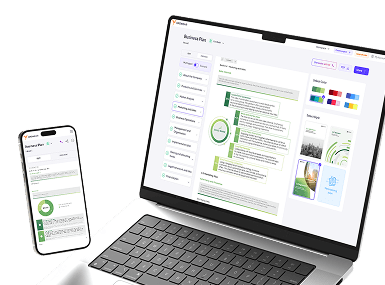
Growexa builds a complete, lender-ready business plan — with financial logic and a professionally formatted PDF
Laundry promotions are often too focused on the first transaction.
“20% off your first order” can generate trials, but it does not prove that the business acquired customers at an acceptable cost. The discount lowers first-order contribution at exactly the moment acquisition spending is highest.
Promotions work better when they have a defined commercial purpose. An introductory wash-and-fold offer can reduce the barrier to trying an unfamiliar service. An off-peak self-service promotion can shift demand away from congested periods. A referral credit can acquire a customer through an existing relationship. A reactivation offer can target customers whose normal purchase cycle has lapsed.
The operator should measure the behavior after the promotion.
Suppose 100 customers redeem a $10 first-order offer. If 60 return at full price, the campaign has created a potentially valuable repeat cohort. If eight return, the business mostly sold discounted laundry.
Loyalty should be approached similarly. A points program is not valuable because customers accumulate points; it is valuable if it increases visit frequency, retention or average spend enough to offset the rewards.
For wash-and-fold and pickup services, SMS or email can be particularly effective when tied to expected reorder behavior. A customer who typically orders every two weeks does not need daily promotions. A reminder around the expected reorder window is more relevant and easier to measure.
Commercial laundry acquisition is closer to sales than advertising.
The operator first needs to identify businesses that generate recurring washable volume and fit the plant's operational capabilities. A salon with predictable towel volume presents a different opportunity from a short-term rental manager requiring rapid linen turnaround across multiple properties.
The sales proposition should therefore be operationally specific: pickup schedule, turnaround, minimum volume, pricing structure, handling requirements, replacement or loss policy, billing and service reliability.
Local partnerships can also create consumer demand without becoming formal commercial laundry accounts. Apartment communities, property managers, universities, gyms and complementary local businesses may provide access to concentrated groups of potential customers.
But partnerships should be measured. A property partnership generating 40 recurring wash-and-fold customers is commercially meaningful. Distributing 2,000 flyers through a partner with no attribution is activity, not a marketing result.
Use a dedicated landing page, promo code, QR code or customer-source field to identify what each partnership actually produces.
A laundry marketing budget should be built backward from customer economics.
There is no universal percentage of revenue that every laundromat should spend. A mature self-service location with strong organic visibility may need relatively little paid acquisition. A new pickup-and-delivery service entering several neighborhoods may spend substantially more while building its customer base.
An illustrative monthly budget could be structured this way:
| Example Marketing Budget | Monthly Spend |
|---|---|
| Local search advertising | $1,500 |
| Pickup/delivery campaigns | $1,200 |
| Local SEO/content | $600 |
| Referral and loyalty credits | $500 |
| Print/local partnerships | $400 |
| Total | $4,200 |
Illustrative example only, not a recommended budget.
The budget matters less than what it buys.
Customer acquisition cost (CAC) measures the cost of adding a new customer:
CAC = Acquisition Spend ÷ New Customers
If $3,000 in attributable acquisition spending produces 100 new customers, CAC is $30.
Average order value (AOV) shows revenue per transaction:
AOV = Revenue ÷ Orders
Repeat rate measures how many customers purchase again within a defined period. The time window must be consistent; otherwise the metric becomes difficult to compare.
Customer lifetime value (CLV) requires more care. A useful simplified planning version should be based on gross contribution, not revenue:
Illustrative CLV = Average Contribution per Order × Expected Orders During Customer Relationship
If an average order contributes $18 after variable service costs and a customer completes 15 orders before churning, simplified contribution-based CLV is $270.
The comparison between CAC and CLV is more useful than either metric alone. A $40 CAC may be poor for a customer who makes one low-margin purchase and excellent for a recurring customer producing hundreds of dollars in contribution.
Operators should also track channel-level conversion, cost per first order, visit or order frequency, reactivation and—particularly for pickup and delivery—revenue and contribution by route or service area.
A 90-day plan should sequence the work rather than launch every channel simultaneously.
| Period | Priority | Execution | Decision Metric |
|---|---|---|---|
| Days 1–30 | Capture existing local demand | Business Profile, website/service pages, tracking, review process | Search actions, calls, first orders |
| Days 31–60 | Test acquisition | Local search ads, pickup campaign, referral test | CAC, first-order contribution |
| Days 61–90 | Build repeat behavior | Reorder messaging, loyalty test, B2B outreach | Repeat rate, order frequency, account pipeline |
During the first 30 days, fix the conversion infrastructure before buying more traffic. Verify business information, make pricing and services easy to understand, establish analytics and conversion tracking, and create a consistent method for asking customers for reviews.
Days 31–60 are for controlled acquisition tests. Run a small number of channels with enough tracking to determine where customers came from. A pickup campaign can test one or two priority service zones rather than an entire metro area. Search campaigns can separate self-service intent from wash-and-fold or pickup intent.
By Days 61–90, enough early customer data should exist to examine repeat behavior. Compare acquisition cohorts, identify which offers brought back full-price customers, and shift spending toward channels producing acceptable acquisition economics.
B2B outreach can run in parallel, but it should have its own pipeline: prospects contacted, conversations, quotes, trials and active accounts.
At day 90, the objective is not to have used every laundromat marketing ideas available. It is to know which two or three acquisition and laundry customer retention mechanisms deserve more capital.
A good laundromat marketing strategy is not a collection of laundry advertising ideas. It is a system for moving the right local customer from discovery to first purchase to repeat behavior at an acquisition cost the business can afford.
That makes measurement more important than reach. A smaller campaign that generates 30 repeat customers in a dense service area may create more value than a city-wide campaign generating 100 discounted orders that never return.
Marketing assumptions should ultimately connect back to the economics of the business itself. The Growexa Laundry Business Plan template can be used to model how customer volume, pricing, operating costs and marketing investment affect the broader financial plan.

