Ukraine
 USA
USA
 Austria

Stop editing templates
Start building a plan that gets approved
Turn this template into a complete business plan with:
- Financial projections
- Loan-ready structure
- Clear repayment logic
Based on 40+ bank requirements


In the beauty industry, artistry meets commerce in a way few other sectors can replicate. A Beauty Salon is not just a place for transformation — it’s a theater of identity, confidence, and emotional renewal. Yet behind every perfectly styled client and glowing review lies something more structured: a clear, data-informed Marketing Plan that transforms creativity into consistency, and consistency into growth.
The global beauty services market now exceeds half a trillion dollars and is projected to expand further as self-care evolves from luxury to lifestyle. In this hyper-connected landscape, salons that succeed are not merely the most talented — they are the most strategic. They understand that marketing today is not about shouting louder but about speaking clearer, aligning their brand voice, digital presence, and customer experience into one cohesive system.
Whether it’s a minimalist Scandinavian-inspired hair studio in London or a high-end wellness salon in Los Angeles, the same principle applies: every Beauty Salon Marketing Plan must translate personality into performance. It’s no longer enough to offer great service — the experience must be visible, sharable, and emotionally resonant.
This guide breaks down the architecture of a modern salon brand — how to position it, attract loyal clients, manage reputation, and scale sustainably. From social storytelling to precision pricing, it reveals how today’s most admired salons design their success as deliberately as they design their spaces.
Turn this template into a complete business plan with:
Based on 40+ bank requirements
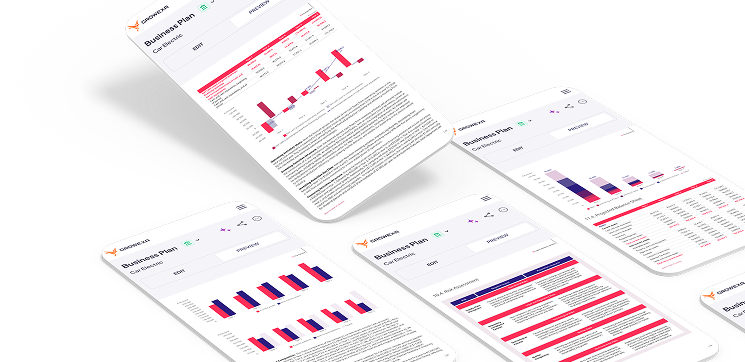


Most business plans fail not because of the idea — but because the numbers don’t prove repayment.
Build a bank-ready business plan in minutes
(with projections, structure, and validation)
Every Beauty Salon Marketing Plan begins not with promotions or hashtags, but with identity. The strongest salons don’t compete for everyone — they stand for something specific. Market positioning defines how your salon is perceived, who it attracts, and what emotional space it occupies in the customer’s mind.
A luxury Beauty Salon builds its reputation on exclusivity — high-end interiors, personalized consultations, and craftsmanship that commands premium pricing. An eco-conscious salon attracts sustainability-minded clients through cruelty-free products and waste-reduction programs. An express salon appeals to urban professionals who value efficiency over indulgence. Each model can succeed, but only if its Marketing Plan articulates a coherent promise.
Brand identity is both visual and emotional. Your logo, color palette, and photography style create the first impression, but your brand’s tone — the words, gestures, and energy you project — seals the connection. A beauty brand built on calm minimalism should never communicate with loud typography or aggressive sales language. Likewise, a bold, trend-forward salon must sound and look like it belongs on the edge of fashion.
A successful Marketing Plan ensures that every touchpoint — from your Instagram feed to your front desk — delivers the same feeling. Consistency is credibility. Salons that shift tone or image confuse clients, and confusion kills loyalty.
To find your positioning, ask not only what you do but why you do it. Are you selling transformation, confidence, empowerment, or relaxation? This purpose shapes the narrative of your Beauty Salon Marketing Plan. It guides photography, partnerships, music playlists, and even scent branding — the invisible details that elevate a visit into an experience.
In beauty, your brand is your business card. It tells clients whether they’re entering a luxury sanctuary or a high-energy social hub. Positioning determines perception, and perception determines price. A strong Marketing Plan doesn’t just define who you are; it defends you from being mistaken for anyone else.
If brand identity defines what you say, customer segmentation defines to whom you say it. A Beauty Salon Marketing Plan that succeeds in the modern marketplace must treat audience understanding as both science and empathy — analyzing demographics, psychographics, and emotional triggers to create lasting loyalty.

Beauty is deeply personal. Two clients may request the same haircut but seek entirely different outcomes: one desires confidence before a new job, the other craves renewal after burnout. Recognizing this human nuance allows a Beauty Salon to market experience rather than just service.
Segmentation starts with demographics — age, income, lifestyle — but it matures with psychographics: values, aspirations, and self-image. Younger clients often prioritize experimentation and shareability; middle-aged clients often seek trust, expertise, and a sense of care. Meanwhile, male grooming and gender-neutral beauty services are expanding markets that reward salons with inclusive branding.
Your Marketing Plan should build personas, not stereotypes. Identify your key audiences — professionals seeking luxury care, students looking for affordability, bridal clients requiring full-service packages, or wellness enthusiasts seeking holistic treatments. Each persona should guide distinct messaging, offers, and channels.
Behavior insights come from observation and data. Booking frequency, preferred time slots, and average ticket value reveal more than opinions ever could. By tracking these metrics, a Beauty Salon can anticipate client needs — promoting color touch-ups at the right interval, suggesting new products after seasonal changes, or offering exclusive experiences for repeat clients.
Emotion drives conversion. The most effective Marketing Plan recognizes that people choose beauty services to feel seen, renewed, or empowered. A loyalty email isn’t just a reminder to book again — it’s a re-invitation to confidence.
Finally, consider generational shifts. Gen Z clients expect digital convenience, transparent pricing, and authenticity; Millennials crave self-expression and personalized recommendations; Gen X and Boomers value trust, hygiene, and premium care. A modern Beauty Salon Marketing Plan respects these nuances while maintaining a unified brand voice that feels both aspirational and approachable.
Every modern Beauty Salon Marketing Plan begins with an uncomfortable truth — you’re competing in one of the most saturated industries on earth. In any urban market, customers can choose from dozens of salons within a ten-minute radius. The real competition isn’t only next door; it’s on Instagram, TikTok, and Google Maps. Clients make decisions before they ever walk through your door, and they’re comparing not just prices but experiences, aesthetics, and values. To survive and thrive, a Beauty Salon must understand the new rules of attraction. Visibility alone no longer guarantees demand. The real advantage lies in emotional positioning — how your brand makes clients feel. A luxury salon no longer wins solely through marble countertops or champagne service; it wins through narrative precision — the promise of exclusivity, transformation, and belonging.
The modern beauty landscape is also shaped by powerful cultural shifts. Wellness has replaced vanity as the central theme of beauty consumption. Clients now view self-care as self-preservation — a statement of identity rather than indulgence. Your Marketing Plan should reflect this transformation: speak the language of empowerment, mindfulness, and authenticity rather than superficial glamour.
Trends like sustainability, inclusivity, and transparency are not optional buzzwords. They’re new forms of currency. The rise of clean beauty, gender-neutral services, and biodegradable packaging all signal that today’s clients reward brands that align with their personal ethics. A forward-thinking Beauty Salon integrates these ideas not as trends but as truths.
Technology is another catalyst of change. Digital appointment systems, AI-driven personalization, and virtual hair color previews are transforming client expectations. Social media platforms have become both storefront and stage — where the line between advertising and authenticity has all but vanished. A well-structured Marketing Plan leverages this environment by blending digital fluency with emotional storytelling, turning every post into both performance and proof. Globally, the industry is fragmenting into two directions: hyper-luxury experiences and hyper-convenient ones. The salons in the middle risk invisibility. Your Beauty Salon Marketing Plan should clearly define which lane you occupy — either elevating service into an art form or streamlining it into an effortless ritual. The middle ground is where brands fade; bold differentiation is where they thrive.
Innovation doesn’t always mean technology. Sometimes it’s cultural — like designing a salon experience that celebrates curly hair textures authentically or creating packages for pre- and postnatal clients. Sometimes it’s operational — offering subscription models for regular maintenance or express stations for lunchtime styling. A resilient Marketing Plan transforms small insights into scalable systems.
In short: the best salons don’t chase trends; they translate them. They see what’s emerging — from micro-influencers to personalized skincare — and adapt before it becomes mainstream. The beauty industry rewards those who anticipate desire, not those who react to it.
A Beauty Salon Marketing Plan is not just about being seen — it’s about being remembered. Every salon’s go-to-market strategy should be designed like a symphony: digital, local, and experiential elements harmonizing to build awareness, trust, and loyalty.
The most successful Beauty Salon brands think omnichannel, not multichannel. That means all communication flows from a single story. Your website, Instagram grid, email campaigns, signage, and even salon playlists should sound like different instruments playing the same melody. A fragmented message confuses the audience; a consistent one converts them.
Social media is your stage, not your sales counter. Clients don’t follow salons to see endless discounts — they follow to feel inspired. Your Marketing Plan should allocate serious attention to visual storytelling: before-and-after transformations, behind-the-scenes content, stylist personalities, and customer testimonials. Every frame should embody your salon’s tone, color palette, and values.
Local marketing remains powerful. Even in the age of algorithms, proximity matters. Optimize Google My Business listings, collect reviews, and partner with nearby boutiques, gyms, or spas for cross-promotion. For a community-based Beauty Salon, credibility is built face-to-face first and reinforced online.
Influencer collaboration deserves a place in your Marketing Plan, but it must be selective. Micro-influencers with genuine local engagement often outperform macro names with diluted audiences. Authenticity trumps reach when it comes to converting beauty clients. Offer experiences, not just sponsorships — an influencer who truly loves your salon becomes a long-term ambassador, not a one-time mention.
Don’t underestimate email and SMS marketing. Personalization is the quiet engine of retention. Send follow-up messages after appointments, birthday offers, or seasonal style tips curated by your stylists. A thoughtful message can trigger rebookings better than any billboard.
Offline experiences are the forgotten frontier. Launch “beauty brunches,” charity events, or open-house styling demos. These experiences turn your salon into a social hub — a space where relationships begin and community forms. When combined with an elegant digital follow-up, they create an emotional flywheel that no algorithm can replicate.
The go-to-market strategy for a Beauty Salon must also adapt to scale. A single-location boutique salon will focus on hyperlocal engagement, while a multi-branch or franchised model must standardize brand aesthetics and operational excellence. In either case, the Marketing Plan must serve as the connective tissue between creativity and conversion — ensuring every marketing dollar strengthens not just awareness, but equity.
Ultimately, your salon’s visibility is not measured in impressions — it’s measured in impact. A client’s willingness to recommend your services, post their results, and rebook automatically reflects how well your Marketing Plan aligns experience with emotion.
In a competitive marketplace, price is never just a number — it’s a signal of identity. A Beauty Salon Marketing Plan that fails to treat pricing as part of brand storytelling risks sending the wrong message before the client even walks through the door.
Luxury salons don’t compete on affordability; they compete on experience. Their pricing reflects craftsmanship, ambiance, and exclusivity. From the moment a customer sees your service list, they should sense value, not expense. Conversely, a fast-service Beauty Salon built on accessibility must ensure pricing communicates efficiency and reliability without feeling cheap. The key is alignment — the price must match the promise.

A well-designed Marketing Plan connects pricing to psychology. Clients don’t always remember the amount they paid — they remember how they felt paying it. Tiered pricing models can subtly shape perception: entry-level services attract new clients, while premium experiences signal status. Packages, memberships, or monthly subscriptions transform one-time buyers into long-term clients. For example, a “Glow Membership” offering monthly facials and styling sessions creates predictable revenue and emotional continuity.
Packaging extends far beyond product boxes or gift cards. It’s the choreography of presentation. The layout of your menu, the tone of your booking confirmation, and the unboxing of retail products all reinforce your value proposition. Every detail in a Beauty Salon — from the scent of the waiting area to the thank-you message after payment — communicates whether your brand belongs in the budget, mid-tier, or luxury category.
Your value proposition must answer one question clearly: Why you? The answer should be emotional, not functional. While services like haircuts or facials are common, what differentiates your Beauty Salon is the intangible layer — how you make clients feel about themselves. A strong Marketing Plan captures this transformation and translates it into communication: not “we cut hair,” but “we help people see their best selves.”
Modern consumers are not purely rational; they buy meaning, not maintenance. When your pricing and packaging reflect identity — not just utility — your Beauty Salon Marketing Plan becomes more than a strategy. It becomes a declaration of purpose.
If your brand positioning and pricing attract clients, your retention system keeps them. A Beauty Salon Marketing Plan without a clear customer lifecycle framework is like a stylist without scissors — creative but ineffective.
The modern sales funnel in beauty begins long before the first booking. Awareness may come from an Instagram reel, a Google review, or a friend’s recommendation. The consideration phase happens digitally — prospects browse your feed, your services, and your online reputation. Conversion occurs not at checkout but at the emotional moment they trust you with their self-image.
Your Beauty Salon should map each of these moments carefully. Start with awareness campaigns — beautiful visuals, collaborations, and PR. Then guide clients through nurturing steps: follow-up messages, trial offers, and consistent engagement. The Marketing Plan should ensure no lead falls through the cracks.
Retention is where profitability lives. Acquiring a new client can cost five times more than retaining an existing one, and the math is even sharper in the salon industry. Implement loyalty programs that reward repeat visits — but make them elegant, not transactional. “Your fifth visit is free” feels generic; “Your loyalty deserves luxury” feels personal. Exclusive previews of new treatments or VIP event invitations can turn regulars into advocates.
CRM (Customer Relationship Management) is the backbone of a sophisticated Beauty Salon Marketing Plan. Modern CRM platforms allow segmentation by service history, preferences, and even emotion — whether a client prefers bold styles or natural tones, morning slots or evening ones. Use these insights to tailor outreach. A message that reads “We noticed you love balayage — a new tone just launched that’s perfect for your shade” feels intimate, not automated.
Feedback loops are equally vital. Encourage reviews, survey satisfaction, and respond promptly to concerns. Every comment is data; every complaint is direction. A Beauty Salon that listens and adapts builds loyalty faster than one that defends or ignores.
Above all, retention is emotional. Clients return to places that understand them — not just their hair type or skin tone, but their confidence patterns, their aspirations. Your Marketing Plan should treat every interaction as an opportunity to deepen that understanding. In a service business where transformation is personal, relationships are your most valuable equity.
A salon with great marketing can fill chairs once. A salon with great relationships keeps them full forever.
No connection between:
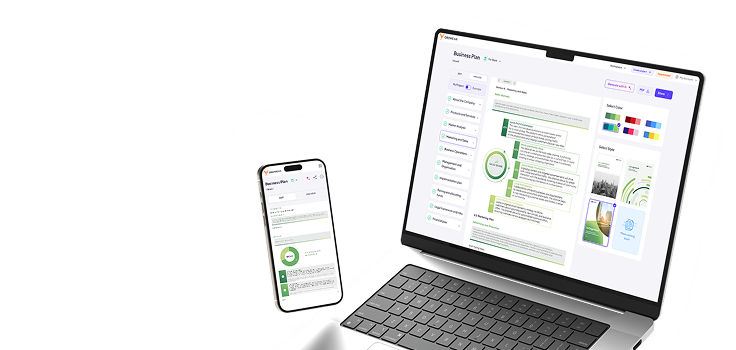
Growexa builds a complete, lender-ready business plan — with financial logic and a professionally formatted PDF
For a Beauty Salon, branding is not decoration — it’s identity architecture. Every color, scent, playlist, and word in your salon should tell the same story: this is who we are, this is who we serve, this is how we make you feel. A strong Marketing Plan ensures that story stays consistent whether a client discovers you through Instagram, Google, or word of mouth.
The digital age has collapsed the distance between local and global perception. A single Instagram post can redefine a salon’s reputation overnight — for better or worse. That’s why every Beauty Salon Marketing Plan must treat branding as an ecosystem, not an accessory.
Your visual identity — logo, typography, palette — forms your first handshake with the world. But beyond the surface, tone of voice, social captions, and client communication define your brand’s personality. If your salon’s promise is calm restoration, your tone should whisper elegance; if it’s creative transformation, your message should radiate boldness and joy. Inconsistency erodes trust, and in beauty, trust is everything.
Public relations (PR) builds authority. Great PR is not about press releases; it’s about narrative. Instead of announcing “we offer new services,” tell stories — of stylists pursuing excellence, clients finding confidence, or sustainable choices making impact. The best Beauty Salon Marketing Plan integrates PR with purpose: positioning your salon as a voice in a broader conversation, not a noise in the background.
Your digital presence should blend functionality with feeling. A sleek, SEO-optimized website is your salon’s digital lobby — it must reflect the same quality and atmosphere as your physical space. Use professional photography, simple navigation, and embedded booking systems. Each page should convert curiosity into trust.
Social media remains the industry’s lifeblood, but vanity metrics deceive. Followers don’t equal clients — engagement does. A well-calibrated Marketing Plan prioritizes authentic storytelling over trends: stylist features, tutorials, transformations, and testimonials that humanize your salon. User-generated content, especially from satisfied clients, acts as modern PR.
Partnerships amplify reach. Collaborate with cosmetic brands, fashion designers, photographers, or even wellness studios. Cross-promotion multiplies awareness while reinforcing credibility. In an era where beauty overlaps with lifestyle, strategic alliances turn your salon into a cultural brand.
Lastly, reputation management cannot be reactive. Monitor online reviews daily. Respond with empathy, not defensiveness. Every review — good or bad — is part of your narrative. A transparent and gracious Beauty Salon earns long-term respect even when handling criticism.
In the digital economy, visibility without identity is noise. Identity without communication is invisibility. The magic lies in integration — and a thoughtful Marketing Plan turns both into influence.
A brilliant brand without metrics is a mirage. A Beauty Salon Marketing Plan must quantify creativity. Every campaign, post, and event should connect to measurable results — client acquisition, retention, lifetime value, and return on marketing investment (ROI).
Tracking performance starts with clarity. Define your north-star metrics: how many new clients per month justify your ad spend? What percentage of appointments come from repeat clients versus new leads? What’s your average ticket size, and how can targeted campaigns raise it? These numbers aren’t just data — they’re decisions.

For most Beauty Salons, marketing budgets range from 8–12% of gross revenue, scaling up to 15% during growth or rebranding phases. But allocation matters more than volume. Your Marketing Plan should distribute resources across awareness, engagement, and retention: awareness builds your audience, engagement converts them, and retention sustains them.
Digital ads offer immediate reach, but they’re only effective when backed by brand depth. A beautiful campaign that leads to an inconsistent experience wastes money. Conversely, a modest budget supported by precision targeting and a consistent story yields better ROI. Balance paid and organic tactics — think of ads as ignition, and storytelling as fuel.
Performance dashboards help visualize progress. Use tools like Google Analytics, Meta Business Suite, and CRM reports to track traffic, conversions, and revenue per channel. A data-driven Beauty Salon Marketing Plan doesn’t just show what worked — it shows why.
Scaling is the art of multiplying success without diluting soul. A single-location boutique must build operational consistency before expansion. Documenting brand guidelines, client communication scripts, and service standards ensures new locations mirror the original ethos. For franchises or multi-branch salons, unified brand identity and localized marketing autonomy must coexist.
Growth isn’t only physical. It can mean expanding product lines, offering online consultations, or developing educational workshops. A Beauty Salon that transforms expertise into scalable assets — tutorials, branded tools, or product partnerships — turns marketing into a profit center.
Budget discipline is not about cutting costs but about amplifying what works. Reinvest in your most profitable channels. Sunset underperforming ones. Refine your message based on insights, not impulse. Marketing maturity means evolution, not exhaustion.
At its peak, your Beauty Salon Marketing Plan becomes more than a promotional document — it becomes an operational philosophy: creative, analytical, and emotionally intelligent.
A Beauty Salon is never just about beauty. It’s about transformation, trust, and storytelling — one client at a time. Behind every polished mirror and curated playlist lies an intricate system of marketing, strategy, and emotion. Success belongs to those who see beyond trends and build timeless brands anchored in purpose.
A great Marketing Plan doesn’t chase clients; it attracts them through authenticity, excellence, and consistency. It aligns brand aesthetics with data intelligence and human understanding. It treats each touchpoint — from an Instagram reel to a front-desk greeting — as part of the same conversation.
Ready to elevate your salon’s visibility, loyalty, and profitability? Design your own Beauty Salon Marketing Plan using Growexa’s professional frameworks. Because in beauty, brilliance starts with structure.
For most salons, 8–12% of annual gross revenue should be allocated to marketing, with up to 15% during launch or rebranding. But more important than the amount is alignment. Your Marketing Plan should balance spending across three tiers — awareness (social media, PR, SEO), engagement (content, influencer partnerships, in-salon events), and retention (CRM systems, loyalty programs). A successful Beauty Salon treats marketing as a growth investment, not a discretionary cost.
No single channel dominates. The best Beauty Salon Marketing Plan uses an omnichannel strategy — Instagram for discovery, Google for intent-driven search, email and SMS for retention, and events for community engagement. Digital storytelling fuels awareness, while real-world experiences anchor loyalty. The interplay between online aesthetics and offline excellence creates a brand people trust, recommend, and return to.
By mastering differentiation. Don’t compete on price; compete on purpose. A new Beauty Salon must articulate what makes its brand emotionally distinct — maybe it’s inclusivity, sustainability, or transformative expertise. Every detail — from color palette to client experience — should reinforce that promise. The Marketing Plan should capture this story consistently across every touchpoint, so when clients think of confidence, self-care, or innovation, they think of you.
Technology should amplify, not replace, humanity. Use CRM platforms to remember client birthdays, track preferences, and automate reminders — but keep communication warm and individualized. A smart Beauty Salon Marketing Plan blends analytics with empathy. Let data guide your timing, but let emotion shape your message. In the beauty business, personalization powered by insight feels like magic — efficient, thoughtful, and deeply human.
Scale starts with systems, not shortcuts. Document every standard — from tone of voice to client rituals — before expanding. Your Marketing Plan should evolve into a brand manual: a living guide to experience design, communication, and performance metrics. As your Beauty Salon grows into new markets, maintain authenticity by training staff not just in techniques but in philosophy. Expansion done right multiplies meaning, not mediocrity.