
Stop editing templates
Start building a plan that gets approved
Turn this template into a complete business plan with:
- Financial projections
- Loan-ready structure
- Clear repayment logic
Based on 40+ bank requirements

Few ventures blend purpose and profitability as meaningfully as a preschool. Early education is both a social necessity and a thriving business sector — one that directly shapes communities while offering stable, recurring revenue. A well-run preschool doesn’t simply prepare children for school; it builds trust with families, creates employment for educators, and strengthens neighborhoods.
But even passion and pedagogy can falter without planning. That’s why every successful preschool begins with a comprehensive business plan — a document that turns educational ideals into operational reality.
A preschool business plan outlines how you’ll deliver quality care and learning, attract families, comply with regulations, and achieve financial sustainability. It is both an educational roadmap and a commercial blueprint. Whether you’re opening your first preschool, expanding an existing center, or franchising a proven model, a solid business plan ensures that your vision aligns with the practical demands of staffing, facilities, and funding.
In an industry where reputation grows from reliability, transparency, and excellence, your preschool business plan becomes your most valuable asset. It defines your standards, communicates your values, and provides measurable benchmarks for growth. What follows is a comprehensive guide through every section of a professional preschool business plan, designed to meet investor expectations while staying true to the mission of early childhood education.
Turn this template into a complete business plan with:
Based on 40+ bank requirements




Most business plans fail not because of the idea — but because the numbers don’t prove repayment.
Build a bank-ready business plan in minutes
(with projections, structure, and validation)
The executive summary introduces your preschool business plan as a compelling snapshot — a clear statement of what your school does, who it serves, and why it will succeed. Investors, lenders, and partners will read this section first, and it must convey credibility, compassion, and commercial clarity.
Begin with your mission: the purpose behind your preschool. Perhaps your goal is to provide high-quality early learning at an affordable price, or to create an inclusive, bilingual, or Montessori-based environment that nurtures creativity and social development. This statement defines the character of your business and sets the emotional tone of your business plan.
Then describe your concept and competitive advantage. Is your preschool an independent learning center, a franchise branch, or a home-based micro-school? Each has unique operational and financial structures. Highlight what differentiates your model — smaller class sizes, innovative curriculum, technology-enhanced learning, or extended hours for working parents. Your preschool business plan should immediately make clear why families would choose your school over others.
Follow with an overview of your target market. Detail the number of families in your area, income brackets, and local childcare gaps. Investors want to see demand supported by demographic data, not assumptions. For example, a suburban region with growing young families and few licensed providers represents strong market opportunity for a preschool.
Next, include your operational scope — capacity, location, and staffing. For example, your business plan might specify a facility designed for 80 students with eight certified teachers and two assistants. This level of precision signals readiness.
Conclude with financial highlights: startup costs, projected tuition revenue, and profitability timeline. Investors expect your preschool business plan to present conservative but confident projections — showing that you understand both costs and cash flow cycles typical in early education.
The best executive summaries read like promises backed by logic: a heartfelt vision, reinforced by strategy, structure, and numbers.
The company overview defines the identity of your preschool — who you are, what you stand for, and how your organization is structured. It’s the foundation of your business plan, blending narrative with formal description.
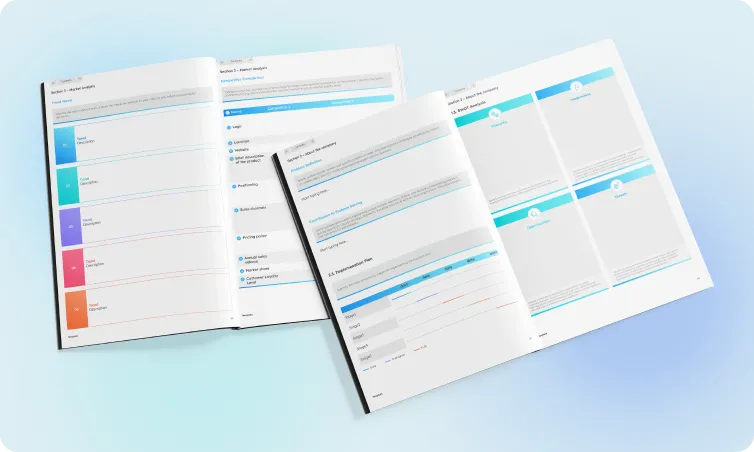
Begin with your legal and operational structure. Specify whether your preschool operates as a sole proprietorship, partnership, LLC, or nonprofit. Include your business name, registration details, and the ownership breakdown. This transparency builds confidence for investors and regulators alike.
Then provide your origin story. Every preschool business plan benefits from a strong sense of purpose. Perhaps you were inspired by your background in education or noticed a lack of affordable childcare options in your area. Personal motivation gives your plan authenticity — something financiers respect when paired with professional execution.
Define your services in detail. A preschool typically offers age-specific programs for toddlers, pre-kindergarten, and sometimes after-school care. Clarify your curriculum philosophy — whether it’s play-based, Montessori, Reggio Emilia, or a hybrid approach. A thorough business plan ties this philosophy directly to measurable outcomes: early literacy, emotional development, or school readiness benchmarks.
Include your location and facilities overview. A well-positioned preschool benefit from accessibility and safety — close to residential areas, with secure drop-off points, outdoor play space, and classrooms meeting state regulations. Your business plan should describe square footage, zoning compliance, and amenities like kitchens or sensory rooms. This level of operational detail reassures readers that your concept is tangible.
Next, articulate your mission and vision statements. The mission defines what your preschool does daily — nurturing young learners through safe, structured environments. The vision expresses long-term ambition — perhaps to become the most trusted early learning brand in your region. Together, they give your business plan philosophical depth and direction.
End this section by summarizing your unique value proposition. Why will parents choose your preschool? It could be an exceptional teacher-to-student ratio, integration of technology, focus on bilingual education, or flexible tuition plans. In the early education market, trust and differentiation drive enrollment — your business plan should demonstrate how your preschool delivers both consistently.
No preschool business plan is complete without a rigorous look at the market. The education industry moves at the intersection of demographics, culture, and policy — and a preschool must position itself within those dynamics. Investors and lenders expect to see data-driven reasoning: that you understand who your customers are, what they value, and how your preschool fits within regional supply and demand.
Start with macro trends. The global preschool market continues to expand due to rising dual-income households, increased awareness of early education’s importance, and public-private initiatives to improve access. In the U.S. alone, the preschool sector exceeds $60 billion annually and is projected to grow steadily over the next decade. These statistics illustrate both opportunity and competition.
Next, shift to local context. Identify your city or district’s population of children aged 2–5, household income levels, and commuting patterns. A strong business plan draws on census data or government childcare reports to estimate how many families can afford — and actively seek — preschool services. For example, a suburban area with 10,000 children under five and only 15 licensed centers reveals a market gap your preschool can fill.
Analyze competitors. Visit existing preschools, document their pricing, capacity, and programs. Are they Montessori-style, faith-based, or corporate franchises? Note their strengths and weaknesses. Your preschool business plan should clearly outline how you differentiate: perhaps through smaller class sizes, digital learning tools, or a bilingual curriculum. Investors value specifics — they show you’ve done your homework.
Include regulatory factors. Each region imposes strict licensing, staffing, and safety standards. A professional business plan shows awareness of these rules — and how compliance adds to your credibility. For example, maintaining certified teachers, staff background checks, and regular safety audits all position your preschool as a trustworthy institution.
Finally, analyze risks. The preschool market depends on family income stability, real estate costs, and changing education policies. Address these in your business plan with mitigation strategies: flexible tuition tiers, partnerships with local employers, or enrollment-based scaling. Demonstrating foresight earns confidence from both banks and parents.
A preschool may teach children, but it markets to parents — a truth that defines your marketing strategy. Your preschool business plan must explain not just how you’ll reach families, but how you’ll earn their trust and loyalty. The decision to enroll a child is emotional, practical, and social — your marketing must address all three.
Start with your brand positioning. What does your preschool stand for? Is it nurturing and community-oriented, or innovative and academic? Clarity in brand identity drives every communication. Your business plan should describe your core message and visual style — from logo to tone — ensuring consistency across brochures, signage, and digital platforms.
Digital marketing is essential. Parents often begin their search online with “preschool near me.” Optimize your website with local SEO, transparent tuition details, and high-quality photos of your facilities. Add testimonials, staff bios, and daily activity snapshots to humanize your brand. A modern preschool with a credible online presence instantly stands out in a crowded field.
Community engagement is equally powerful. Host open houses, parent workshops, and local partnerships with pediatricians or children’s stores. Word-of-mouth remains the strongest advertising channel for any preschool, and your business plan should treat it as a measurable growth engine.
Pricing strategy plays a major role in marketing. Your business plan should balance affordability with perceived value. Many successful preschools use tiered pricing — full-day, half-day, and enrichment program options — appealing to diverse family schedules and incomes. Offer sibling discounts or referral bonuses to encourage retention and advocacy. Finally, detail your sales process. Enrollment is a conversion journey: inquiry, tour, trial class, registration. Define how your staff will manage each step. Include follow-up systems, CRM tools, and communication protocols. A preschool business plan that integrates marketing with sales execution proves that you understand how relationships become revenue.
The operations plan translates your business plan into day-to-day execution. It demonstrates how your preschool runs efficiently, safely, and in alignment with educational quality standards.
Begin with facility design and logistics. Your preschool should be more than functional — it must inspire learning and security. Describe classroom layouts, play zones, nap areas, and outdoor spaces. Investors and regulators expect compliance with health, safety, and accessibility laws. Include capacity metrics — for instance, “eight classrooms supporting up to 96 students.”
Next, staffing. Teachers are the heart of your preschool. Outline hiring criteria: certifications, experience levels, and ratios (often 1:8 or lower). Include ongoing training programs in your business plan to show commitment to quality and retention. High turnover can damage consistency, so proactive HR policies build confidence.
Discuss curriculum and schedule management. Your preschool business plan should present a structured daily routine balancing academics, play, and rest. Mention any proprietary curriculum or partnerships with education specialists. For example, if you incorporate STEM-based learning or emotional intelligence programs, specify how they align with early learning standards.
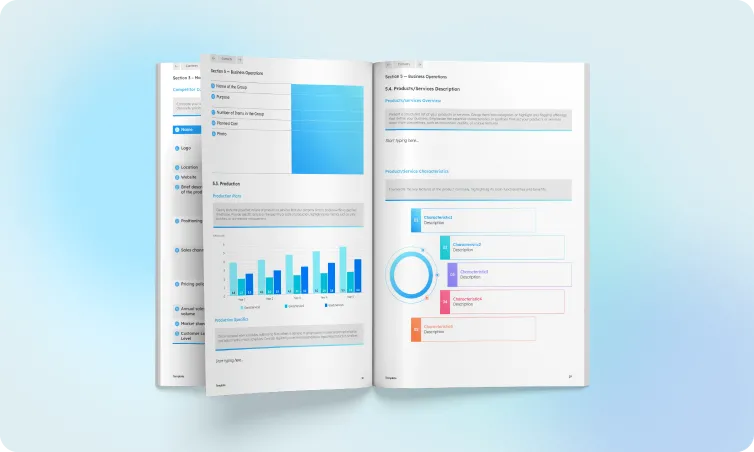
Address operations technology. Modern preschools use management software for attendance, billing, and parent communication. Adding these details to your business plan signals efficiency and transparency. Parents value digital updates, real-time photos, and easy payment systems — all operational strengths that reinforce marketing promises. Lastly, safety and compliance. A professional preschool must meet local health codes, maintain insurance, and conduct regular fire and sanitation inspections. Include these commitments in your business plan; they demonstrate foresight and responsibility.
Strong operations aren’t just logistics — they’re brand performance. When your processes run smoothly, parents trust you more deeply. And trust, in the preschool industry, is the currency that drives growth.
A preschool business plan must demonstrate that leadership is as solid as the curriculum. Education-based enterprises succeed when passion meets professional management, and this section proves your preschool is guided by expertise, structure, and accountability.
Start with ownership and leadership. Define who owns the preschool, who manages it, and who is responsible for educational quality. Investors and regulators alike want transparency. Whether you’re an owner-operator with an early childhood education background or part of a partnership, your business plan should show complementary skill sets — one leader for pedagogy, another for finance or marketing.
Describe your organizational chart. A clear structure builds trust. Typical preschools include a director, lead teachers, assistants, administrative staff, and support roles for cleaning and maintenance. Each role should have defined duties. A disciplined business plan explains how this structure maintains safety, consistency, and parent satisfaction.
Next, outline recruitment and retention strategies. Staff turnover disrupts continuity — a key concern for families. Your preschool business plan should include competitive pay scales, ongoing training, and career development incentives. Certification upgrades and professional workshops also elevate program quality, signaling that your preschool invests in people, not just property.
Finally, highlight governance and culture. Ethical operations matter deeply in education. A strong business plan includes clear policies for child safety, inclusivity, and parental communication. When leadership practices transparency and empathy, your preschool becomes more than a business — it becomes a community institution.
No connection between:
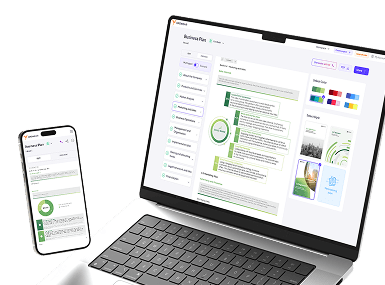
Growexa builds a complete, lender-ready business plan — with financial logic and a professionally formatted PDF
Even the most heartfelt educational mission needs solid financing. The raising and allocating funds section of your preschool business plan should show how much capital is required, where it will come from, and how it will be used responsibly.
Begin with funding requirements. Itemize startup costs: property lease or purchase, renovations, furniture, playground equipment, teaching materials, insurance, and initial payroll. A medium-sized preschool may need anywhere from $150,000 to $500,000 depending on scale and location. Precision inspires confidence — avoid vague estimates.
Then, specify funding sources. Your business plan might include a mix of personal investment, small business loans, grants, or early-stage investors. Nonprofits may also pursue government or philanthropic funding. Whatever the structure, explain how your preschool balances equity and debt, ensuring long-term solvency.
Now, detail allocation. Investors want to see a plan — not just a request. For example, allocate 40% to facility setup, 25% to staff and training, 20% to marketing, and 15% to working capital reserves. A disciplined preschool business plan proves that money follows mission.
Include contingency planning. Delays in enrollment or unexpected costs can test new preschools. Address these scenarios openly in your business plan with backup funding or credit options. Risk-aware entrepreneurs earn respect — especially in education, where reliability matters most.
Lastly, connect investment to milestones. Explain how each funding round leads to measurable outcomes — full enrollment, additional classrooms, or a second campus. This performance-based narrative reassures financiers that your preschool isn’t built on hope, but on execution.
Numbers tell your preschool business plan’s credibility story. This section converts educational vision into tangible financial outcomes. It answers the most important investor question: can your preschool be both sustainable and profitable?
Start with revenue projections. Estimate enrollment capacity, average tuition per child, and annual retention rates. For example, a 90-student preschool charging $800 monthly would generate $864,000 annually. Adjust for seasonality — most preschools see steady income once the school year stabilizes, but your business plan should account for summer dips or vacation closures.

Next, detail expenses. Include staff salaries, rent or mortgage, utilities, insurance, supplies, meals, and marketing. Labor often represents over 50% of total costs, so emphasize efficiency through multi-role staff or part-time assistants. Transparent cost accounting gives your business plan realism.
Present a profit and loss projection. A successful preschool may achieve 15–25% margins once stable enrollment is reached. Show your break-even analysis — how many students cover fixed costs. A clear business plan demonstrates that profitability aligns with capacity goals.
Include cash flow forecasting. Many preschools receive tuition monthly but pay expenses weekly. This mismatch requires planning. Your preschool business plan should show reserves or credit lines that maintain liquidity. Strong cash management ensures operational calm — a quality every parent values.
Lastly, project long-term growth. Over three to five years, consider expanding to multiple locations, adding enrichment programs, or introducing franchising. Align these projections with your business plan’s vision. Growth rooted in discipline earns far more trust than growth fueled by optimism.
Modern parents expect a preschool that reflects contemporary values — sustainability, technology, and inclusion. Adding this section to your business plan shows that your preschool is built for the future, not just the present.
Start with environmental responsibility. Early education facilities consume water, energy, and materials — but they can also model sustainability. Include details in your business plan about eco-friendly cleaning products, natural light usage, recycling programs, and energy-efficient designs. A green preschool not only saves money but teaches children lifelong respect for the planet.
Then, emphasize innovation in learning. Digital tools, when used mindfully, enhance engagement. Tablets for interactive storytelling, smart boards, and communication apps that connect parents to classroom updates can elevate experience without replacing human connection. Your preschool business plan should show balance: technology supporting, not dominating, education.
Discuss community impact. Modern preschools often partner with local organizations, offering parenting workshops or volunteering initiatives. Embedding social responsibility in your business plan signals maturity and long-term purpose. Finally, consider scalability through innovation. Modular classroom designs, cloud-based management software, and data-driven performance tracking make it easier to replicate success. A forward-thinking preschool doesn’t just educate — it evolves. Including innovation in your business plan ensures your organization remains relevant and resilient amid changing family needs.
Building a preschool means shaping lives — but also running a disciplined, enduring business. A thoughtful preschool business plan bridges idealism and structure, combining the heart of education with the rigor of entrepreneurship. From market analysis to financial strategy, every section of your business plan defines how your preschool will serve children, families, and investors with equal responsibility. A plan grounded in research, transparency, and sustainability earns more than funding — it earns trust.
The most successful preschools don’t just open classrooms; they build ecosystems of care, creativity, and consistency. With a strong business plan, your preschool can become that cornerstone in your community — where growth is measured not only in profits, but in the bright futures you help create.
Ready to begin your own journey? You can download a free preschool business plan template and tailor it to your vision, or explore a completed example to see how each section works in practice. And if you’re ready to craft a fully personalized strategy, visit Growexa — where intelligent planning tools and guided AI insights help transform your concept into a confident, investor-ready plan.

