
Choose the business model before sourcing inventory. Handmade, private-label, resale, fine jewelry, and made-to-order products involve different capital requirements and risks.
Calculate profitability beyond product markup. Landed costs, payment fees, packaging, shipping, returns, and customer acquisition determine the actual contribution per order.
Avoid tying up excessive cash in inventory. Test demand with limited collections and monitor sell-through before expanding product lines.
Build differentiation into the product and positioning. A defined customer segment and credible quality standards are more defensible than competing on price alone.
Use financial projections to guide growth. Average order value, gross margin, acquisition costs, inventory turnover, and working capital should determine when to scale.
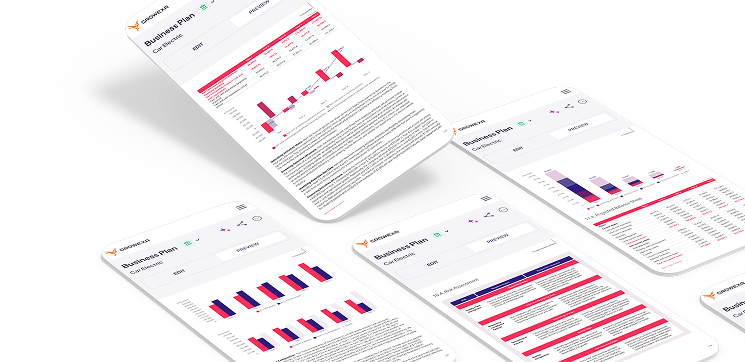

Create a Business Plan in 5 Minutes with AI

Understanding how to start an online jewelry business requires a strategic balance between creative design and rigorous financial management. The business model determines how much capital the company needs, how it controls product quality, and how quickly it can respond to demand.
Handmade jewelry gives founders direct control over design and production. It can support distinctive positioning and smaller initial collections, but production capacity is limited by the time and skills required to make each item.
Private-label jewelry involves sourcing products from manufacturers and selling them under the company's brand. This can make production more scalable, although minimum order quantities, quality consistency, and supplier dependence introduce additional risks.
Wholesale and resale models allow entrepreneurs to purchase finished products and sell them through their own channels. They can simplify product development, but differentiation may be difficult when competing retailers offer similar designs.
Fine jewelry typically involves precious metals, gemstones, higher average order values, and more capital tied up in individual products. Authentication, material disclosure, insurance, security, and customer trust become especially important.
Fashion jewelry generally operates at lower price points, often with greater sensitivity to trends, shipping costs, and advertising efficiency. A $25 accessory and a $2,500 engagement ring should not be evaluated using the same inventory or customer acquisition assumptions.
Made-to-order and custom manufacturing can reduce finished-goods inventory, but they introduce production lead times, customization requirements, and potentially more complicated return policies.
The most suitable model is the one that aligns product economics with the founder's available capital, capabilities, and target market.
Jewelry is a highly visual category, but attractive design alone is rarely a sustainable competitive advantage in a thriving jewelry ecommerce business.
A new brand needs a specific reason for customers to choose its products over established retailers, independent designers, marketplaces, and competing direct-to-consumer brands.
Positioning can be based on materials, design language, craftsmanship, personalization, price, gifting occasions, or a clearly defined customer segment.
For example, a brand specializing in personalized sterling silver gifts has a different commercial proposition from one selling premium minimalist gold jewelry. The first may compete on customization and gifting convenience, while the second may depend more heavily on material quality, design consistency, and long-term brand credibility.
Niche selection should also consider repeat purchasing behavior. Engagement rings may generate high-value transactions but relatively infrequent purchases. Everyday accessories may produce lower order values while creating more opportunities for repeat sales.
A useful positioning statement should identify the customer, the product category, the reason to purchase, and the evidence supporting the brand's claims.
The narrower the initial positioning, the easier it becomes to develop relevant products, photography, messaging, and acquisition campaigns.
Jewelry business startup costs vary significantly according to product category, inventory strategy, manufacturing method, and marketing approach.
A founder producing handmade jewelry from home may avoid commercial rent and large wholesale orders. A fine jewelry brand purchasing finished inventory may require considerably more capital before its first sale.
| Startup cost category | What it covers | Financial consideration |
|---|---|---|
| Product development | Design, prototypes, samples | Testing before production |
| Initial inventory | Materials or finished products | Cash tied up until products sell |
| Business setup | Registration, permits, professional advice | State and local requirements |
| Branding and website | Identity, domain, ecommerce setup | Initial and recurring expenses |
| Product photography | Photography, editing, styling | Conversion and merchandising |
| Packaging | Boxes, inserts, labels, protective materials | Cost per order |
| Software | Ecommerce, inventory, accounting tools | Monthly subscriptions |
| Marketing | Content, advertising, collaborations | Customer acquisition cost |
| Insurance and security | Business coverage, inventory protection | Particularly relevant for valuable stock |
| Working capital | Reorders, returns, operating expenses | Cash needed between purchases and collections |
Inventory deserves particular attention because it consumes cash before generating revenue.
Suppose a founder invests $15,000 in an initial collection. Even if the products have attractive projected margins, the business cannot use that capital for advertising, replenishment, or operating expenses until the stock sells.
If only 40% of the collection sells during the expected period, the remaining inventory may constrain the next product launch.
Entrepreneurs seeking external financing for inventory or equipment should prepare a business plan for a business loan that explains inventory purchasing, expected sales velocity, working capital, and repayment capacity.
Supplier selection should be treated as a quality-control and financial decision, not simply a search for the lowest unit price.
For handmade brands, material sourcing affects production consistency, product durability, and the ability to fulfill repeat orders. For private-label and wholesale businesses, supplier reliability influences delivery schedules, defect rates, and customer satisfaction.
Before committing to large orders, request samples and assess materials, construction, finishes, clasps, plating durability, dimensions, and packaging.
For fine jewelry, verify precious-metal specifications, gemstone descriptions, documentation, and the accuracy of product claims. U.S. sellers should consider the Federal Trade Commission's Jewelry Guides, which address representations concerning precious metals, gemstones, and related products.
Quality standards should be documented in supplier agreements where appropriate. A product that looks acceptable in a sample may perform differently when produced at scale.
Supplier negotiations should also address minimum order quantities, lead times, defective merchandise, replacement procedures, payment terms, and shipping responsibilities.
A slightly higher unit cost can be commercially preferable when it reduces defects, delays, and the amount of inventory that must be purchased upfront.
Jewelry business pricing should begin with landed cost rather than a simple markup on the supplier's quoted price.
Landed cost includes the cost of acquiring or producing an item and bringing it into saleable inventory. Depending on the model, this may include materials, manufacturing labor, inbound freight, duties, and other directly attributable costs.
Consider a hypothetical fashion jewelry product:
| Pricing component | Amount |
|---|---|
| Manufacturing or purchase cost | $14.00 |
| Inbound freight and duties | $3.00 |
| Total landed cost | $17.00 |
| Retail selling price | $49.00 |
| Gross profit per unit | $32.00 |
| Gross margin | 65.3% |
A 65.3% gross margin appears attractive. However, it does not represent the profit earned from each online sale.
Suppose the business also incurs $2 in packaging, $5 in outbound shipping, and $2 in payment processing and other variable transaction costs.
Contribution before advertising and fixed overhead falls to $23 per order. If acquiring a new customer costs $18, the first order contributes only $5 toward fixed expenses and operating profit, before any returns or additional costs.
This is why a high product markup does not necessarily create a profitable ecommerce business.
Fine jewelry requires a different approach. High product values may support larger dollar contributions, but inventory financing, insurance, authentication, and slower stock turnover can offset those advantages.
Pricing decisions should reflect the total cost of serving the customer and the return required on inventory investment.
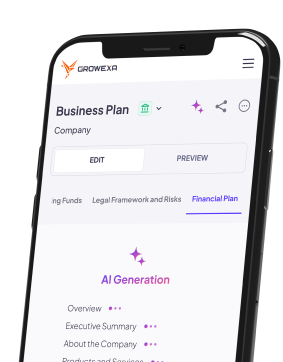
The ecommerce platform should support the business's product complexity, merchandising requirements, and operational processes.
Platforms such as Shopify, WooCommerce, and marketplace channels such as Etsy offer different combinations of control, built-in audiences, transaction costs, and technical requirements.
An independent storefront provides greater control over branding, customer relationships, and merchandising. Marketplaces may offer access to existing shoppers but can create dependence on platform policies, fees, and competitive search rankings.
The choice should be based on the expected product catalog, customization options, inventory integration, payment processing, and marketing strategy.
For example, a made-to-order jewelry business may need product personalization fields and production-status tracking. A brand managing hundreds of stock-keeping units may prioritize inventory synchronization and detailed product analytics.
Launching with sophisticated software is unnecessary if the company has not validated its product-market fit. Start with a platform capable of supporting the initial operating model and expand functionality when actual sales justify the investment.
Jewelry is particularly difficult to evaluate online because customers cannot physically inspect weight, scale, finish, or craftsmanship.
Photography must therefore do more than make products attractive. It must reduce uncertainty.
Effective product pages combine clear product images, close-up details, scale references, accurate material descriptions, dimensions, and information about care and durability.
Lifestyle photography can communicate brand positioning, while consistent product photography helps shoppers compare items across a collection. For fine jewelry, accurate representations of gemstones, metals, and product characteristics are especially important. Misleading visual presentation or unsupported material claims can create legal and reputational risks.
Merchandising should also consider product relationships. Matching earrings, necklaces, bracelets, or complementary items can increase average order value when recommendations are relevant.
The objective is not simply to display more products. It is to help customers understand what they are buying and make confident purchasing decisions.
Fulfillment affects both customer experience and unit economics.
Jewelry packaging may need to protect delicate components, reinforce brand positioning, and support gifting occasions. However, elaborate packaging adds cost to every order.
Shipping policies should reflect product value, insurance requirements, tracking, delivery reliability, and the economics of free-shipping thresholds. Return policies need particular attention for customized products, engraved items, and high-value merchandise. Any limitations should be clearly disclosed and comply with applicable consumer protection requirements.
Returns create more than a refund expense. They can generate additional shipping costs, inspection labor, repackaging expenses, and inventory that cannot immediately be resold.
The business should distinguish between products that can return to inventory and items that require repair, discounting, or disposal.
A well-designed fulfillment process protects margins while maintaining the customer trust needed for repeat purchases.
Marketing should connect product positioning with the buying situations that generate demand.
Visual channels such as Instagram, Pinterest, and short-form video can support product discovery, but attention does not automatically translate into profitable orders.
Search-oriented content can capture shoppers looking for specific materials, styles, occasions, or gift ideas. Email marketing can support repeat purchases, collection launches, and customer retention.
Paid advertising offers faster testing, although performance depends on product appeal, conversion rates, average order value, and acquisition costs.
Influencer partnerships and creator collaborations can provide credible product exposure, but the business should evaluate the cost of each partnership against attributable sales and the quality of the resulting customers.
Marketing performance should be measured beyond impressions and website traffic.
A campaign that generates $10,000 in sales may still destroy value if discounts, advertising, fulfillment, and product costs consume the entire contribution.
For early-stage brands, focused campaigns promoting a limited number of validated products can provide more useful commercial evidence than broad campaigns covering an untested catalog.
An online jewelry business should manage four connected financial indicators.
Average order value (AOV) measures revenue per order. Higher AOV can improve the economics of fulfillment and customer acquisition, provided the additional products maintain adequate margins.
Gross margin measures the proportion of revenue remaining after the cost of goods sold. It indicates product-level economics but excludes many selling and operating expenses.
Customer acquisition cost (CAC) measures the cost of acquiring customers. It should be evaluated alongside contribution per order, repeat purchase behavior, and customer retention rather than against revenue alone.
Inventory turnover measures how efficiently stock is sold and replaced. Slow turnover can create liquidity problems even when reported gross margins remain strong.
These metrics interact. A brand may improve AOV by offering bundles, but if those bundles require heavy discounts, gross margin can decline. Similarly, aggressive advertising may increase revenue while reducing cash available for inventory replenishment.
Consider two hypothetical product strategies:
| Metric | Fashion jewelry | Fine jewelry |
|---|---|---|
| Average order value | $60 | $1,200 |
| Gross margin | 65% | 40% |
| Gross profit per order | $39 | $480 |
| Illustrative CAC | $20 | $150 |
| Gross profit after CAC | $19 | $330 |
These figures are illustrative, not industry benchmarks. Neither column represents final operating profit.
The fine jewelry order generates more gross profit in dollar terms, but it may require substantially more inventory capital and longer selling periods. The fashion jewelry order produces less contribution per transaction and may depend more heavily on repeat purchases and efficient fulfillment.
For management purposes, the most useful question is not which model has the highest gross margin percentage. It is which model generates the strongest sustainable cash return relative to the capital invested.
Inventory turnover can be calculated as:
Inventory Turnover=Cost of Goods Sold / Average Inventory
If a business records annual cost of goods sold of $120,000 and maintains average inventory of $40,000, inventory turnover is three times per year.
That ratio provides a starting point for evaluating purchasing efficiency. However, it should be analyzed by collection or product category because fast-selling items can conceal substantial quantities of slow-moving stock.
Reorder decisions should consider sell-through, supplier lead times, expected demand, and available cash. Expanding the catalog before understanding these relationships can increase revenue potential while weakening liquidity.
A jewelry business plan should translate the brand concept into measurable commercial assumptions.
The plan should identify the target customer, product positioning, sourcing strategy, pricing, distribution channels, marketing approach, and fulfillment model. Financial projections should connect expected order volume and average order value to gross profit, acquisition costs, operating expenses, and inventory investment.
A jewelry store business plan template can provide a structured starting point for documenting the business model, while an AI business plan generator can help organize assumptions and financial projections into a coherent plan.
The most important forecasts concern cash as much as profit. Founders should estimate when inventory must be purchased, how quickly it will sell, when suppliers require payment, and how much cash remains available for marketing and replenishment.
A practical launch sequence is to validate a narrow collection, obtain product samples, calculate fully loaded unit economics, test customer response, and expand inventory only when sales evidence supports additional purchasing.
The commercial challenge in starting an online jewelry business is not getting products onto a website. It is turning product demand into repeatable, cash-generating sales without allowing inventory and acquisition costs to consume the company's resources.
Founders should prioritize a differentiated collection, verified quality standards, defensible pricing, and disciplined inventory purchasing. Before scaling advertising or expanding product lines, build a financial plan that connects each order to its true contribution and each inventory investment to expected cash recovery.
A jewelry brand becomes scalable when its economics justify growth—not simply when its catalog or sales volume becomes larger.
Startup costs depend on the product category, sourcing model, inventory quantity, branding, ecommerce platform, and marketing budget. A small handmade business operating from home may require relatively limited capital, while a fine jewelry brand holding valuable inventory may need substantially more. Calculate startup expenses and working capital separately.
Yes. Many handmade, made-to-order, and online resale businesses operate from home. However, founders should verify applicable business registration, local zoning, sales tax, insurance, and product-related requirements. Home-based operations do not eliminate compliance obligations.
Pricing should account for materials, production labor, packaging, and other direct costs, followed by an appropriate margin to cover selling expenses and overhead. Founders should avoid treating their own production time as free labor.
It can be, provided product margins, customer acquisition costs, inventory turnover, and operating expenses support positive cash generation. High retail markups do not guarantee profitability, particularly when advertising costs or unsold inventory are substantial.
An LLC is not universally required to sell jewelry. Entrepreneurs may operate under different legal structures, subject to applicable registration, tax, and licensing rules. The appropriate structure depends on liability considerations, ownership, taxation, and growth plans.
Begin with a limited collection, made-to-order production, or small-batch sourcing rather than purchasing extensive inventory. Validate demand through samples, pre-launch marketing, and actual customer orders before committing significant capital. Preorders should be managed with clear delivery terms and sufficient production capacity.


