
A business plan cover page should include essential identifying information. The company name, document title, preparation date, and contact details are standard elements; a logo, version number, and confidentiality notice are optional.
Professional formatting matters more than visual design. A clean layout, consistent typography, and clear information hierarchy improve readability and credibility without unnecessary decoration.
Business plan formatting should remain consistent throughout the document. Use standardized headings, readable financial tables, page numbering, and uniform currency, date, and percentage formats.
Banks and investors have different presentation priorities. Bank-oriented plans emphasize financial clarity and repayment assumptions, while investor-oriented plans prioritize business potential, scalability, and easy navigation.
The final document format should match its purpose. PDF is generally suitable for formal submissions, Word supports editing and collaboration, and online formats facilitate ongoing updates.
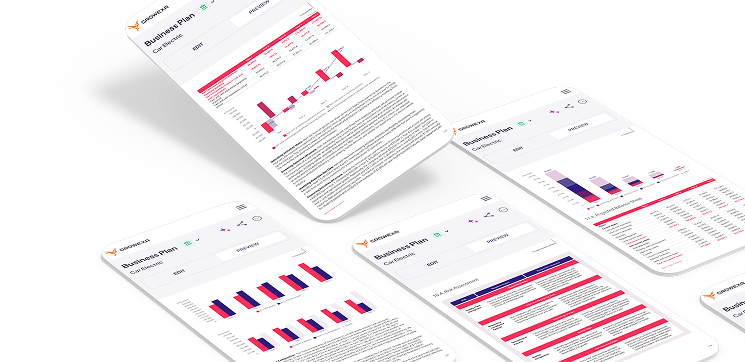

Create a Business Plan in 5 Minutes with AI

A business plan cover page, also called a business plan title page, is the first page of a formal business plan. It identifies the business, establishes the document's purpose, and provides basic information about its preparation.
The cover page normally appears before the table of contents and executive summary. It should contain only essential identifying information rather than detailed descriptions of the business model, financial forecasts, or market opportunity.
Its purpose is administrative as well as presentational. A clearly dated and labeled document helps recipients distinguish between versions, especially when a business plan is revised during a financing application or investor review.
For short internal plans, a separate title page may be unnecessary. A one-page business plan can incorporate the company name and date into its header without using an entire page for identification.
Understanding how to format a business plan properly ensures your document communicates credibility and value. Adhering to a clean business plan layout improves readability and helps lenders or investors locate critical details quickly.
A conventional business plan cover page contains five essential elements and two optional fields.
| Element | What to include | Recommendation |
|---|---|---|
| Company name | Registered or operating business name | Use the name consistently throughout the plan |
| Company logo | Current business logo, if available | Optional; keep proportions and resolution appropriate |
| Document title | “Business Plan” or a more specific title | State the document's purpose clearly |
| Date and version | Preparation date and revision number | Update when material changes are made |
| Contact information | Responsible person, email, phone, and relevant address | Use professional, current details |
| Confidentiality notice | Brief statement about intended distribution | Optional; avoid unsupported legal claims |
| Prepared-for line | Recipient, lender, investor, or organization | Include when preparing a tailored submission |
The company name should be prominent, followed by the document title. Contact details can appear near the bottom of the page.
A logo can improve visual recognition, but it is not necessary for a professional document. Early-stage founders without an established brand should use a clean text-based layout rather than delay preparation to create visual assets.
The date and version number are particularly useful when forecasts change. A recipient reviewing several revisions should be able to identify which document contains the current financial assumptions.
A confidentiality statement may be appropriate for sensitive commercial information. However, placing “Confidential” on a cover page does not automatically establish a legally enforceable confidentiality obligation.
The following business plan cover page example illustrates a conventional layout suitable for a small-business financing proposal.
This layout establishes a clear visual hierarchy without excessive decoration. The company name and document title receive the greatest emphasis, while administrative details remain accessible but secondary.
For a bank submission, the prepared-for line may identify the financial institution or lending department. For an investor submission, it may identify the investment firm or intended recipient, although a general version is often more practical during initial outreach.
A business plan cover page should not contain revenue projections, valuation claims, or promotional statements. Those belong in the executive summary and supporting analysis, where they can be explained and substantiated.
The following business plan cover page template can be copied into Word, Google Docs, or another document editor.
The template should be adapted to the intended audience. A startup preparing an investor document may emphasize the company name and contact details, while a borrower preparing a formal financing application may include the legal business name and recipient information.
Use the same company name, date conventions, and document title throughout the business plan. Inconsistencies between the cover page and financial schedules can make version control unnecessarily difficult.
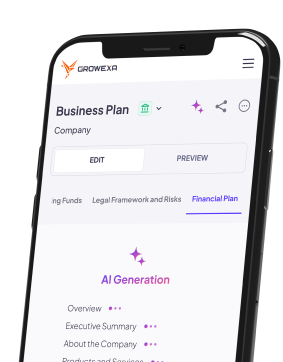
Professional business plan formatting should improve the document's usability. The goal is to make important information easy to locate, compare, and verify.
The recommendations below are common document-design practices, not universal lender or investor requirements. If a recipient provides specific formatting instructions, those instructions take precedence.
For a U.S. business plan, US Letter paper (8.5 × 11 inches) is a practical default. International recipients may prefer A4.
Margins of approximately one inch on each side provide sufficient space for readable text, tables, and printing. Slightly narrower margins may be appropriate for financial schedules, provided the content remains legible.
Avoid using unusually narrow margins to reduce the apparent page count. A shorter document is not more effective if its tables become difficult to read.
Use a professional, widely available typeface such as Arial, Calibri, Aptos, or another legible sans-serif or serif font.
Body text generally works well at 10.5–12 points, depending on the typeface and line spacing. Headings should be larger and visually distinct, but the document should not contain excessive font variations.
Consistency matters more than the precise font choice. A business plan using one body typeface and a controlled heading system will usually be easier to review than a document combining several decorative styles.
A clear heading hierarchy helps readers understand the structure of the business plan and locate relevant information.
Use major headings for sections such as Executive Summary, Company Description, Market Analysis, Operations, Marketing Strategy, and Financial Plan. Subheadings should identify the specific topics within those sections.
Numbered headings can be useful in longer plans, particularly when financial schedules or appendices refer to particular sections.
The hierarchy should remain consistent. A subsection should not appear visually more prominent than the main section containing it.
Tables should present financial information in a format that supports comparison. Charts should illustrate relationships or trends that would be difficult to understand from figures alone.
Financial tables should include clear titles, reporting periods, currency units, and consistent number formats.
For example, a revenue forecast should distinguish between monthly and annual figures. A chart showing operating margins should identify the percentage basis and reporting periods.
Avoid using charts as decoration. A chart should help readers understand revenue growth, cost structure, profitability, cash flow, or another relevant business metric.
Page numbers help reviewers reference specific sections during discussions and revisions.
A common approach is to leave the cover page unnumbered and begin numbering with the executive summary or table of contents. The exact convention is flexible unless a recipient specifies otherwise.
For longer business plans, headers or footers may also include the company name and document version. This can reduce confusion when pages are printed or shared separately.
A table of contents is useful when the plan contains multiple sections, financial schedules, or appendices.
It should list major headings and corresponding page numbers. In Word or Google Docs, automatic heading styles can help generate and update the table of contents as the document changes.
For a short plan of only a few pages, a table of contents may add little value. A one-page business plan format generally does not require one.
Financial information should use consistent currency, decimal, percentage, and date conventions.
For a U.S. business plan, amounts are commonly presented in dollars, with commas separating thousands. Financial tables should specify whether figures are expressed in dollars, thousands of dollars, or millions.
| Financial item | Recommended presentation |
|---|---|
| Revenue | $250,000 |
| Gross margin | 42.5% |
| Monthly operating costs | $18,500 |
| Financial period | Year Ending December 31, 2027 |
| Negative amount | ($12,000) or −$12,000, used consistently |
| Forecast status | Historical, projected, or estimated |
Do not combine monthly and annual figures in the same table without clear labels. Similarly, avoid presenting historical results and forecasts as though they were equivalent.
Consistent formatting helps readers identify changes in financial performance without first interpreting different presentation conventions.
A bank-oriented business plan should prioritize clarity, financial consistency, and the ability to verify repayment assumptions.
Lenders may review the business model, management experience, use of funds, historical performance, cash-flow forecasts, debt obligations, and supporting documentation. The plan should make these elements easy to locate.
The executive summary should identify the financing request, intended use of proceeds, and the business's expected source of repayment. Financial tables should reconcile with the narrative and supporting schedules.
For example, if the plan states that the company will purchase $200,000 in equipment, the use-of-funds schedule and financial projections should reflect that investment. If the equipment is expected to increase production capacity, the forecast should show the related operating assumptions.
A bank-ready business plan should also distinguish projected performance from historical results and explain material assumptions.
There is no universal requirement that every bank business plan use a specific font, cover design, or page count. Actual submission requirements depend on the lender and financing product.
Formatting cannot compensate for weak repayment capacity, but poor formatting can make otherwise credible financial information more difficult to evaluate.
Investor-oriented business plans should emphasize the business opportunity, commercial evidence, scalability, management capability, and financial implications of the proposed investment.
The document should be easy to scan. An investor reviewing several opportunities needs to locate the value proposition, market assumptions, competitive position, traction, financial model, and funding request without searching through lengthy descriptive passages.
This does not mean that a business plan should imitate a pitch deck. A pitch deck communicates a concise investment narrative, while a full business plan provides more detailed supporting analysis.
Tables and charts can improve investor readability when they clarify unit economics, customer acquisition, revenue growth, or capital requirements.
A founder seeking equity financing should also ensure that the use-of-funds statement and financial projections are consistent. The amount being raised should correspond to identifiable milestones and a credible operating runway.
Investor documents benefit from concise presentation, but unsupported claims about market size or future valuation remain weaknesses regardless of design quality.
The appropriate document format depends on whether the recipient needs to review, edit, print, or collaborate on the plan.
| Format | Principal advantage | Main limitation | Best use |
|---|---|---|---|
| Preserves layout and visual consistency | Less convenient for direct editing | Formal submissions and external review | |
| Word (.docx) | Supports editing, comments, and revisions | Layout can change across applications | Collaborative drafting and adviser review |
| Online document | Enables sharing and ongoing updates | Access permissions and formatting may vary | Internal planning and team collaboration |
PDF is often a practical final-delivery format because it preserves page layout, tables, and fonts across devices. However, some lenders or advisers may request editable documents or separate spreadsheet models.
Word is useful during drafting and review. It allows collaborators to suggest revisions, update financial narratives, and maintain heading styles.
Online planning platforms can support collaboration and version updates, but access controls should be considered when the document contains confidential financial or commercial information.
A professionally formatted business plan may require more than one output. For example, a lender could receive a PDF narrative alongside an editable financial workbook and supporting documentation.
The most frequent formatting problems are not necessarily visual. They arise when document design interferes with the reader's ability to understand or verify the information.
| Formatting mistake | Why it matters | Better approach |
|---|---|---|
| Overdesigned cover page | Distracts from essential identifying information | Use a restrained title-page layout |
| Inconsistent fonts and headings | Makes the document difficult to navigate | Apply a consistent style hierarchy |
| Dense financial tables | Obscures important assumptions and trends | Use clear labels, spacing, and units |
| Missing dates or version numbers | Creates uncertainty about which plan is current | Identify each material revision |
| Inconsistent financial periods | Makes comparisons unreliable | Clearly label monthly, quarterly, and annual figures |
| Excessive charts | Adds length without improving analysis | Use visuals only when they clarify information |
| Unreadable PDF exports | Reduces usability for external reviewers | Review the exported file before submission |
| Unsupported financial claims | Weakens credibility regardless of appearance | Link figures to assumptions and evidence |
One overlooked issue is version control. A business plan may be revised several times during financing discussions. If the cover page, financial model, and appendices carry different dates, reviewers may question whether the information is consistent.
A final quality check should therefore cover both visual presentation and the underlying document structure.
A business plan cover page should make the document identifiable, current, and professional. It should not compete with the substance of the plan for attention.
The same principle applies to business plan formatting as a whole. Clear headings, readable financial tables, consistent assumptions, and controlled versioning improve the document's usefulness for lenders, investors, and management teams.
The most effective formatting does not make a business appear more successful than it is. It makes the underlying commercial and financial information easier to evaluate.
For founders who want to reduce the time spent organizing and formatting their documents, Growexa's AI business plan generator provides a structured approach to preparing a professionally formatted business plan with financial projections.
The objective is to deliver a document that supports informed decisions—not merely one that looks complete.
A business plan cover page should normally include the company name, document title, preparation date, and contact information. A logo, version number, confidentiality notice, and prepared-for line may also be included when relevant.
A formal business plan generally benefits from a cover page, particularly when submitted to lenders, investors, or external advisers. However, there is no universal requirement for every business plan to have one. Short internal plans may use a simple document header instead.
A clean, professional layout with a clear company name, prominent document title, date, and contact information is usually appropriate. Unless the recipient provides specific instructions, readability and consistency are more important than decorative design.
A confidentiality statement is optional. It may indicate that the document contains sensitive commercial information, but it does not automatically create a legally enforceable confidentiality obligation. Businesses requiring formal confidentiality protections should obtain appropriate legal advice.
Professional, legible fonts such as Arial, Calibri, Aptos, or similar typefaces are appropriate. Body text of approximately 10.5–12 points is a practical starting point. Specific font requirements should be followed when provided by a lender, institution, or other recipient.
PDF is often preferable for formal submission because it preserves formatting. Word is useful when editing and collaboration are required. The recipient's instructions should determine the final format, and financial models may need to be supplied separately.
There is no universal page count. A simple business may use a concise plan, while a financing proposal or complex operation may require detailed financial schedules and supporting analysis. The appropriate length depends on the audience and the decisions the document must support.


