
Choose the service model first. Resident needs determine licensing, staffing, property requirements, and potential reimbursement sources.
Verify state and local regulations before securing a property. Licensing, zoning, fire safety, and accessibility requirements vary by jurisdiction and type of care.
Budget beyond initial setup costs. Include renovations, insurance, recruitment, payroll, and sufficient working capital to cover gradual occupancy and payment delays.
Build staffing and revenue projections together. Required coverage can create substantial fixed costs even when the home is not fully occupied.
Complete a financial and operational plan before seeking funding. Connect licensing, staffing, occupancy, and cash-flow assumptions to establish whether the business is financially sustainable.
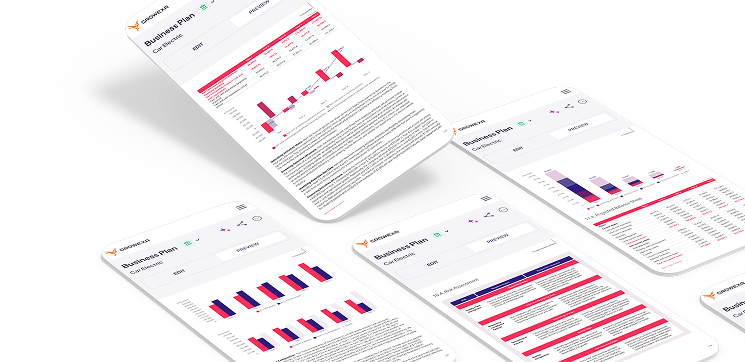

Create a Business Plan in 5 Minutes with AI

A group home is generally a residential setting where individuals live together and may receive supervision, personal assistance, supportive services, or specialized care. However, group home is a broad description rather than a single national licensing category. Understanding group home business requirements is an essential first step for any prospective operator.
Common models include residential services for adults with intellectual or developmental disabilities, community-based mental health housing, homes serving older adults, recovery residences, and other specialized residential programs.
The distinction matters because housing and care are not necessarily regulated in the same way. Some residences primarily provide accommodation and peer support. Others deliver personal care, medication assistance, behavioral support, or clinical services that may trigger additional licensing requirements.
A group home business may operate as a for-profit company or nonprofit organization. Its revenue can come from residents, families, public programs, contracts, or combinations of these sources, depending on the services offered and the applicable rules.
The resident population determines the operating model. Before estimating revenue or looking at properties, define who the home will serve, what level of assistance residents require, and which services the operator intends to provide.
For example, a residence supporting adults with developmental disabilities may require individualized support plans, trained direct-support professionals, and coordination with state disability-service programs. A residential mental health program may need additional clinical oversight, depending on its service scope. An assisted living model may face distinct requirements for resident assessments, medication assistance, and staffing.
The founder should establish the expected resident capacity, admission criteria, daily service responsibilities, and boundaries of care. These decisions determine whether the organization needs specialized employees, overnight supervision, accessible facilities, or agreements with external healthcare providers.
They also shape reimbursement. A model relying on private-pay residents has different pricing and collection risks from one dependent on public-service authorizations or government contracts.
Do not assume that a house with six bedrooms can automatically accommodate six paying residents. Permitted capacity may depend on licensing classification, usable space, accessibility, safety standards, resident needs, and local requirements.
There is no universal federal group home license. State and local requirements vary by service model, resident population, and location. Understanding specific group home licensing requirements early in the process ensures full regulatory compliance before signing leases or acquiring property. Some operations also participate in federally funded programs that impose additional conditions.
Regulatory research should precede property acquisition or lease commitments.
Identify the state agency responsible for the intended residential service. Depending on the model, this may be a health department, human services agency, disability services authority, behavioral health regulator, or another designated office.
Request the applicable regulations, application instructions, facility standards, administrator qualifications, background-check requirements, and inspection procedures.
Determine whether the business needs an organizational license, a facility-specific license, program certification, or separate authorization to provide particular services. Licensing and approval to receive public reimbursement may be distinct processes.
For an example of how states publish residential-care requirements, see the California Department of Social Services Community Care Licensing Division. California's categories and procedures should not be treated as national standards.
A property suitable for residential occupancy is not automatically approved for the intended group home operation.
Before signing a lease, confirm the applicable zoning classification, building use, occupancy limits, parking requirements, and whether additional local approvals are necessary. Seek written clarification where possible.
Federal fair housing protections may also affect how certain group homes are treated under local land-use rules. The U.S. Department of Housing and Urban Development provides information about federal fair housing requirements. Their application to a particular property or dispute requires fact-specific analysis.
Fire, safety and accessibility requirements
Residential programs may be subject to fire inspections, building-code compliance, emergency evacuation planning, accessibility requirements, and other safety obligations.
The exact standards depend on the facility classification and residents' needs. A home accommodating individuals with mobility limitations may require more extensive accessibility modifications and evacuation planning than an ordinary residence.
Confirm requirements with the relevant licensing agency, building department, and fire authority before commissioning renovations.
Medicaid can support certain eligible home- and community-based services, including services delivered in qualifying residential settings. However, it does not automatically pay for every group home or all associated living expenses.
Eligibility, covered services, provider enrollment, reimbursement methodology, and service authorization depend on the state and program. Medicaid generally distinguishes covered services from ordinary room-and-board expenses, subject to specific program rules and exceptions.
The federal Centers for Medicare & Medicaid Services provides an overview of home- and community-based services. Operators should verify the applicable state waiver or other program directly before including reimbursement in financial forecasts.
Group home startup costs vary substantially with location, property condition, resident capacity, service intensity, and staffing requirements. When analyzing how much does it cost to start a group home, operators must evaluate both initial capital outlays and ongoing operational reserves. A leased residence requiring limited modifications has a different capital profile from a property needing extensive accessibility improvements or specialized systems.
Instead of relying on a single national startup-cost estimate, prepare a detailed sources-and-uses budget.
| Cost category | One-time startup costs | Recurring operating costs |
|---|---|---|
| Property | Purchase costs, lease deposits, closing expenses | Rent or mortgage, property taxes where applicable |
| Renovation and accessibility | Bathrooms, ramps, safety modifications, building upgrades | Repairs and ongoing facility maintenance |
| Furniture and equipment | Beds, furnishings, appliances, office and care equipment | Replacement and maintenance |
| Licensing and professional services | Applications, inspections, legal and accounting setup | Renewals, compliance support, professional fees |
| Insurance | Initial premiums or deposits | Liability, property, workers' compensation and other coverage |
| Payroll before occupancy | Pre-opening salaries and onboarding | Wages, benefits, payroll taxes and overtime |
| Recruiting and training | Recruitment, initial certifications and orientation | Continuing education, turnover and refresher training |
| Working capital | Initial cash reserve | Funding gaps, unexpected costs and operating shortfalls |
The distinction between startup investment and recurring expenditure is critical. A founder may have sufficient cash to furnish and prepare the home but insufficient reserves to pay employees while resident admissions and reimbursement ramp up.
Working capital should cover the expected period between initial spending and reliable collections. If the home depends on third-party reimbursement, the forecast should account for authorization, billing, processing, and payment timing rather than assuming revenue immediately becomes cash.
Property financing and any associated debt service must also be included separately from ordinary operating expenses.
Staffing is typically one of the most important cost and compliance considerations in a group home. Unlike many small businesses, residential-care operations may need employees on duty when residents are sleeping, during weekends, and on holidays.
Group home staffing requirements depend on the resident population, assessed support needs, approved capacity, state regulations, and services provided. There is no reliable national employee-to-resident ratio that applies to every group home.
| Position | Primary responsibilities | Planning considerations |
|---|---|---|
| Administrator or manager | Compliance, personnel, budgets, resident coordination | Required qualifications and management coverage |
| Direct-care staff | Daily assistance, supervision, documentation | Resident needs, shift coverage, training |
| Overnight staff | Nighttime support, emergencies, supervision | Awake versus sleep shifts, where permitted |
| Clinical professionals | Nursing, behavioral or therapeutic services | Licensing requirements and service scope |
| Relief and substitute staff | Cover absences, vacations and vacancies | Overtime control and continuity of care |
| Administrative support | Scheduling, billing, records and purchasing | Internal staffing versus outsourcing |
A useful staffing budget starts with required coverage hours rather than an arbitrary headcount.
For illustration, one continuously staffed position requires 168 hours of coverage each week. At 40 scheduled hours per full-time employee, that represents 4.2 full-time equivalents before accounting for leave, training, absences, and other scheduling constraints. It is a coverage calculation, not a regulatory staffing recommendation.
A home requiring multiple employees on duty or specialized support will have a substantially different payroll model.
The budget must also account for recruitment, background checks, initial training, continuing education, supervision, employee benefits, payroll taxes, and overtime. Operators should verify which duties may be performed by direct-care staff and which require licensed professionals.
Staffing should never be reduced below applicable requirements or residents' assessed needs merely to meet a financial target.
Group home revenue depends on who pays, which services are covered, and how payment is calculated. Exploring various avenues for group home funding—such as private-pay, Medicaid waivers, or government contracts—is necessary to construct a sustainable revenue strategy.
Private-pay operations may charge residents or families for accommodation and services under applicable agreements. Other programs may receive payments through Medicaid-funded services, government contracts, or approved provider arrangements.
Some organizations combine several sources, but eligibility and payment conditions must be confirmed individually.
Medicaid home- and community-based services can cover certain supports delivered in qualifying residential settings. Federal HCBS rules also establish requirements concerning community integration, individual rights, and person-centered services. These requirements affect operational design, not just reimbursement eligibility.
For relevant HCBS waiver arrangements, ordinary room and board generally cannot be included in Medicaid service reimbursement, apart from specified exceptions. Operators therefore need to identify how housing, food, and other living costs will be funded separately.
Revenue projections should distinguish approved capacity from actual occupancy and billable services. A resident moving into the home does not necessarily mean that every planned service is authorized or immediately reimbursable.
The operator should document the applicable payment source, rate or contracted amount, service authorization, billing requirements, expected collection timing, and responsibility for uncovered expenses.
The financial plan should connect resident capacity, occupancy, service intensity, staffing, and cash flow. These variables cannot be modeled independently.
Begin with approved capacity and a realistic admissions schedule. A newly licensed home should not automatically assume full occupancy from its opening date. Referral relationships, eligibility assessments, resident choice, authorizations, and the suitability of available placements can affect the pace of admissions.
The revenue model should distinguish between occupied beds, paying residents, authorized services, and collectible revenue. A vacancy may reduce income without materially reducing payroll, because minimum coverage and supervision obligations can remain unchanged.
Operating expenses should include payroll, benefits, housing, utilities, insurance, food, transportation, supplies, maintenance, administration, professional services, and compliance costs. Debt service and capital replacement requirements also need consideration.
The most revealing financial test is often not profitability at full occupancy, but the cash position during the first several months.
For example, a home designed for six residents may eventually support its planned staffing and housing expenses when fully occupied. If admissions occur gradually, however, the operator could incur nearly the same fixed costs while receiving substantially less revenue.
This creates a structural risk: occupancy may increase gradually, but staffing obligations can begin immediately.
Prepare monthly income statements, cash-flow forecasts, and balance sheet projections, with particular attention to the launch period. Model at least a base case and a slower-admissions case, and calculate how much additional working capital each requires.
The financial plan should answer three questions: How much cash is needed before opening? How much could the business consume before reaching sustainable occupancy? And how much liquidity remains if admissions or reimbursement are delayed?
Opening should follow a documented readiness process. Requirements vary by state and license category, but the following checklist provides a practical starting point.
Pre-opening readiness checklist
Documentation should be operational rather than ceremonial. Staff need to understand emergency procedures, reporting responsibilities, resident protections, and their own scope of work.
Before admitting residents, confirm that the facility is authorized for the intended services and that required inspections, staffing, and administrative systems are complete.
There is no reliable nationwide opening timeline. The process depends on the state, license type, property condition, approval requirements, and availability of qualified personnel.
The main stages are sequential, although some work can proceed simultaneously.
Resolve inspection findings, obtain required authorizations, and begin admissions in accordance with the approved service model.
A property requiring substantial renovation or a program needing additional certifications may take significantly longer than one using an already suitable facility.
Founders should build a milestone-based opening schedule and budget for delays rather than assuming that the first proposed opening date is guaranteed.
A group home business plan should demonstrate that the proposed operation is legally feasible, appropriately staffed, and financially sustainable under realistic occupancy and reimbursement assumptions.
For this industry, a credible plan needs more than a market overview and projected revenue. It should explain the intended resident population, regulatory pathway, property strategy, service scope, staffing model, admissions process, reimbursement sources, and risk-management procedures.
The financial sections should include startup costs, funding sources and uses, monthly operating projections, a staffing-linked payroll budget, cash-flow forecasts, and reserves for delays or unexpected expenses.
This matters particularly when seeking debt financing. A lender needs to understand not only how much capital is requested, but also how the facility will reach a stable operating position and generate sufficient cash to repay its obligations.
The U.S. Small Business Administration identifies funding requirements, financial projections, management information, and supporting documentation as important elements of a financing-oriented business plan. Operators preparing to approach lenders can use a business plan for a bank loan to organize the financing case and review SBA business plan requirements when preparing supporting materials.
Funding may involve owner equity, private investors, conventional commercial loans, eligible SBA-backed financing, or other programs where available. Public-service reimbursements should not be confused with startup grants or guaranteed financing.
Once licensing, staffing, and reimbursement assumptions are established, an AI business plan generator can help organize the operating model and financial projections into a structured document. The assumptions still need to be verified against official requirements and actual cost quotations.
Many residential-care and supervised-service models require state licensing, certification, or other authorization. However, requirements depend on the resident population, services provided, and jurisdiction. Some housing-only arrangements may be regulated differently. Confirm the applicable classification with the responsible state agency before operating.
There is no dependable national startup-cost figure. Capital requirements depend on property acquisition or leasing, renovations, accessibility, equipment, licensing, insurance, pre-opening payroll, and working capital. Prepare a property-specific budget and a cash-flow forecast that accounts for gradual occupancy.
Certain group homes may receive payment for eligible Medicaid-covered services through applicable state programs, including some home- and community-based services arrangements. Provider approval, resident eligibility, service authorization, and reimbursement rules vary. Medicaid funding is not automatic, and ordinary room and board are generally excluded from HCBS service payments, subject to limited exceptions.
There is no universal staffing number. Requirements depend on state regulations, resident needs, service intensity, capacity, and required coverage. A staffing plan should include management, direct-care coverage, overnight arrangements where needed, qualified clinical professionals where applicable, and sufficient relief coverage.
Potentially, but property use must be evaluated under applicable zoning, building, licensing, and fair housing rules. Certain disability-related housing arrangements may have federal fair housing protections. Obtain property-specific guidance before purchasing or leasing a home for the proposed operation.
Profitability depends on occupancy, reimbursement or private-pay rates, staffing intensity, housing costs, and operational efficiency. A home can appear profitable at full occupancy while experiencing substantial losses during startup or when residents require additional support. Evaluate cash flow, staffing compliance, and downside scenarios rather than relying on projected revenue per bed.
Starting a group home is fundamentally an exercise in aligning care obligations with operational and financial capacity. Licensing determines what the business may provide; resident needs determine how it must operate; staffing and property requirements determine much of its cost base; and payment arrangements determine whether those obligations can be funded sustainably.
Before committing to a property, establish the applicable regulatory pathway and build a financial model around realistic staffing, admissions, and cash-flow assumptions. That sequence protects both the investment and the continuity of services residents will depend on.
Regulatory note: This article provides general U.S. business-planning information, not legal, clinical, or licensing advice. State and local requirements and program rules should be verified with the relevant authorities before making commitments.


