
Format determines capital needs. A kiosk or compact takeaway operation generally requires less capital than a full-service café with seating, extensive renovations and food preparation.
Location should be evaluated against sales capacity, not rent alone. Occupancy costs that appear expensive in absolute dollars can work if traffic and transaction volume justify them.
Equipment is only one part of the opening budget. Build-out, deposits, permits, initial payroll and working capital can absorb as much attention—and sometimes more capital—than the espresso bar itself.
Break-even depends on transactions, ticket size and contribution margin. A realistic revenue forecast should be built from customer volume rather than an arbitrary monthly sales target.
Working capital matters. A shop can have attractive long-term economics and still run out of cash during its opening ramp-up.
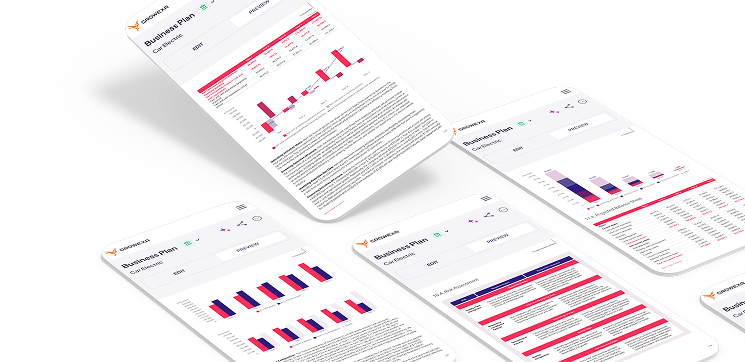

Create a Business Plan in 5 Minutes with AI

Opening a coffee shop is relatively simple from a product standpoint. Making the economics work is harder. A strong location can carry high rent, a premium espresso machine can improve throughput and consistency, and a larger menu can raise the average ticket—but each of those decisions also increases the amount of capital that has to be recovered through future sales.
For entrepreneurs researching how to start a coffee shop, the first question should therefore not be “How much money do I need?” but “What operating model can this market support?” A 300-square-foot takeaway shop, a neighborhood café with 40 seats, and a specialty coffee concept may all sell espresso, yet their rent, staffing, equipment, build-out and break-even economics are fundamentally different.
Current industry estimates illustrate the range. A coffee shop with seating can require roughly $80,000 to $300,000 to open, while a stand or kiosk may fall closer to $60,000 to $105,000. These are planning benchmarks, not universal budgets: local construction costs, lease conditions, equipment choices and the state of the premises can move the actual investment substantially higher or lower.
The practical objective is to build the coffee shop from its unit economics backward—starting with realistic customer volume and average ticket, then determining how much rent, labor and startup capital those sales can support.
So, how much does it cost to open a coffee shop in the United States? A useful planning range for a conventional café with seating is approximately $80,000 to $300,000, while smaller stands and kiosks can start lower. Industry estimates are broad because there is no meaningful “average coffee shop”: a second-generation restaurant space requiring modest improvements has little in common with a shell that needs plumbing, electrical upgrades, HVAC and a complete interior build-out.
The table below provides an illustrative coffee shop startup budget for an independent small-to-mid-sized café. These figures are assumptions for planning purposes rather than quotations.
| Startup Cost | Illustrative Range | What Drives the Cost |
|---|---|---|
| Lease deposit and pre-opening rent | $6,000–$20,000 | Local rent, deposit terms, build-out period |
| Renovations and build-out | $25,000–$100,000+ | Condition of space, plumbing, electrical, HVAC, finishes |
| Commercial espresso equipment | $8,000–$25,000 | Capacity, brand, number of groups, new vs. used |
| Grinders and brewing equipment | $3,000–$10,000 | Number of grinders, batch brewing, specialty methods |
| Refrigeration and ice equipment | $5,000–$20,000 | Menu complexity and storage requirements |
| Furniture, fixtures and signage | $5,000–$25,000 | Seating capacity, materials, branding |
| POS and technology | $1,500–$5,000 | Hardware, displays, printers, networking |
| Licenses, permits and professional fees | $2,000–$10,000+ | City, state, construction and food-service requirements |
| Initial inventory and disposables | $3,000–$8,000 | Menu size and opening stock |
| Pre-opening payroll and training | $5,000–$15,000 | Team size and training period |
| Working capital reserve | $20,000–$60,000+ | Fixed expenses and expected sales ramp-up |
The biggest budgeting mistake is treating these categories independently. A cheaper unfinished lease, for example, can require tens of thousands of dollars in additional construction. A larger food menu can increase revenue per customer but also requires refrigeration, storage, preparation equipment, inventory and labor.
That is why coffee shop startup costs should be modeled as a system rather than a shopping list.
Concept selection establishes the operating model before money is committed. It determines required floor area, equipment capacity, staffing, customer throughput and ultimately the average ticket the business needs to achieve.
A full-service café typically has the highest capital requirement because customers are paying for both the product and the environment. Seating, restrooms, furniture, interior design and potentially a larger food operation increase the build-out budget.
The advantage is revenue flexibility. A customer who stays for breakfast or lunch can generate a larger ticket than a commuter buying one coffee. The trade-off is lower table turnover and more space devoted to seating rather than production.
A takeaway-focused shop reduces the amount of customer-facing space and can concentrate investment around the bar. The model depends on throughput: serving more transactions during short morning and lunch peaks.
This can reduce rent and build-out costs, but site selection becomes especially important. Without strong pedestrian or commuter traffic, the model has fewer ways to compensate for weak transaction volume.
A kiosk or cart strips the concept down further. Industry estimates put some coffee stands and kiosks in roughly the $60,000–$105,000 opening range, although mobile formats, site infrastructure and equipment requirements can change that substantially.
Lower capital requirements do not automatically mean better economics. Limited storage, restricted menus and dependence on a host location can cap revenue. The model works when low fixed costs combine with concentrated demand.
Specialty concepts compete through product quality, sourcing, preparation and brand positioning. They may support premium pricing, but they can also require higher-grade equipment, more skilled labor and tighter quality control.
The financial question is whether the target customer will consistently pay enough of a premium to cover those additional operating costs. Specialty positioning is economically useful only when differentiation converts into ticket size, repeat purchases or customer volume.
Coffee is local. National consumption statistics may demonstrate category demand, but they do not tell you whether a particular intersection can support another café.
Start with the trade area. Count pedestrian traffic during the actual periods when the shop expects to make money—not simply on a Saturday afternoon. A location near offices may produce an intense 7:30–10:00 a.m. rush but weaker weekends. A residential neighborhood can behave in the opposite way.
Then map direct and indirect competitors. Record their prices, opening hours, customer traffic, seating, product mix and positioning. A neighborhood with six coffee shops is not automatically oversaturated if all six are busy. Conversely, an area with no café may represent an opportunity—or evidence of insufficient demand.
Demographics also need to match the concept. Household income matters for premium pricing; commuting patterns matter for takeaway; parking matters in car-dependent markets; delivery demand matters if food is expected to generate a meaningful share of revenue.
The objective is not to prove that people drink coffee. It is to estimate how many transactions this particular location can realistically capture.
The cheapest lease is rarely the best coffee shop location, and the highest-traffic corner is not automatically affordable. Coffee shop rent has to be evaluated against projected revenue.
One industry planning benchmark is to keep total occupancy costs around 6%–10% of gross sales, although actual sustainable ratios depend on the concept and market.
Suppose a site costs $6,000 per month in base rent and related occupancy expenses. At 10% of sales, the shop would need approximately $60,000 in monthly revenue simply to keep occupancy at that threshold. At $35,000 in monthly sales, the same $6,000 becomes more than 17% of revenue.
That changes the question from “Is $6,000 expensive?” to “Can this site reliably produce the transaction volume required to support $6,000?”
Before signing, examine the lease term, annual escalations, common-area charges, tenant-improvement allowances, exclusivity provisions and responsibility for major repairs. Also investigate whether the premises previously operated as a food-service business. Existing plumbing, electrical capacity and compliant restrooms can materially reduce build-out risk.
Menu design determines much more than what appears on the board. It affects inventory, equipment, staffing, service time and gross margin.
Start with the expected beverage mix. Espresso-based drinks usually require more labor and equipment capacity than batch coffee. Cold beverages may require additional refrigeration, ice production and ingredients. Food can raise the average ticket but also introduces spoilage, preparation and inventory complexity.
Assume, for example, an average beverage transaction of $6.25. If 30% of customers add a $4.50 pastry or food item, the blended average ticket rises to roughly $7.60. Across 250 daily transactions, that difference represents more than $10,000 in additional monthly revenue over 30 operating days.
But revenue is only half the equation. Every menu addition should be evaluated through contribution margin: selling price minus the variable costs associated with producing the item.
The best menu is therefore not necessarily the largest one. It is the menu that produces a strong average ticket without creating disproportionate labor, waste and equipment requirements.
Coffee shop equipment costs can consume a significant share of opening capital. Commercial espresso machines alone range from several thousand dollars to more than $20,000, while refrigeration, ice machines and dishwashing equipment can add thousands more.
A practical opening setup usually includes a commercial espresso machine, espresso and batch-brew grinders, drip brewers, water filtration, refrigeration, an ice machine where required, sinks, storage, POS hardware and smallwares. Food preparation equipment depends entirely on the menu.
Capacity matters as much as purchase price. Saving $5,000 on an espresso machine is a false economy if it creates a bottleneck during the morning rush. At the other extreme, buying equipment sized for volumes the business may not reach for years ties up capital unnecessarily.
Build-out deserves equal scrutiny. Plumbing, electrical work, counters, ventilation, flooring and accessibility requirements can quickly exceed the cost of the coffee equipment itself. Obtain contractor estimates before finalizing the lease rather than assuming a generic per-square-foot renovation budget.
There is no single national set of coffee shop permits that covers every US location. Requirements vary by state, county and municipality.
A coffee shop will generally need business registration and applicable local operating approvals, while food-service operations commonly require health-department review, food-safety compliance and inspections. Construction or remodeling may trigger building, plumbing, electrical, signage, fire and occupancy approvals. Employee food-handler or manager certifications may also apply depending on jurisdiction.
Treat permits as a project schedule issue as well as a cost. A delayed inspection can postpone opening while rent, financing costs and payroll commitments continue.
Before committing to a property, confirm requirements directly with the relevant state and local authorities.
Labor should be modeled around demand by hour rather than by a generic headcount.
A small café may need baristas, shift leads and a manager, with owners covering some management functions during the early stage. The actual requirement depends on opening hours, food preparation, service model and peak transaction volume.
Industry operators often target labor in roughly the 25%–35% range of sales, though individual shops can fall outside that range. Labor expense should include more than hourly wages: employer payroll taxes, workers’ compensation, training and applicable benefits also affect the real cost.
Scheduling is where the model becomes operational. Three employees may be excessive at 2:30 p.m. and inadequate during an 8:00 a.m. rush. Build the staffing plan against projected transactions by daypart, then test what happens if opening sales are 20% below forecast.
A useful coffee shop revenue forecast starts with three variables:
Transactions per day × Average ticket × Operating days = Monthly revenue
Consider an illustrative café operating 30 days per month:
220 transactions × $7.50 average ticket × 30 days = $49,500 monthly revenue
That is the top line. Now assume cost of goods sold equals 30% of revenue. The shop retains approximately $34,650 after product costs to cover labor, occupancy, utilities, insurance, software, marketing and other fixed or semi-fixed expenses.
If those operating expenses total $29,000 per month, the café generates roughly $5,650 before debt service, taxes, depreciation and owner distributions.
The same model also exposes downside risk. At 170 transactions per day with the same $7.50 ticket, monthly sales fall to $38,250. A business that looks comfortable at 220 transactions may be near break-even at the lower traffic level.
That is why coffee shop break even should be calculated before opening, not discovered afterward. Build at least a base case and downside case, then test transaction volume, average ticket, labor and ingredient costs. These operating assumptions can also be translated into a structured coffee shop financial and business planning model before capital is committed.
A coffee shop business plan should connect every major operating decision to the financial model.
The startup budget determines how much capital must be raised. The location determines rent and potential traffic. The menu affects average ticket and cost of goods sold. Staffing determines labor expense and service capacity. Together, these assumptions produce the income statement, cash-flow forecast and break-even point.
This connection is more important than producing an optimistic five-year revenue chart. If a forecast assumes 300 daily transactions, the market analysis should explain why the location can generate that traffic. If revenue increases 25% in year two, the operating plan should show whether the existing equipment and staffing can support the additional volume.
A lender or investor should be able to move from an assumption to its operational rationale and then to its financial effect.
For founders building the model themselves, Growexa can structure these inputs into an integrated plan, including market analysis, startup investment, sales assumptions, operating costs, financial statements and key financial ratios. The value is not simply faster document production; it is keeping the narrative and financial assumptions connected as the concept changes.
Before opening, verify the business in roughly this order:
The central challenge in learning how to start a coffee shop is not choosing an espresso machine or designing a menu. It is proving that the concept can generate enough transactions, at a sufficient average ticket and contribution margin, to support its fixed cost structure.
That reverses a common startup sequence. Instead of finding an attractive storefront and then asking how to make the numbers work, founders should establish the economics first. Determine realistic demand, calculate the sales required to support occupancy and labor, stress-test the assumptions, and only then decide how much capital the concept can justify.
A coffee shop can have excellent coffee, strong branding and steady traffic and still be financially weak if too much capital went into the build-out or if its fixed costs require unrealistic sales. Conversely, a disciplined concept with controlled occupancy, efficient throughput and sufficient working capital has more room to absorb the inevitable variance between a spreadsheet and the first months of operation.
Before signing a lease or committing major capital, build the operating assumptions into a complete financial model. Growexa’s coffee shop planning template can help turn the concept, startup budget, revenue forecast and cash-flow assumptions into a structured plan that can be tested before the money is spent.
A conventional coffee shop with seating can require approximately $80,000–$300,000, while some stands and kiosks can open closer to $60,000–$105,000. These are broad US industry benchmarks. Your actual requirement depends on the lease, condition of the space, construction, equipment, concept and working-capital reserve.
There is no margin that applies to every café. Profitability depends on product costs, labor, occupancy, transaction volume, pricing and debt. Instead of building a plan around a target net-margin percentage, model each major expense against realistic sales and calculate the resulting operating profit.
Most coffee operations need an espresso machine, grinders, brewing equipment, water filtration, refrigeration, sinks, storage, POS equipment and service smallwares. Ice production, dishwashing and food-preparation equipment depend on the menu and local requirements. Equipment should be sized for peak-hour demand rather than average daily volume.
Coffee shops can be financed through owner equity, partners or investors, conventional business loans, equipment financing and, where the borrower and transaction qualify, SBA-backed lending. Financing requirements vary, but lenders will generally want credible cost estimates, owner investment, repayment capacity and financial projections rather than a startup budget alone.
The timeline varies substantially. Concept development and site search may take several months, while lease negotiations, design, permitting, construction, inspections, hiring and training can extend the process further. Taking over an existing food-service space can shorten the schedule; extensive construction can lengthen it considerably.


