Ukraine
 USA
 Austria




A car wash does not become profitable simply because it sits beside a busy road. Traffic must enter the site easily, equipment must convert that traffic into completed washes, and each wash must contribute enough to support utilities, chemicals, labor, maintenance, occupancy costs, and debt service.
That is why a credible car wash business plan must connect location, format, capacity, pricing, and customer retention. It should show how many vehicles the site can process, how many it is likely to attract, what customers will pay, and how membership revenue affects cash flow.
The common assumption that automation makes a car wash passive is incorrect. Automation can reduce labor per vehicle, but it increases dependence on equipment reliability, preventive maintenance, site design, payment technology, and uninterrupted utilities. A highly automated site can lose an entire day of revenue because of one failed component.
What a Car Wash Business Plan Should Include
A complete plan should define the wash format, customer segments, location criteria, competitive position, services, pricing, membership strategy, site configuration, equipment, staffing, environmental controls, startup budget, funding request, and financial projections.
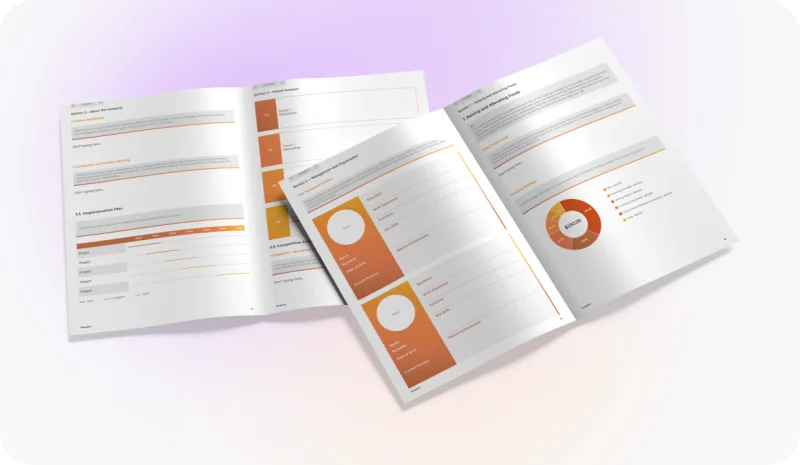
The downloadable car wash business plan template organizes these decisions into a lender-ready document. It includes the executive summary, company description, market analysis, services, operations, management, marketing, funding, and projected financial statements.
A useful car wash business plan example must connect its narrative with its numbers. If the plan promises a high-volume express tunnel, the forecast must reflect conveyor capacity, stacking space, operating hours, equipment downtime, labor, and site traffic. If the concept depends on detailing, labor hours and service-bay capacity will limit revenue more than the washing equipment.
This distinction matters because car wash models are not financially interchangeable. A mobile car wash business plan may center on technician productivity and route density. A tunnel car wash business plan depends much more heavily on site traffic, throughput, membership conversion, and capital utilization.
Choose the Car Wash Business Model
The operating format determines capital requirements, labor intensity, site needs, pricing, and revenue capacity. The plan should select a primary model before estimating startup costs or sales.
Express Tunnel
An express tunnel moves vehicles through a conveyorized wash process and typically competes on speed, consistency, convenience, and subscription membership. Its economics depend on high throughput and equipment uptime.
Theoretical conveyor capacity should not be confused with achievable sales. A tunnel may be technically capable of processing many vehicles per hour, but actual volume can be limited by site access, payment speed, vehicle loading, staffing, weather, queue length, or local demand.
An automatic car wash business plan for an express tunnel should show peak and average cars per hour, operating hours, downtime assumptions, membership usage, and the traffic volume required to support the investment.
Automatic In-Bay
An in-bay automatic system washes one stationary vehicle at a time. It requires less land and may fit alongside a convenience store, gas station, dealership, or existing automotive business. Capacity is lower than a tunnel because each vehicle occupies the bay for the full wash cycle.
The financial model should calculate realistic cycles per hour and account for payment, entry, wash, drying, and exit time. A second bay can increase capacity, but only if site circulation and demand support it.
Self-Service
A self service car wash business plan should model revenue by bay-hour rather than applying tunnel assumptions. Customers provide the labor while the business supplies the bay, water, chemicals, pressure equipment, vacuums, and payment system.
Self-service facilities can operate with limited staffing, but equipment misuse, vandalism, cleaning, cash controls, freeze protection, and maintenance remain material concerns. Revenue depends on bay occupancy, average session value, operating hours, and the number of days affected by weather or equipment outages.
Full-Service
A full-service wash combines automated exterior cleaning with interior vacuuming, wiping, finishing, or detailing. The format can produce a higher average ticket, but labor becomes a central capacity constraint.
The plan should measure labor minutes per vehicle, rework, employee utilization, scheduling, and payroll burden. High sales do not guarantee strong margins if service packages are underpriced relative to the labor required.
Mobile Car Wash
A mobile operator reduces fixed-site investment but introduces route planning, travel time, water usage and power access, vehicle capacity, and technician productivity. The business may serve residential customers, office locations, dealerships, rental fleets, or commercial vehicles.
A mobile car wash business plan should forecast appointments per crew per day, average service time, travel time, cancellation rates, average ticket, and repeat-booking frequency. Adding technicians without increasing route density can raise payroll faster than revenue.
Location and Demand Analysis
For a fixed-site wash, location is part of the production system. Traffic volume is valuable only when drivers can see the business, enter safely, navigate the property, and exit without excessive delay.
The market analysis should review traffic counts, road direction, turning restrictions, speed limits, visibility, signage, intersection access, stacking capacity, nearby retail activity, vehicle registrations, household density, income, commuting patterns, apartment concentration, weather, and planned development.
Raw traffic counts should not be converted directly into revenue. The relevant progression is: Passing traffic × addressable traffic × site capture rate × purchase conversion = customer volume
Vehicles traveling in the wrong direction, moving too quickly to enter, or using the road for purposes unrelated to the trade area may contribute little practical demand. A lower-traffic site with better access can outperform a higher-traffic property with difficult turns or inadequate stacking. Competitor analysis should record wash format, prices, package design, membership fees, tunnel length, visible queue, review quality, operating hours, equipment age, free-vacuum offer, detailing services, and promotional activity. Nearby competition is not automatically negative—it may confirm demand—but the plan must identify why customers will choose the proposed site.
Weather should be treated as a source of volatility rather than a simple demand driver. Rain can suppress immediate volume, while road salt, pollen, dust, and post-storm conditions may increase subsequent demand. Monthly projections should therefore use local historical patterns rather than evenly dividing annual sales by twelve.
Services, Packages and Memberships
A practical menu usually includes several exterior wash packages, monthly memberships, fleet accounts, detailing or interior services, and selected add-ons. The structure should guide customers toward higher-value purchases without making the choice confusing.
Each wash package needs a clear difference in customer value and variable cost. Adding chemicals or process steps that customers do not understand can increase cost without improving conversion. The plan should track average ticket by package, not only the posted price of the most expensive wash.
Membership revenue can reduce dependence on daily transaction volume. The basic formula is: Monthly membership revenue = Active members × Average monthly membership fee
Recurring revenue is not automatically high-margin revenue. Members may wash more frequently than retail customers, creating additional chemical, water, electricity, equipment-wear, and queue costs. The model should therefore track average member visits per month and variable cost per visit.
Churn also matters. A location can sell hundreds of new memberships while its active base remains flat because cancellations offset acquisition. Forecasts should separately show beginning members, new sign-ups, cancellations, and ending members.
Fleet accounts can add weekday volume, but negotiated prices, invoicing, vehicle size, wash frequency, and payment timing affect profitability. Detailing and interior services may increase the average ticket, although labor and bay capacity must be modeled separately.
Monthly Retail Wash Revenue Calculator
Site, Equipment and Capacity
Site planning should connect physical layout with revenue capacity. The plan must identify entry points, stacking lanes, pay stations, wash bays or tunnel, equipment room, vacuum spaces, detailing areas, drainage, utility connections, employee areas, and exit circulation.
For an automatic wash, practical hourly capacity is constrained by the slowest operational stage. A high-capacity tunnel cannot reach its rated throughput if a single pay station creates a queue or attendants cannot load vehicles consistently. Likewise, limited stacking space can force potential customers back onto the road during peak periods.
Equipment selection should follow the operating model and expected volume. The plan should identify wash equipment, conveyors, pumps, dryers, boilers or heating systems, vacuums, compressors, payment terminals, license-plate recognition where used, chemical systems, water treatment, reclamation equipment, security systems, and backup components.
The capacity model should distinguish:
| Capacity measure | What it shows |
|---|---|
| Rated equipment capacity | Manufacturer’s theoretical vehicles per hour |
| Practical operating capacity | Sustainable volume under normal conditions |
| Peak realized throughput | Highest completed volume during peak demand |
| Average daily volume | Normal sales across all operating hours |
| Downtime-adjusted capacity | Volume after planned and unplanned outages |
Investment decisions should use practical capacity, not the manufacturer’s maximum. Equipment capable of processing 150 vehicles per hour creates little economic value if the site attracts only 250 vehicles per day.
Maintenance is equally important. The operations plan should document inspections, lubrication, chemical calibration, water-quality checks, cleaning, replacement intervals, critical spare parts, vendor support, and expected downtime. Deferred maintenance may improve short-term cash flow but increases the probability of larger revenue interruptions.
Car Wash Startup Costs
Startup costs vary dramatically by model, property, equipment selection, construction requirements, utility capacity, and local permitting. The following figures are illustrative planning ranges, not industry averages or contractor quotations.
| Startup category | Mobile operation | Fixed-site wash |
|---|---|---|
| Business formation, permits, and professional fees | $1,000–$5,000 | $10,000–$75,000 |
| Vehicle or service unit | $15,000–$70,000 | — |
| Wash and detailing equipment | $5,000–$30,000 | $150,000–$1,500,000+ |
| Land or lease deposits | $2,000–$10,000 | $25,000–$500,000+ |
| Site work, construction, and utility connections | Limited | $250,000–$3,000,000+ |
| Water treatment and reclamation | $2,000–$15,000 | $50,000–$500,000+ |
| Payment, POS, cameras, and software | $1,000–$8,000 | $20,000–$150,000 |
| Opening chemicals and supplies | $1,000–$5,000 | $5,000–$25,000 |
| Insurance and operating deposits | $2,000–$10,000 | $10,000–$50,000 |
| Signage and launch marketing | $2,000–$15,000 | $25,000–$150,000 |
| Recruitment and opening payroll | $2,000–$10,000 | $20,000–$100,000 |
| Working-capital reserve | $10,000–$40,000 | $75,000–$500,000+ |
A self-service conversion, in-bay automatic installation, new tunnel development, and mobile operation should each have a separate budget. Combining them into one “average car wash startup cost” produces a figure that is not useful for financing.
Property acquisition should also be separated from construction and equipment. A project can remain within its equipment budget and still experience a funding gap because of drainage work, electrical upgrades, utility connections, engineering, permitting delays, or interest during construction.
Operating Costs
Operating expenses should be divided into costs that vary with wash volume and costs that continue regardless of traffic.
Chemicals, water, sewer charges, electricity used during the wash cycle, merchant fees, towels, and certain equipment wear generally rise with volume. Labor may be variable, fixed, or mixed depending on the staffing model.
Rent, property taxes, insurance, management payroll, software, security, base utility charges, marketing, and debt service are primarily fixed. Maintenance should not be treated as fully discretionary. Equipment may require routine spending even during low-volume periods.
The relevant unit metric is contribution per wash: Contribution per wash = Average ticket − variable cost per wash
Suppose a wash generates an average ticket of $18 and incurs $3.50 in chemicals, utilities, merchant fees, and other volume-related costs. It contributes $14.50 toward labor, occupancy, maintenance, marketing, management, and debt service.
Reducing chemical application by a small amount may improve unit economics, but only if wash quality and retention remain stable. A cheaper wash that generates complaints, rewashes, or membership cancellations can produce a worse financial result.
Car Wash Financial Projections
Financial projections should model retail transactions and memberships separately. A practical monthly structure is:
Retail revenue = Retail cars × Average retail ticket Membership revenue = Active members × Monthly membership fee
The following automatic-wash example uses hypothetical assumptions and is not an industry benchmark.
| Financial driver | Illustrative monthly assumption |
|---|---|
| Retail vehicles per day | 120 |
| Operating days | 30 |
| Average retail ticket | $18 |
| Retail wash revenue | $64,800 |
| Active membership accounts | 1,200 |
| Average membership fee | $29 |
| Membership revenue | $34,800 |
| Detailing, fleet, and add-on revenue | $10,000 |
| Total monthly revenue | $109,600 |
| Wash-level variable costs | $19,500 |
| Direct operating labor | $22,000 |
| Repairs and maintenance | $7,500 |
| Occupancy, insurance, and administration | $20,500 |
| Marketing and membership acquisition | $5,000 |
| Equipment and property debt service | $24,000 |
| Illustrative monthly cash surplus | $11,100 |
The model should also show member activity. If 1,200 members wash an average of 2.5 times per month, they generate 3,000 monthly wash cycles in addition to retail volume. Those visits consume chemicals, water, utilities, equipment capacity, and maintenance even though revenue does not increase with each visit.
Membership projections should use a roll-forward calculation:
| Membership driver | Illustrative assumption |
|---|---|
| Beginning active members | 1,200 |
| New memberships sold | 120 |
| Monthly churn | 5% |
| Canceled memberships | 60 |
| Ending active members | 1,260 |
A projection that adds new members without subtracting churn materially overstates recurring revenue.
Break-even depends on contribution from both retail washes and memberships. If fixed operating costs and debt service total $72,000 per month and the blended contribution margin is 75%, the illustrative break-even revenue is: $72,000 ÷ 75% = $96,000 per month
Capacity should then be tested. If break-even requires more cars per day than the site can physically process—or more traffic than the location can realistically capture—the project is not financeable on its current assumptions.
The first year should be modeled monthly. Construction timing, opening promotions, membership ramp-up, weather, equipment interruptions, and debt payments can create cash shortages that disappear in an annual summary.
What Lenders Check First
| Lenders verify | Numbers reviewed first | Common reason for concern |
|---|---|---|
| Site demand | Traffic, capture rate, and expected cars per day | Forecast converts passing traffic directly into sales |
| Practical capacity | Cars per hour and peak queue length | Revenue exceeds site or equipment throughput |
| Membership quality | Active members, churn, and wash frequency | Sign-ups grow without cancellations or usage costs |
| Project cost | Contractor bids and equipment quotations | Budget excludes utilities, drainage, or contingency |
| Unit economics | Ticket and variable cost per wash | Gross sales presented without wash-level costs |
| Equipment resilience | Maintenance budget and downtime | Forecast assumes continuous operation |
| Repayment capacity | Cash flow after debt service | Profit excludes principal or ramp-up losses |
| Liquidity | Opening reserve and downside coverage | No cash buffer for delays or equipment failure |
A lender will not rely exclusively on the property value or equipment collateral. The operating business must generate enough cash to service its obligations after normal maintenance and replacement spending.
Funding a Car Wash
A funding request should separate real estate, site development, equipment, and working capital. These uses have different useful lives, collateral characteristics, draw schedules, and repayment implications.
Land acquisition or major construction may require long-term financing. Wash equipment can often be financed according to its expected useful life. Working capital should cover preopening payroll, training, marketing, chemicals, utilities, debt service, and the period required to build recurring demand.
A lender-ready plan should include property documentation, construction estimates, equipment quotations, permits, environmental or engineering reports where applicable, owner equity, the opening schedule, and a detailed sources-and-uses table.
The forecast should also explain how the business will fund equipment replacement. A car wash may report accounting profit while failing to accumulate enough cash to replace major components. Depreciation is not itself a cash reserve.
For a mobile operation, financing priorities are different. Vehicles and equipment may represent the largest asset requirement, while working capital must cover payroll, fuel, insurance, and marketing during the customer-acquisition period.
Environmental and Operational Considerations
Wash water may contain dirt, oil, grease, detergents, and other contaminants. The EPA warns that improperly managed vehicle wash water can affect surface water and groundwater. Commercial operators must verify wastewater, sewer, stormwater, chemical-storage, and discharge requirements with the relevant local and state authorities.
A water-reclamation system can reduce freshwater demand by reusing treated water during appropriate wash stages. EPA guidance notes that treatment requirements depend on how reclaimed water will be used; separation of grit, oil, and grease is a minimum step for certain applications.
The business case should be based on site-specific utility prices, water quality, equipment requirements, maintenance costs, and applicable rules. Environmental technology should not be presented as an automatic financial benefit without calculating installation and operating costs. Operational controls should also address vehicle damage claims, chemical handling, slip hazards, employee safety, security, cash controls, equipment shutdowns, freezing conditions, and customer complaints.
Car Wash Business Plan Template and Sample
A car wash business plan sample can demonstrate structure, but it cannot supply the operating assumptions for another location. Traffic capture, wash pricing, membership adoption, utility costs, site capacity, and financing terms must be specific to the proposed business.
Personalize the template with actual traffic data, competitor pricing, property terms, equipment specifications, contractor estimates, utility rates, staffing plans, membership assumptions, and lender quotations.
An express-tunnel model should emphasize throughput, memberships, and equipment uptime. A self-service plan should focus on bay utilization and session value. A mobile model should prioritize route density and technician productivity. Copying one format’s economics into another undermines the entire forecast.
Build the Plan Around Site-Level Economics
A car wash is not scalable merely because its equipment can process more vehicles. It becomes scalable when the site generates sufficient demand, memberships retain customers, equipment remains available, and each completed wash produces enough contribution to support the capital invested.
Growexa connects site traffic, wash volume, average ticket, memberships, operating costs, equipment, and financing in one lender-ready model.