
Start with official databases, not grant roundups. Grants.gov is the central search system for federal funding opportunities, while specialized federal agencies maintain their own program information.
Do not assume “small business” means eligible. Many government programs support economic development but award funds to nonprofits, universities, local governments, tribes, intermediaries, or narrowly defined businesses rather than ordinary for-profit startups.
Search by project and industry, not only by “small business grant.” Research, technology, agriculture, manufacturing, energy, exporting, and community-development programs often use specialized eligibility criteria.
Treat deadlines and funding amounts as volatile information. A legitimate program can be closed today, reopen later, change its award limits, or modify eligibility in a new funding cycle.
Prepare the business case before the application window becomes urgent. Market evidence, project budgets, financial projections, milestones, management capability, and use of funds frequently require more preparation than filling out the application itself.
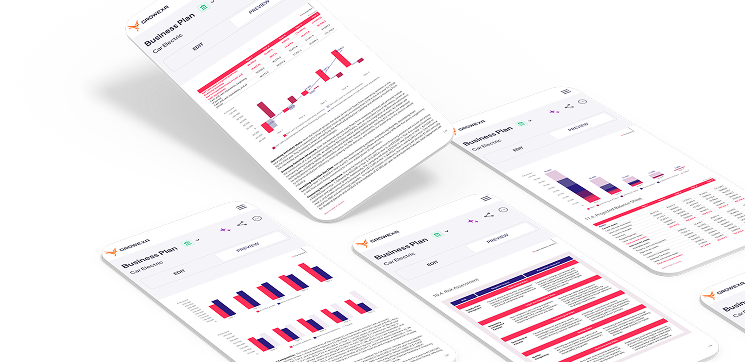

Create a Business Plan in 5 Minutes with AI

Searching for small business grants becomes easier once one misconception is removed: there is no broad federal program handing out free startup capital to ordinary businesses simply because they are small.
The U.S. Small Business Administration explicitly states that it does not provide grants for starting or expanding a business. Its grant activity is concentrated in narrower areas, including scientific research, manufacturing-related initiatives, support organizations, and exporting.
That does not mean grants for small business are fictional. Federal research programs fund eligible technology companies. State and local governments periodically fund economic-development priorities. Industry programs target specific projects. Foundations and corporations run private competitions. The difficulty is that grants are purpose-specific, eligibility-specific, and often temporary.
For entrepreneurs searching for small business grants 2027, the right strategy is therefore not to build a static list of “top grants.” It is to build a repeatable discovery process using authoritative sources and verify every opportunity immediately before applying.
A grant provides funding under defined program rules without functioning like a conventional loan or equity investment. When a business legitimately receives grant funding, it generally does not repay principal and interest as it would with debt, nor does it normally surrender ownership simply because it received the award.
That does not make the money unrestricted.
Grant programs usually specify eligible applicants, eligible activities, allowable costs, reporting obligations, performance periods, and other conditions. Some require cost sharing or matching funds. Others reimburse qualifying expenditures rather than providing unrestricted cash in advance.
Loans work differently because capital must generally be repaid under agreed terms. Equity financing exchanges ownership or economic rights for capital. Tax credits reduce qualifying tax liabilities and operate under tax rules rather than as conventional grant awards.
The distinction matters because entrepreneurs frequently search for startup grants when what they actually need is flexible working capital. A grant restricted to a research project, employee-training program, or specific equipment purchase may be valuable without solving payroll, rent, inventory, or other general liquidity needs.
The correct funding question is therefore not simply, “Can I get a grant?” It is, “Does an active funding program support the specific project I need to finance?”
For federal opportunities, begin with Grants.gov rather than commercial grant directories. The platform allows users to search and filter federal opportunities, and its help documentation explains keyword, opportunity-number, assistance-listing, and faceted searches. Saved searches can also be used to receive notifications about matching opportunities.
The important limitation is that a federal grant appearing in search results is not necessarily available to a conventional small business. Each Notice of Funding Opportunity defines eligible applicants. A search may return programs intended for universities, state agencies, nonprofits, tribal entities, research organizations, or other categories.
The U.S. Small Business Administration should also be checked, but entrepreneurs need to understand what SBA grants actually mean. SBA says it does not provide grants for starting or expanding an ordinary business. Its grant-related programs are much narrower.
One major exception for qualifying companies is America's Seed Fund through SBIR and STTR. These programs support technology-focused small businesses conducting research and development aligned with federal needs. The official program site says participating agencies collectively invest about $4 billion annually and fund roughly 4,000 companies per year.
Some of the most relevant local business grants never become permanent national programs. States, counties, cities, economic-development agencies, and redevelopment organizations may launch temporary programs tied to job creation, downtown occupancy, equipment investment, façade improvements, energy efficiency, disaster recovery, exports, or targeted industries.
Navigating government grants for small business often requires researching state-level economic development offices to identify active small business funding programs and regional grant funding opportunities.
Search the official economic-development and commerce websites for the state where the business operates. Then check county and city economic-development departments, local redevelopment agencies, and other public organizations responsible for business growth.
Do not assume that a program labeled “business development” pays grants directly to businesses. USDA's Rural Business Development Grants illustrate the distinction. The program supports rural economic-development activities, but USDA states that eligible direct applicants include public entities, federally recognized tribes, and nonprofit entities serving rural areas; individual for-profit businesses are not direct grant recipients under that program. The 2026 application cycle is currently closed.
That distinction is easy to miss in secondary grant lists and is exactly why eligibility should be verified at the original source.
Industry and project characteristics can be more important than the age or size of the business.
Technology companies conducting qualifying R&D should examine SBIR/STTR opportunities through America's Seed Fund. The program operates through participating federal agencies and is designed to move scientific and technological innovations toward commercialization.
Funding can be significant. The program currently describes typical Phase I awards of $50,000–$275,000 and Phase II awards that can reach $1.8 million, although actual solicitations and agency awards vary. SBA also notes higher statutory award thresholds that participating agencies can use without requesting a waiver, so applicants should rely on the specific solicitation rather than a generic funding figure.
Agriculture and rural-development businesses should monitor USDA Rural Development and other relevant USDA agencies. Economic-development projects can also be researched through the U.S. Economic Development Administration's funding opportunities. Again, many of these programs fund organizations, partnerships, or development projects rather than giving unrestricted startup cash to individual businesses.
The same research principle applies to energy, advanced manufacturing, health, defense, environmental technology, and other sectors: search the federal agency responsible for the problem the business solves.
Private companies, foundations, accelerators, trade organizations, and financial institutions periodically offer grants for entrepreneurs. These can be more accessible to conventional businesses than federal research programs, but they are also less stable.
A corporate grant may run for one application cycle and disappear. Funding amounts can change. Geographic restrictions may be introduced. A program that accepted startups last year may require operating history this year. For that reason, this article does not treat a corporate program as permanently “available” simply because it has existed before. Before publishing or applying, verify the current application page, eligibility criteria, award amount, deadline, official rules, and sponsor identity.
Private grants should be evaluated as live opportunities, not evergreen financing products.
Some public and private programs define eligibility around a founder population, geography, business type, community served, or economic objective.
That can include programs designed for veterans, rural businesses, exporters, manufacturers, researchers, businesses in designated communities, or entrepreneurs participating in specific development initiatives.
The category requires careful wording. Belonging to a particular demographic or business group does not mean an entrepreneur automatically qualifies for grant funding. Each program can define ownership thresholds, residency, business age, revenue, industry, project location, certification, or other requirements differently.
Treat the program rules—not the grant's marketing label—as the definition of grant eligibility.
Because availability changes, a useful comparison table should distinguish searchable funding sources from specific currently verifiable programs.
| Program / Source | Funding Type | Target Applicant | Potential Funding | Status / Timing | Official Source |
|---|---|---|---|---|---|
| Grants.gov | Federal opportunity database | Varies | Varies by individual opportunity | Continuously updated | Search Grants.gov |
| SBA grant programs | Specialized federal programs | Varies; ordinary startup/expansion grants are not generally offered by SBA | Program-specific | Program-specific | SBA Grants |
| SBIR/STTR | Federal R&D funding | Eligible U.S. technology/R&D small businesses | Typical Phase I: $50K–$275K; Phase II can reach $1.8M | Solicitations vary by agency | America's Seed Fund |
| NIH/CDC/FDA Parent SBIR | SBIR research grant | Eligible small businesses conducting qualifying R&D | Solicitation-specific | Current solicitation includes Jan. 5 and Apr. 5, 2027 due dates | SBIR opportunity listing |
| USDA Rural Business Development Grants | Rural economic-development grants | Eligible public bodies, tribes and nonprofits serving rural areas; not individual for-profit businesses | Program/project-specific | 2026 cycle closed; future cycle must be verified | USDA Rural Development |
| EDA funding opportunities | Federal economic-development funding | Eligibility varies by NOFO | Program-specific | Multiple programs; check current NOFO | EDA Funding Opportunities |
| State/local economic-development programs | State or local grants/incentives | Geography and program-specific | Varies | Local cycle/deadline | Relevant official state/city agency |
The table also shows why a list titled “free grants for any small business” is usually misleading. The most substantial government programs often exist because a business or project advances a defined public objective, not simply because the applicant needs capital.
Grant fraud often exploits the idea that government money is waiting to be claimed.
The Federal Trade Commission warns that the government does not contact people unexpectedly to offer free grant money. Legitimate federal grants require an application for a specific purpose. The FTC also warns against requests for upfront fees and demands for payment through gift cards, wire transfers, cash, or cryptocurrency.
A legitimate opportunity should be traceable to an official government agency or identifiable private sponsor. For federal grants, confirm the opportunity through Grants.gov or the responsible agency. For private grants, verify the sponsor's official site and read the full program rules.
Application fees deserve particular scrutiny. Paying a legitimate professional to help prepare a proposal is different from being told that a government agency requires a processing fee before releasing an award. The FTC specifically identifies upfront payment demands as a grant-scam warning sign.
Be equally cautious with sensitive information. A real application can eventually require detailed organizational and financial information, but an unsolicited message asking immediately for a Social Security number, bank details, or payment credentials is a serious warning sign.
Grant applications should begin with eligibility, not writing.
Use this checklist before committing substantial time to a business grant application:
For SBIR/STTR specifically, applicants need a Unique Entity ID from SAM.gov to receive an award, and the program advises entrepreneurs to begin registration and opportunity research before proposal submission.
A business plan for a grant helps answer a question the project budget alone cannot: what happens economically after the grant money is spent?
Grant reviewers may need to understand the business model, target market, customer demand, competitive position, management capability, operating plan, financial condition, project budget, and expected outcomes. The exact requirements depend on the program; not every grant requests a conventional business plan.
Where a plan is required, it should be built around the funding purpose rather than recycled unchanged from another financing application. Suppose a manufacturer requests grant funding for new equipment. The application should not merely state that the machine costs $150,000. The business case should show what capacity constraint exists today, how the equipment changes production, whether sufficient customer demand exists, what additional labor or working capital will be required, and whether the company can operate the expanded capacity after the grant period.
The financial projections should tell the same story. If the equipment doubles production capacity but the sales forecast does not change, the strategic logic is incomplete. If sales increase substantially but payroll and working capital remain flat, the financial logic may be equally weak.
That is why preparing a business plan for a grant can be useful even when the application form asks for only selected sections. It forces management to connect the funding request to the economics of the business.
An eligibility mismatch is the most avoidable failure. Entrepreneurs sometimes spend hours preparing applications for programs whose rules exclude their entity type, geography, industry, business stage, or intended use of funds.
Incomplete submissions create another preventable problem. Missing attachments, registrations, signatures, budgets, certifications, or required responses can undermine an otherwise strong proposal.
Vague use of funds is more substantive. “Marketing,” “growth,” or “equipment” does not explain what will be purchased, why it is necessary, how the cost was determined, or what measurable result the spending should produce.
Weak financial logic can create the same problem. If the project requires matching funds, future operating expenses, or additional working capital, the applicant should be able to show where that capital comes from.
Documentation also matters because grants are rule-based funding instruments. A claim that cannot be supported may carry little weight even when it sounds commercially reasonable.
Finally, deadlines are absolute in many programs. A strong application submitted after the cutoff may simply be ineligible for consideration. The most productive way to approach how to find small business grants is to stop treating grants as a separate pool of money waiting for businesses to discover it.
Funding follows objectives. Federal agencies fund research or public priorities. State and local programs support specific economic-development goals. Private organizations establish their own commercial or social objectives. The entrepreneur's task is to find the intersection between an eligible project and an active funding program.
That approach produces fewer apparent opportunities—but far more relevant ones.
For small business grants 2027, begin with official databases, verify every eligibility rule and deadline at the source, and prepare the business case before the application window becomes urgent. When a program requires commercial evidence, a strong business plan for a grant should show not merely why the business wants funding, but why the proposed use of capital is economically credible.
Legitimate grants exist, but “free money for any small business” is misleading. Real programs have defined eligibility, allowable uses, application requirements, and often reporting obligations. SBA explicitly states that it does not provide grants simply to start or expand an ordinary business.
Generally, no. SBA states that it does not provide grants for starting and expanding businesses. It supports narrower grant programs, including SBIR/STTR for qualifying research and development and programs involving entrepreneurship-support organizations, manufacturing initiatives, and exporting.
Yes, under some programs. SBIR/STTR, for example, is specifically designed to support eligible technology-focused small businesses and startups pursuing qualifying R&D. Other programs may require operating history, particular locations, industries, or applicant types. Eligibility must be checked program by program.
A legitimate grant is generally not repaid like a conventional loan when the recipient complies with the award terms. However, recipients must follow program rules governing eligible expenditures, reporting, performance, and other conditions. A grant should not be treated as unrestricted cash.
Not always. Requirements vary substantially. Some applications request a formal plan; others require project narratives, commercialization plans, budgets, financial information, market evidence, or similar components. Even when a conventional business plan is not mandatory, the underlying business logic still needs to be defensible.


