
Use a one-page business plan for clarity and early decisions. It works well for idea validation, internal alignment, initial discussions, and straightforward owner-operated businesses.
Use a full plan when evidence matters. Lenders, investors conducting due diligence, and regulated or capital-intensive businesses typically require supporting financial and operational detail.
Keep financial assumptions visible. Even a one-page plan should identify revenue drivers, major costs, funding needs, and measurable milestones.
Treat the short plan as a starting point, not a substitute for analysis. A concise document can summarize research without containing every supporting calculation.
Expand only when the decision requires it. The transition to a full business plan should follow financing needs, operating complexity, and the expectations of external stakeholders.
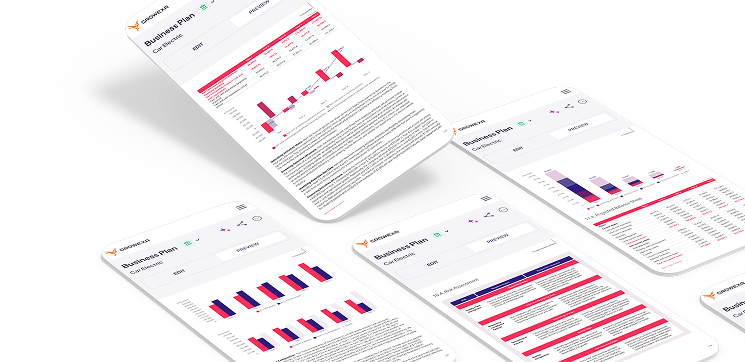

Create a Business Plan in 5 Minutes with AI

A one-page business plan is a condensed description of how a business intends to create value, reach customers, generate revenue, and achieve its immediate objectives. Unlike a traditional business plan, which may include extensive market research, financial statements, operational procedures, and supporting documents, a one-page plan presents the essential commercial logic in a compact format.
Using a standardized one page business plan template helps founders quickly organize key assumptions and refine their commercial model.
Its purpose is to make the business model understandable and testable. A reader should be able to identify the target customer, the problem being addressed, the proposed solution, the revenue mechanism, the principal costs, and the next steps.
The format is particularly useful when important assumptions remain uncertain. Early-stage founders often lack reliable data on customer acquisition costs, conversion rates, repeat purchases, or operating margins. A concise plan can distinguish what is known from what must still be tested.
However, brevity should not be confused with simplicity. A well-developed one-page plan may summarize substantial research and financial analysis. The document is short because it prioritizes decisions, not because the underlying business has no complexity.
Founders can use a structured one-page business plan to organize the business concept and its financial assumptions without immediately producing a comprehensive report.
A one-page plan is generally sufficient when the immediate objective is to evaluate an idea, coordinate a small team, or communicate a business concept rather than secure a formal financing commitment.
The strongest use cases share one characteristic: the decision can be made using a limited number of commercial assumptions, and the consequences of an incorrect assumption are manageable.
Validating a business idea. Before investing heavily in product development, founders need to establish whether a defined customer segment experiences a meaningful problem and is willing to pay for a solution. A one-page plan can connect the customer proposition, pricing hypothesis, acquisition channel, and initial validation milestones.
Internal planning. Small businesses often need a practical operating reference rather than a lengthy strategic document. A concise plan can establish revenue targets, cost limits, priorities, and performance indicators that management reviews regularly.
Founder alignment. Early-stage teams may agree on a broad concept while holding different assumptions about the target customer, business model, or growth strategy. Documenting these choices on one page makes disagreements visible before they become expensive execution problems.
Early conversations. A short plan can support introductory discussions with advisers, potential partners, mentors, and prospective investors. It communicates the concept efficiently without requiring the recipient to review detailed supporting materials. However, a positive initial conversation does not mean the same document will satisfy later due diligence.
Networking and business development. Consultants, freelancers, and service-based entrepreneurs can use a concise plan to explain their positioning, target market, and commercial objectives. The format is especially useful when the business model is straightforward and does not require substantial external capital.
Simple owner-operated businesses. A solo consultant, independent designer, or small service provider may be able to manage the business using a short strategic plan supported by separate cash-flow and expense records. The need for a longer document generally increases when the business adds employees, locations, debt, or operational complexity.
The underlying principle is proportionality. Planning effort should reflect the scale of the decision and the financial consequences of getting it wrong.
A one-page plan becomes insufficient when stakeholders need to verify assumptions, assess financial risk, or evaluate an organization's ability to meet contractual and regulatory obligations. So, when do you need a full business plan?
Bank financing. Lenders generally require more than a description of the business concept. Depending on the financing product and borrower, they may review historical financial statements, cash-flow forecasts, debt obligations, collateral, owner equity, and repayment capacity. A one-page summary can introduce the business, but it cannot replace the financial documentation required for underwriting.
SBA and lender review. SBA-backed financing does not have one universal documentation package applicable to every loan. Requirements depend on the program, lender, borrower, and transaction. Nevertheless, a business seeking significant financing should expect to substantiate revenue assumptions, startup expenditures, management experience, and projected cash flow. A full business plan for a bank loan is generally more appropriate when the lender requests a detailed business narrative and projections.
Investor due diligence. A concise plan may be useful for an initial investor introduction, but professional investors typically need deeper evidence before committing capital. They may examine market sizing, customer traction, unit economics, competitive advantages, capitalization, financial forecasts, and potential returns. The one-page document can function as an executive overview rather than the complete investment case.
Complex financial projections. Businesses with substantial inventory, long sales cycles, multiple revenue streams, or significant capital expenditure need detailed financial models. A single-page summary cannot adequately demonstrate how working capital, debt service, depreciation, or seasonal demand affects liquidity.
Regulated businesses. Healthcare, financial services, childcare, and other regulated activities may require licensing documentation, compliance policies, staffing plans, and detailed operational procedures. A short business plan does not replace these obligations.
Multiple operating units. A business managing several locations, product lines, or subsidiaries needs visibility into performance at both the unit and consolidated levels. A one-page overview may communicate strategic priorities, but management decisions require more detailed operational and financial reporting.
The critical distinction is between explaining a business and demonstrating that it can execute its strategy under realistic financial and operating conditions.
The two formats serve different purposes. A one-page business plan emphasizes strategic clarity, while a full business plan provides supporting evidence for complex decisions.
| Comparison criteria | One-page business plan | Full business plan |
|---|---|---|
| Primary purpose | Clarify the business model and immediate priorities | Demonstrate commercial, operational, and financial feasibility |
| Typical audience | Founders, small teams, advisers, early contacts | Lenders, investors, partners, management |
| Length | Approximately one page | Multiple sections with supporting schedules |
| Financial depth | Revenue drivers, major costs, basic targets | Detailed forecasts, cash flow, assumptions, scenarios |
| Market research | Target customer and core market hypothesis | Market sizing, segmentation, competition, evidence |
| Operating detail | Key activities and resources | Staffing, processes, suppliers, capacity, execution |
| Risk analysis | Principal uncertainties | Quantified risks and mitigation strategies |
| Typical use | Idea validation, alignment, initial discussions | Financing, due diligence, expansion, major investments |
| Update frequency | Often revised as assumptions change | Updated around material strategic or financial decisions |
A full plan is not automatically better. Preparing a 30-page document for an untested idea may create unnecessary work and encourage founders to present uncertain assumptions as established facts.
Conversely, using a one-page format for a business requiring substantial financing can conceal critical information. The appropriate choice depends on the level of evidence required, not the perceived sophistication of the document.
The most efficient approach is to maintain a concise strategic summary while expanding the supporting analysis as the business develops.
Selecting a clear one page business plan format ensures that all essential elements are visually structured and easy for readers to digest. An effective format should contain enough information to explain the business model and identify the assumptions management must validate. It should not attempt to reproduce every section of a traditional business plan in smaller type.
The following structure works for many early-stage businesses.
| Component | What to include | Decision it supports |
|---|---|---|
| Business concept | Product or service and the problem it solves | Is the proposition clear? |
| Target customers | Specific customer segments and purchasing needs | Who is likely to buy? |
| Value proposition | Differentiation and customer benefits | Why choose this business? |
| Revenue model | Pricing, sales volume, and revenue sources | How will the business earn money? |
| Sales and marketing | Principal acquisition channels | How will customers be reached? |
| Operations | Essential resources, suppliers, and activities | Can the product or service be delivered? |
| Financial snapshot | Startup funding, major costs, revenue target, break-even | Is the model economically plausible? |
| Milestones | Near-term objectives and performance indicators | What must happen next? |
The financial snapshot deserves particular attention. A business plan that explains the product and market but omits financial assumptions is closer to a concept note than an operating plan.
Even a preliminary financial model should identify the variables that determine profitability. For a service business, these might include the number of paying customers, average contract value, delivery costs, and monthly overhead. For a retailer, the critical variables may be transaction volume, average purchase value, gross margin, and inventory requirements.
Founders should also distinguish targets from evidence. An expected $20,000 in monthly revenue is a forecast until supported by contracts, customer activity, or other credible demand indicators.
The strongest one-page plans communicate these uncertainties directly. Rather than presenting an unsupported growth projection, they identify the assumptions that need testing and the milestones that will confirm whether the business model is viable.
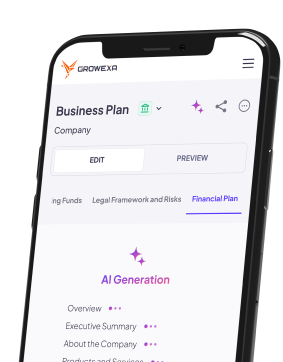
Reviewing a real-world one page business plan example helps illustrate how to summarize core commercial operational assumptions concisely.
Consider a hypothetical bookkeeping service targeting small professional firms. The founder intends to operate remotely, acquire clients through referrals and direct outreach, and generate recurring revenue through monthly service contracts.
The following one-page business plan example illustrates how commercial assumptions can be summarized without preparing a lengthy document.
At 30 clients, the service would generate $15,000 in monthly revenue. Variable delivery expenses of $3,000 and fixed costs of $4,800 would leave $7,200 in monthly operating profit under the stated assumptions, before any additional expenses or taxes not included in the model.
These figures are hypothetical. The purpose of the example is to show how a concise plan can connect customer acquisition, pricing, service capacity, and financial performance.
The example also exposes important questions. Can the founder acquire 30 clients within twelve months? How many clients can one person serve without sacrificing quality? Will additional staffing increase fixed expenses before the revenue target is achieved?
A one-page plan is useful precisely because it makes those questions visible. The next step is to test them rather than replace uncertainty with more detailed but unsupported forecasts.
Expanding a one-page business plan should be a structured process, not an exercise in adding descriptive text. Each section of the short plan becomes the starting point for deeper evidence, financial analysis, and operational planning.
The customer section can develop into market research covering market size, segmentation, purchasing behavior, and competitive alternatives. The value proposition can expand into product positioning, pricing strategy, and evidence of customer demand.
The revenue model should become a detailed forecast showing the relationship between customers, transaction volume, pricing, and recurring or one-time revenue. Operating assumptions should be translated into staffing requirements, supplier costs, delivery capacity, and capital expenditure.
Financial projections require the greatest expansion. A full plan should connect revenue assumptions with direct costs, operating expenses, profit and loss, cash flow, and funding requirements. For businesses with inventory, debt, or significant fixed assets, the model may also require balance sheet forecasts and supporting schedules.
| One-page component | Supporting analysis in a full plan |
|---|---|
| Target customers | Market research, segmentation, demand evidence |
| Value proposition | Competitive analysis, product strategy, differentiation |
| Revenue model | Pricing assumptions, sales forecast, customer economics |
| Marketing channels | Acquisition budget, conversion assumptions, sales process |
| Operations | Staffing, suppliers, capacity, delivery processes |
| Financial snapshot | P\&L, cash flow, balance sheet, break-even, scenarios |
| Milestones | Implementation schedule, responsibilities, performance indicators |
| Funding needs | Use of funds, financing structure, repayment or return analysis |
The decision to expand should be triggered by a practical requirement. A founder seeking a substantial bank loan may need to demonstrate repayment capacity and provide historical or projected financial statements. A startup entering investor due diligence may need to document market assumptions, customer traction, unit economics, and the proposed use of funds.
For these situations, an AI business plan generator can help organize the transition from a concise strategic overview to a more detailed business plan. However, financial assumptions, market evidence, and operating estimates still require verification.
The objective is continuity. The full plan should develop the same business logic established in the one-page version, with additional evidence and calculations. It should not introduce an entirely different strategy merely to satisfy a longer document format.
A one-page business plan is most valuable when it forces founders to identify the few assumptions that determine whether their business can work. Its strength is clarity, not the elimination of financial or operational complexity. A full business plan becomes necessary when those assumptions must be supported by evidence, detailed forecasts, and documented execution capabilities. The choice between formats should therefore reflect the decision at hand rather than a preference for shorter or longer documents.
For founders validating an idea, aligning a team, or establishing initial priorities, the appropriate next step is to create a one-page business plan that connects the customer proposition, revenue model, major costs, and measurable objectives.
As the business approaches financing, expansion, or formal investor review, that same framework can be developed into a comprehensive plan. The goal is not to produce more documentation than necessary, but to ensure that every significant business decision is supported by an appropriate level of analysis.
For some businesses, yes. A one-page plan can provide sufficient strategic direction for testing an idea or launching a straightforward owner-operated operation. However, it does not replace financial records, legal requirements, permits, or other operational documentation. Businesses involving substantial capital, employees, inventory, or regulatory obligations generally need more detailed planning.
A one-page plan may support an initial conversation with a lender, but it is unlikely to replace the financial information required for a substantial loan application. Documentation depends on the lender, financing product, borrower, and loan amount. Applicants may need financial statements, cash-flow projections, tax records, collateral information, and supporting business analysis.
Some investors may review a one-page plan or executive summary during an initial introduction. However, formal investment decisions generally require more extensive information about the market, management, financial performance, ownership structure, and business risks. A one-page plan is best viewed as an introduction rather than a complete due diligence package.
A one-page business plan is a concise narrative or structured summary of the business strategy, financial assumptions, and objectives. A Business Model Canvas is a specific framework organized around nine building blocks, including customer segments, value propositions, channels, revenue streams, and cost structure. Both can support early planning, but neither automatically provides the financial depth of a full business plan.
It should include at least a basic financial snapshot. Revenue drivers, major costs, startup funding, and break-even assumptions help determine whether the proposed business model is economically plausible. Detailed monthly forecasts may be maintained separately until the business requires a full financial plan.
The document itself can be prepared relatively quickly once the underlying assumptions are clear. However, researching customers, testing prices, estimating costs, and validating demand may require substantially more time. The quality of the plan depends more on the evidence behind its assumptions than on the time spent formatting the page.
A one-page plan should be reviewed when important assumptions change, including customer demand, pricing, operating costs, target markets, or funding requirements. Early-stage businesses may benefit from reviewing it monthly or quarterly. The purpose is to maintain a useful decision-making document rather than preserve the original plan unchanged.


