
Choose your service model first. Companion care, non-medical personal care, and skilled home health services can have substantially different licensing and staffing requirements.
Verify state regulations before launching. Business registration alone may not authorize an agency to provide personal care or clinical services.
Budget for payroll and delayed collections. A home care business startup faces heavy payroll costs long before clients or third-party payers settle invoices.
Build profitability around billable care hours. Caregiver wages, payroll burden, travel, scheduling gaps, and utilization determine whether revenue translates into sustainable margins.
Scale only after establishing reliable operations. Recruiting, scheduling, care documentation, client acquisition, and quality control must work consistently before expanding service volume.
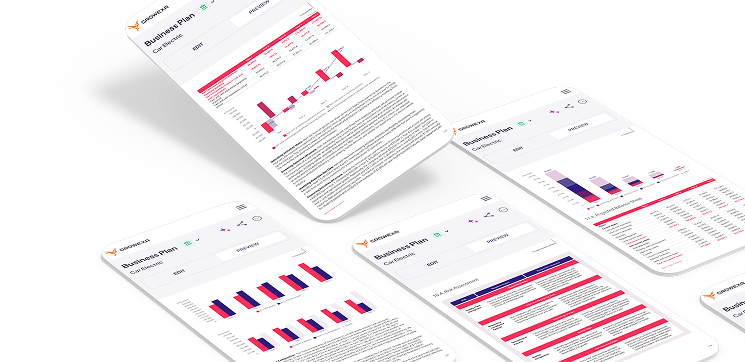

Create a Business Plan in 5 Minutes with AI

The first step when planning how to open a home care agency is defining the scope of services.. The term home care is used broadly, but the underlying business models are not interchangeable.
Companion care typically focuses on non-clinical support such as companionship, errands, meal preparation, and assistance with routine household activities. Depending on the jurisdiction and services involved, the provider may still be subject to home care agency licensing or registration requirements.
Non-medical personal care may include assistance with bathing, dressing, mobility, toileting, and other activities of daily living. Although these services are not necessarily skilled nursing, they can involve significant client safety considerations and may be regulated differently from basic companionship.
Skilled home health care involves qualifying clinical services, potentially including skilled nursing, therapy, and other services delivered by licensed professionals. Agencies seeking Medicare certification must satisfy applicable federal requirements in addition to relevant state requirements.
A founder planning a non medical home care business should not assume that Medicare home health reimbursement will be available. Medicare generally does not pay for custodial or personal care when that is the only care a person needs, although covered home health services can include certain aide services when program conditions are met.
The business model should identify the target client population, services offered, geographic coverage, service hours, expected visit duration, and payment sources. These decisions determine the applicable licensing pathway, caregiver qualifications, insurance needs, and pricing structure.
Obtaining the correct home care business license is a critical early benchmark Home care licensing requirements vary significantly across the United States. Some states regulate non-medical home care agencies through dedicated licensing programs, while others distinguish between companion services, personal care, and home health services.
Founders should contact the responsible state health or human services agency and obtain the current requirements for the exact service category they intend to operate.
The regulatory review should address agency licensing, business registration, ownership disclosures, administrator qualifications, background checks, employee training, insurance, policies, inspections, and renewal obligations.
For instance, California regulates home care organizations and home care aides under its Home Care Services framework, while other states use different classifications and approval processes. California's Home Care Services Branch provides an example of an official state regulatory resource, not a nationwide licensing standard.
Founders considering skilled home health services need a separate analysis. Medicare-certified home health agencies are subject to federal Conditions of Participation under 42 CFR Part 484, as well as applicable state requirements. Medicare enrollment and certification should not be confused with obtaining an ordinary business license.
The Centers for Medicare & Medicaid Services provides federal information about home health agency certification.
Medicaid-funded personal care and home- and community-based services represent another distinct pathway. Coverage, provider qualifications, authorization requirements, and reimbursement vary by state and program. A non-medical agency should verify its eligibility for a specific Medicaid arrangement rather than assuming that providing personal care automatically qualifies it for public reimbursement.
Before launch, document which activities the agency may perform, which require licensed professionals, and which are outside its authorized scope. This prevents a commercially attractive service menu from becoming a compliance problem.
Home care agency startup costs are shaped less by physical facilities than by licensing, insurance, recruitment, operating systems, marketing, and the cash needed to support employees before collections stabilize.
A home-based administrative operation may require relatively little office infrastructure. However, lower property costs should not be mistaken for a low working-capital requirement.
| Startup expense | Initial investment | Ongoing financial impact |
|---|---|---|
| Business registration and legal setup | Entity formation, legal review, contracts | Annual filings and professional support |
| Licensing and compliance | Applications, policies, inspections where required | Renewals, compliance administration |
| Insurance | Initial premiums and deposits | General and professional liability, workers' compensation and other coverage |
| Scheduling and management software | Setup, configuration, training | Subscriptions and support |
| Recruiting and screening | Job advertising, interviews, background checks | Turnover, replacement hiring |
| Caregiver training | Initial orientation and required qualifications | Continuing education and refresher training |
| Marketing | Website, local presence, launch campaigns | Advertising and referral development |
| Office and administration | Equipment, phones, workspace | Rent, communications and administration |
| Payroll reserve | Cash for wages before sufficient collections | Continuing payroll and timing gaps |
There is no defensible single startup-cost figure for every home care agency. An owner-operated companion-care business and a skilled home health agency requiring licensed clinical personnel have fundamentally different capital needs.
Build the budget using actual insurance quotations, software proposals, recruitment estimates, and state-specific licensing requirements.
Most importantly, calculate how many payroll cycles the agency must finance before client payments arrive. Payroll may be due weekly or biweekly, while some clients and third-party payers operate on longer payment schedules.
That mismatch can create a cash shortage even when the agency reports positive accounting profits.
Home care pricing should reflect the cost of delivering a reliable service, not simply the hourly rates advertised by competitors.
An agency may charge by the hour, establish minimum visit lengths, offer scheduled overnight coverage, or provide extended-duration support. Some operators offer specialized services within their permitted scope, such as dementia-related assistance or post-discharge non-clinical support. Each service format has different economics.
Short visits can create disproportionate scheduling and travel costs. A caregiver may spend 30 minutes traveling to deliver a two-hour service, reducing the number of productive hours available during the day. Minimum visit policies can help address that inefficiency, but they must be consistent with client needs, contracts, and applicable program rules.
Overnight and extended-duration arrangements require careful wage-and-hour analysis. Founders should not assume that a live-in designation eliminates overtime, compensable work, or other employment obligations.
The U.S. Department of Labor's direct care workers guidance explains federal wage-and-hour considerations affecting home care employment. Applicable state laws may impose additional requirements.
Pricing should also account for weekend coverage, cancellations, minimum shifts, caregiver qualifications, and any contractual restrictions imposed by third-party payers.
A profitable service menu is one that produces an adequate contribution after the actual labor and delivery costs associated with each service—not merely one that commands a high hourly rate.
An agency's growth rate is directly tied to its capacity for reliable home care staffing. A home care agency's ability to grow is constrained by the availability of qualified caregivers. Client demand has little commercial value if the business cannot provide reliable coverage.
Recruitment should begin with the service model and anticipated weekly care hours. A founder expecting 300 billable hours per week needs to understand how those hours translate into employee schedules, travel, availability, and backup coverage.
Hiring should not rely exclusively on filling immediate vacancies. The agency needs a pipeline of candidates who can meet its service requirements and work within the intended geographic area.
Recruiting channels may include local job boards, caregiver training programs, community colleges, employee referrals, and professional networks. However, hiring speed should never replace screening.
Before assigning caregivers, the agency should complete all applicable background checks, verify credentials where required, confirm eligibility to work, and document training. Additional checks may apply under state licensing rules, payer contracts, or the services being delivered.
Caregiver turnover affects more than recruiting expenses. It disrupts client relationships, increases scheduling pressure, creates additional training costs, and can force managers to cover shifts through overtime.
A retention strategy should address predictable schedules, realistic travel assignments, supervision, training, compensation, and communication. For agencies serving clients with recurring weekly needs, continuity can also become a competitive advantage.
The economic objective is not to minimize hourly wages at any cost. It is to maintain a dependable workforce at a total labor cost that the pricing model can support.
Home care operations depend on consistent execution across multiple client locations. The agency must know what services are scheduled, who is responsible, what was delivered, and how problems are escalated.
A reliable operating system begins with client intake. Before accepting an assignment, the agency should evaluate whether the client's needs fall within its authorized service scope, whether qualified staff are available, and whether the proposed schedule is feasible.
Service agreements should explain the services provided, fees, scheduling arrangements, cancellation terms, and responsibilities of the parties. Care plans or service plans should document client needs and the tasks employees are expected to perform, as required by the applicable model.
Scheduling software can reduce administrative workload, but it does not replace operational oversight. The agency still needs procedures for missed visits, caregiver absences, emergencies, complaints, incidents, documentation, and quality reviews.
For Medicare-certified home health agencies, federal requirements extend to clinical assessments, care planning, patient rights, records, and quality management. These obligations are materially different from those of a non-medical companion-care business.
The operating model should also protect confidential client information and apply the privacy and security requirements relevant to the organization. HIPAA applicability depends on the entity and its activities; not every non-medical home care provider has the same federal obligations.
A practical management dashboard should track scheduled and completed visits, caregiver availability, client complaints, service interruptions, collections, and labor costs. Those indicators help management identify operational problems before they become persistent financial losses.
Client acquisition in home care is built on trust, local visibility, and the ability to demonstrate reliable service.
Referrals can originate from families, physicians, discharge-planning teams, senior communities, social workers, community organizations, and other professionals. However, a referral relationship does not guarantee a steady volume of clients, and any arrangements must comply with applicable laws and professional standards.
Hospitals and clinical referral sources may be particularly relevant for agencies serving clients after discharge, but the business must avoid implying that non-medical care substitutes for prescribed clinical services.
Local search is another important channel. Prospective clients and family members often look for providers serving a specific city or neighborhood. A clear website should explain the agency's services, geographic coverage, contact process, qualifications, and how care arrangements begin.
Paid advertising can supplement referrals, but acquisition costs need to be evaluated against the value of the resulting client relationship.
A client requiring four hours of weekly assistance has different economics from one purchasing 30 hours. The agency should therefore measure not only inquiries and new clients, but also expected care hours, retention, contribution margin, and acquisition cost.
Early marketing should focus on a service area the agency can staff efficiently. Expanding too quickly across a large territory may increase travel time and scheduling complexity faster than revenue.
The central financial unit in a non-medical home care agency is often the billable care hour.
Revenue is generated when services are delivered and billed, but the agency incurs additional costs beyond the caregiver's hourly wage. Payroll taxes, insurance, training, supervision, travel, paid non-billable time, and scheduling inefficiencies can materially reduce the contribution from each hour.
Consider an illustrative private-pay agency with the following assumptions:
| Financial driver | Illustrative assumption |
|---|---|
| Average client billing rate | $36 per care hour |
| Caregiver wage for direct service | $20 per hour |
| Payroll burden and related direct costs | $4 per care hour |
| Allocated travel and other variable delivery costs | $2 per billable hour |
| Contribution per billable hour | $10 |
| Monthly fixed overhead | $12,000 |
| Break-even volume | 1,200 billable hours per month |
Illustrative calculations only; these are not national wage, reimbursement, or pricing benchmarks.
At 1,200 monthly billable hours, the agency generates $43,200 in revenue and $12,000 in contribution before fixed overhead, producing approximately break-even operating results under these assumptions.
At 1,500 billable hours, contribution rises to $15,000, leaving $3,000 after the stated fixed costs.
That is a relatively modest operating surplus for a business coordinating substantial service volume. It is not necessarily the owner's take-home profit: owner compensation, financing costs, taxes, and other expenses must be treated consistently in the model.
Suppose an agency pays for 1,600 employee hours during a month but bills clients for only 1,400. Some non-billable time may be unavoidable, including paid travel, training, meetings, and other compensable activities.
The agency cannot evaluate profitability using only the wage rate for the 1,400 billed hours. It must account for the cost of all compensated time and avoid double-counting those costs elsewhere in the model.
Under federal wage-and-hour guidance, travel between client worksites during the workday is generally compensable for covered employees. The U.S. Department of Labor also explains the treatment of overtime and other working-time issues for direct care workers.
Utilization therefore connects scheduling performance directly to financial results.
A company with strong demand but poorly coordinated assignments can experience weak margins because caregivers spend too much paid time between visits. Conversely, clustering assignments geographically and establishing appropriate minimum visit durations may improve efficiency without increasing prices.
The financial model should project monthly billable hours, average rates, total compensated labor hours, payroll burden, acquisition costs, fixed overhead, and collections.
It should also test slower client acquisition, caregiver vacancies, higher wages, cancellations, and delayed payments.
Cash flow deserves separate attention. A profitable month on an accrual basis may still create a cash deficit if wages are paid before client invoices are collected. Founders should maintain sufficient working capital to support payroll and other obligations through that gap.
A home care business plan should explain how the agency will acquire clients, deliver services consistently, recruit caregivers, comply with applicable requirements, and generate sufficient cash to fund operations.
For lenders and prospective partners, the most useful evidence is operational rather than promotional. The plan should identify the service category, target market, licensing status, management qualifications, pricing approach, staffing assumptions, and expected client acquisition channels.
Financial projections should be built around care hours, not unsupported revenue growth percentages. A forecast showing revenue doubling should explain where the additional clients and caregivers will come from, how scheduling capacity will expand, and whether the resulting labor costs preserve acceptable margins.
A business plan for financing can help organize the funding request, use of proceeds, operating assumptions, and repayment case.
For founders planning regulated clinical services, a healthcare business plan example may offer a useful reference for structuring clinical operations and financial planning. However, a medical clinic has different licensing, reimbursement, and staffing requirements and should not be treated as a home care agency template.
Once the agency's actual service model and cost assumptions are established, AI business planning software can help organize the business narrative and financial forecasts. Regulatory requirements, reimbursement eligibility, and operating assumptions must still be verified independently.
Expansion should follow evidence that the existing operation can maintain care quality, staffing continuity, collections, and sustainable margins.
It depends on the state and services provided. Many states license or regulate non-medical home care agencies, while skilled home health services may require additional state approvals and federal certification for Medicare participation. Business registration alone may not authorize care services. California, for example, has a dedicated licensing framework for home care organizations.
Startup capital depends on the service model, state licensing requirements, insurance, technology, recruitment, training, marketing, and payroll reserves. A non-medical companion-care agency may have fewer initial infrastructure expenses than a skilled home health agency. A credible budget should include both startup expenses and sufficient cash to support operations until collections become predictable.
It can be, but profitability depends on billing rates, caregiver wages, total compensated hours, client retention, utilization, overhead, and collections. Gross margin per billable hour is not the same as operating profit or owner income. Founders should calculate break-even care hours and test profitability under realistic staffing and scheduling conditions.
There is no universal staffing number. Requirements depend on the state, services, client needs, and scheduled care hours. Agencies should recruit enough qualified caregivers to meet expected demand and maintain backup coverage without compromising training or compliance.
Depending on the jurisdiction and business model, coverage may include general liability, professional liability, workers' compensation, commercial auto, cyber liability, and employee-related coverage. State licensing requirements, contracts, and insurer underwriting conditions may impose specific obligations. Obtain advice and quotations based on the actual services provided.
Ordinary companion care and personal care provided as standalone custodial services generally do not qualify for Medicare home health reimbursement. Medicare covers qualifying home health services under specific eligibility and provider requirements, including care furnished by a Medicare-certified home health agency. Medicaid and private-pay arrangements operate under different rules.
A successful home care business is not defined by how quickly it signs clients. It is defined by whether the agency can deliver authorized services safely, staff those services consistently, and collect enough revenue to support the full cost of care.
Founders should begin by confirming their service and licensing model, then build a financial forecast around billable hours, compensated labor, utilization, and cash reserves. Only after those fundamentals are established should they commit significant resources to marketing and expansion.
The most valuable next step is to develop a state-specific launch budget and monthly operating model. Those two documents will reveal whether the proposed agency is ready to open—and what must change before it can scale responsibly.
Regulatory note: This article provides general U.S. business-planning information, not legal, licensing, employment, or clinical advice. Verify current state requirements, payer rules, and applicable employment obligations with the responsible authorities and qualified professionals.


