
Choose a profitable niche. Weddings, corporate events, private parties, and conferences have different client expectations, sales cycles, and operating requirements.
Define services and pricing clearly. Match flat fees, hourly rates, packages, or percentage-based pricing to the actual workload and project complexity.
Budget for more than business registration. Include insurance, marketing, software, portfolio development, contractor expenses, and working capital.
Separate planning revenue from event spending. A client's total event budget is not the planner's profit; track professional fees, delivery costs, and overhead independently.
Build a reliable client acquisition system. Develop vendor partnerships, demonstrate expertise through a portfolio, and validate demand before expanding the business.
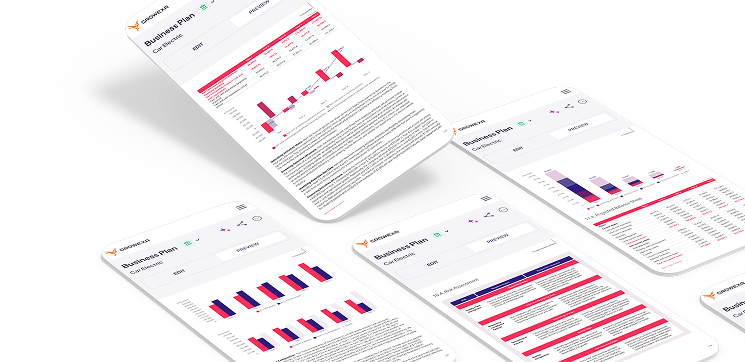

Create a Business Plan in 5 Minutes with AI

Understanding how to start an event planning company requires looking beyond party decorations and venue aesthetics. Specialization affects more than brand positioning. It determines the sales cycle, client expectations, vendor relationships, scheduling requirements, and potential profit per engagement.
Wedding planning typically involves individual clients, significant emotional expectations, and long preparation periods. Services may include venue selection, budget management, vendor coordination, guest logistics, and wedding-day execution.
A wedding planner business plan can help structure a wedding-focused operation around seasonal demand, service packages, vendor coordination, and client acquisition costs.
Corporate clients may commission product launches, employee events, executive meetings, and customer experiences. Procurement procedures, approval processes, brand standards, and measurable business objectives often influence these engagements.
Corporate events can create opportunities for repeat business, although payment terms and stakeholder coordination may increase administrative complexity.
Birthdays, anniversaries, celebrations, and other private events may involve shorter sales cycles and smaller budgets. This segment can suit an independent planner building a local reputation, provided service boundaries and minimum fees are clearly established.
Conferences, fundraisers, and association events can require complex registration, sponsorship, speaker management, logistics, and multiple stakeholder approvals.
These projects may offer larger professional engagements but can also involve substantial advance planning and financial oversight.
The best niche is not necessarily the one with the largest event budgets. It is the one where the planner can consistently win profitable assignments and deliver them with available resources.
An event planning company should define exactly what clients purchase when selecting event planner services.
Full-service planning generally covers the project from concept through execution. Partial planning supports selected activities, while event-day coordination focuses on final preparation and on-site delivery. Vendor management and consulting can also be sold as standalone services.
The distinction matters because two events with identical budgets may require radically different amounts of work.
A planner managing venue research, supplier negotiations, guest communications, transportation, and production schedules may spend several hundred hours on an engagement. Another planner hired only for final coordination may perform a much narrower role.
Service packages should therefore specify deliverables, planning meetings, communication limits, on-site hours, vendor responsibilities, and the treatment of additional requests.
Without these boundaries, a fixed-fee engagement can become less profitable every time the client expands the scope.
Event planning business startup costs depend on whether the founder works independently, hires employees, maintains an office, or provides equipment and production services.
A service-based planning company can often avoid substantial inventory and facility investments. However, professional insurance, marketing, operating systems, and working capital still require funding.
| Cost category | Typical expense | Financial consideration |
|---|---|---|
| Business registration | Entity formation, permits where applicable | Initial and recurring filings |
| Insurance | General liability, professional liability, event-specific coverage | Policy limits and client requirements |
| Website and branding | Website, domain, visual identity | Updates and maintenance |
| Portfolio development | Photography, styled projects, promotional materials | Initial marketing investment |
| Planning software | Project management, CRM, budgeting tools | Monthly subscriptions |
| Marketing | Local advertising, networking, industry listings | Client acquisition cost |
| Contractors | Assistants, coordinators, production support | Project-based labor |
| Working capital | Deposits, operating expenses, contingency | Cash needed before collections |
Avoid treating the entire event budget as a startup expense. Vendor purchases made directly by clients are different from costs the planning company must finance.
If the company contracts with suppliers and pays them before collecting from the client, working-capital exposure can increase substantially.
Founders seeking outside capital should prepare a business plan for financing that explains startup uses of funds, expected bookings, and the timing of client payments.
Event planning business pricing should reflect scope, complexity, labor requirements, and financial responsibility rather than event size alone. Common structures include flat fees, hourly rates, percentages of event budgets, packages, and retainers.
The following figures are hypothetical examples illustrating how different approaches work, not market-rate benchmarks.
| Pricing model | Illustrative example | Main commercial consideration |
|---|---|---|
| Flat fee | $4,500 per event | Requires tight scope control |
| Percentage | 12% of a $60,000 event budget = $7,200 | Define which costs count toward the fee |
| Hourly | $125 × 40 hours = $5,000 | Requires accurate time tracking |
| Service package | $2,000 coordination package | Standardize deliverables |
| Retainer | $2,500 monthly for ongoing services | Define availability and workload |
A percentage-based fee can align compensation with event scale, but a larger budget does not always mean more planning work. Conversely, a relatively inexpensive event can require extensive coordination.
Flat-fee pricing becomes particularly risky when the planner underestimates revision cycles, vendor meetings, and event-day staffing.
Before quoting a project, estimate the total professional hours required, contractor costs, travel, software allocation, and desired operating margin. The resulting fee should compensate the business for both delivery and the risk of managing the engagement.
An event planning business depends heavily on suppliers it does not directly control.
Venues, caterers, photographers, audiovisual providers, decorators, rental companies, transportation operators, and entertainment vendors influence the client experience. Poor supplier performance can damage the planner's reputation even when the failure occurs outside the planner's direct responsibility.
Build relationships based on reliability, capacity, communication, contractual clarity, and financial terms—not simply the lowest quotation.
Maintain alternative suppliers for critical categories. A single unavailable venue or production provider should not make an event impossible to deliver.
The company should also establish whether vendors contract directly with clients or through the planning business. That decision affects payment obligations, liability exposure, cash requirements, and the presentation of revenue.
New planners face a familiar problem: clients want evidence of successful events, but the business needs clients to build that evidence.
The solution is to demonstrate capability without misrepresenting experience.
Founders can document relevant work completed as employees or contractors, with appropriate permissions and accurate descriptions of their responsibilities. They can also develop styled event concepts, collaborate with vendors on portfolio projects, or publish detailed planning examples.
A useful portfolio should explain the event objective, planning challenges, responsibilities, and execution approach.
Photographs demonstrate aesthetic judgment. Case studies demonstrate operational competence.
For corporate clients, the latter may be particularly valuable because event success involves deadlines, coordination, attendee experience, and budget discipline.
Understanding how to get event planning clients efficiently requires beginning with a narrow target market and a clear service proposition.
A wedding planner might build relationships with venues, photographers, and bridal professionals. A corporate event planner may focus on local companies, business associations, marketing agencies, and organizations that regularly host meetings or customer events.
Search visibility matters when prospective clients are actively comparing planners in a particular location. A website should clearly describe services, geography, portfolio work, and the inquiry process.
Networking and referrals can provide early opportunities, but the founder should track where qualified leads originate and how often they become paying clients.
A channel generating many inquiries may still be ineffective if those prospects cannot afford the agency's minimum fee.
For a new company, disciplined follow-up and well-defined qualification criteria can be more valuable than a large advertising budget.
Event planning contracts should establish the scope of services, fees, payment schedule, responsibilities, cancellation provisions, and procedures for changes.
Deposits and milestone payments can help protect cash flow, but their structure should reflect the work performed, commitments made, and applicable law.
Cancellation provisions deserve particular attention because event preparation often involves substantial labor long before the event date. The contract should explain what happens when a client postpones, cancels, changes venues, or substantially revises the scope.
It should also clarify responsibility for vendor agreements and payments. Client funds collected for supplier expenses should be handled and recorded appropriately, with clear documentation of the company's obligations.
Contract terms should be reviewed by qualified legal counsel familiar with the relevant jurisdiction and service arrangements.
Event planning revenue should be forecast from expected bookings and professional fees, not from the combined budgets of clients' events.
Consider a planner managing ten events with an average client event budget of $50,000. The aggregate event spending is $500,000. If the planner earns an average professional fee of $5,000, however, the business generates only $50,000 in planning-fee revenue.
That distinction is essential.
Whether vendor expenditures appear as the company's gross revenue or are excluded depends on the contractual arrangements and applicable accounting treatment. Management should nevertheless evaluate the economics of planning services separately from supplier expenditures.
A simplified annual operating model might look like this:
| Financial metric | Illustrative amount |
|---|---|
| Completed events | 20 |
| Average planning fee | $5,000 |
| Planning-fee revenue | $100,000 |
| Direct contractor and delivery costs | $25,000 |
| Gross profit | $75,000 |
| Fixed operating expenses | $35,000 |
| Operating profit before taxes and financing | $40,000 |
This example assumes the owner's compensation is not included in the stated expenses. If the founder performs substantial planning work, that labor must be considered when evaluating the business's true economic return.
Seasonality, cancellations, client acquisition costs, and payment timing can materially change results. A profitable annual forecast does not guarantee sufficient cash during quieter months.
An event planning business plan should connect niche selection, service packages, pricing, marketing, vendor relationships, and financial projections.
The most important operating assumptions are the number of qualified inquiries, booking conversion rate, average planning fee, hours required per engagement, contractor expenses, and timing of collections.
Founders can use an AI business plan generator to organize these assumptions into a structured plan, provided the projections are based on realistic delivery capacity and verified costs.
Days 1–30 Define and validate the business. Select a niche, research competitors, interview potential clients, establish service packages, verify registration and insurance requirements, and calculate startup costs.
Days 31–60 Build the operating foundation. Prepare contracts, create portfolio materials, establish vendor relationships, launch a website, and set up lead tracking, budgeting, and project-management systems.
Days 61–90 Test client acquisition and pricing. Begin targeted outreach, develop referral partnerships, submit proposals, measure conversion rates, and revise packages based on actual client demand and delivery costs.
The objective of the first 90 days is not to build a large event company immediately. It is to establish a repeatable process for winning, pricing, and delivering profitable engagements.
Startup costs vary depending on the business structure, insurance, marketing, technology, staffing, and whether the company owns event equipment. A solo planner working remotely generally requires less initial capital than an agency with employees, an office, or production assets. Prepare a detailed budget rather than relying on a universal startup estimate.
There is no single nationwide event planner license. Business registration, local licensing, tax requirements, and event-specific permits vary by jurisdiction and activities. Events involving alcohol, public spaces, food service, or other regulated activities may require additional approvals, often involving the venue or vendors.
Common methods include flat fees, hourly billing, percentages of event budgets, service packages, and retainers. The appropriate method depends on scope, project complexity, time commitment, and financial responsibilities.
Build a credible portfolio through relevant prior work, clearly labeled concept projects, or vendor collaborations. Focus on a defined niche, establish local referral relationships, and demonstrate planning competence through detailed service descriptions and case studies.
It can be profitable when planning fees cover professional labor, contractors, acquisition costs, overhead, and business risk. Profitability depends on booking volume, project complexity, pricing discipline, and the ability to prevent scope expansion from consuming unpaid hours.
An event planning company does not need a large office, extensive equipment, or a substantial team to begin operating. It does need a defined market, defensible pricing, reliable vendors, clear contracts, and a realistic financial model.
The most important early management decision is determining which events the company can deliver profitably—and which it should decline. Start with a focused service offering, validate pricing through real client engagements, and expand only when bookings, delivery capacity, and cash flow support the next stage of growth.


