
Almost, but not literally. A founder who already has transportation, a phone and basic cleaning supplies may be able to secure the first residential job with minimal incremental spending.
Residential cleaning has the lowest entry barrier. Commercial accounts can offer larger recurring contracts but usually involve a longer sales cycle, more formal insurance requirements and greater working-capital needs.
Do not buy for scale before you have sales. Specialized machines, branded vehicles, office space and employees are unnecessary for validating a basic residential service.
Pricing has to cover non-cleaning time. Travel, quoting, scheduling, purchasing supplies and administration are part of the economics even when customers are not billed directly for them.
The transition from self-employment to an employer is the financial inflection point. Payroll, supervision, workers’ compensation and customer acquisition can change the cost structure quickly.
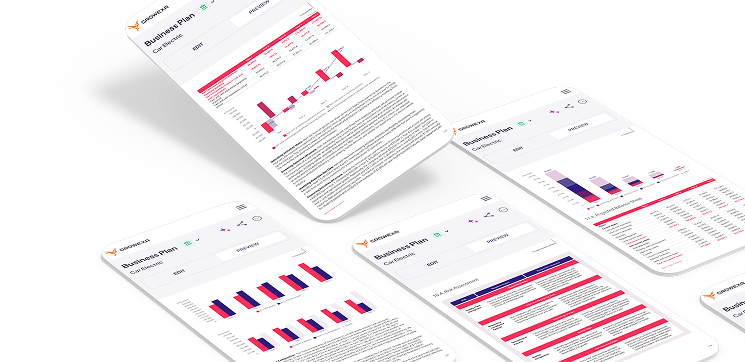

Create a Business Plan in 5 Minutes with AI

A cleaning business is one of the few service businesses where the founder can begin selling before building much infrastructure. There is no storefront to lease, expensive production equipment to finance or large inventory position to fund. In residential cleaning, the owner can perform the first jobs personally and, in some cases, use products already available in the client’s home.
That makes starting a cleaning business with no money directionally possible—but literally spending nothing is an unrealistic assumption. Transportation, basic supplies, business registration where required, cleaning business insurance and customer acquisition all create costs sooner or later.
The more useful question is how little capital is required to prove demand.
For someone researching how to start a cleaning business, the lowest-risk approach is to keep the first version deliberately small: sell a narrow service, perform the work yourself, avoid fixed overhead, collect payment quickly and reinvest early revenue. The business becomes capital-intensive later, when growth requires employees, vehicles, equipment, payroll float and commercial contracts.
This is an important distinction. Cleaning is cheap to enter. Building a cleaning company that can operate without the founder is a different financial problem.
A minimum viable cleaning operation is surprisingly small. For a founder providing standard residential cleaning personally, the initial objective is not to assemble every tool a professional cleaning company might eventually own. It is to have enough equipment, protection and administrative structure to complete the first jobs reliably.
The following budget is illustrative. Actual registration, insurance and supply costs vary by location and business model.
| Expense | Minimum Viable Setup | Typical Initial Budget | Essential at Launch? |
|---|---|---|---|
| Basic cleaning chemicals | Small multipurpose set or client-supplied products | $30–$100 | Yes, unless client supplies |
| Microfiber cloths, sponges, brushes | Basic reusable kit | $25–$75 | Yes |
| Mop, bucket and basic floor tools | Standard equipment | $30–$100 | Usually |
| Vacuum | Existing personal unit or entry-level commercial model | $0–$300+ | Depends on service |
| Gloves and basic PPE | Small initial stock | $15–$50 | Yes |
| Business registration | Depends on structure and location | $0–$300+ | Depends on jurisdiction |
| Insurance | Quote before regular operations | Varies significantly | Strongly advisable / sometimes required |
| Website | Social/profile presence can substitute initially | $0–$300 | No |
| Paid advertising | Start with organic acquisition | $0 | No |
| Branded vehicle | Use existing transportation | $0 | No |
| Specialized cleaning equipment | Add only when services justify it | $0 at launch | No |
The distinction between essential and optional spending is where many low-capital businesses lose their advantage.
A logo, uniform, premium website and professional carpet extractor may make the operation look more established. None proves that customers will pay for the service. Five recurring clients do.
Residential and commercial cleaning share some operational tasks, but they are different business models.
A residential cleaning business usually offers the faster path to first revenue. The buyer is often the homeowner or tenant, sales decisions can happen quickly, jobs are relatively small, and payment is commonly collected at or shortly after service. Work is usually performed during the day.
Residential customers can also be acquired one household at a time. That makes the model suitable for a founder starting alone with limited working capital.
Commercial cleaning business shifts the economics. Offices, retail spaces and other facilities can generate larger recurring contracts, but clients may expect formal proposals, certificates of insurance, scheduled crews and consistent service across a larger space. Cleaning frequently takes place outside normal business hours.
Payment timing can also be less favorable. An employee may need to be paid this Friday even if a commercial customer pays an invoice several weeks later.
The choice therefore should not be based only on contract size. Residential cleaning offers lower barriers and faster cash conversion; commercial cleaning can create more predictable contracted revenue but generally demands more operating infrastructure.
A founder can eventually serve both markets, but the initial sales process and cost model should be designed for one.
The cheapest employee in a startup cleaning company is usually the founder.
That is not because founder labor has no economic value. It does. But performing the first jobs personally eliminates payroll as an immediate cash requirement and provides information that is difficult to obtain from a spreadsheet.
You learn how long a two-bedroom apartment actually takes to clean. You discover which products get consumed fastest, how much travel time exists between jobs and which customer requests consistently push a job beyond its quoted scope.
Those observations become the basis for cleaning business pricing.
Start with services that require limited specialized equipment: recurring home cleaning, basic apartment cleaning or straightforward move-in/move-out work where the existing toolkit is sufficient.
Avoid adding carpet extraction, exterior pressure washing, specialized floor care or other equipment-intensive services simply because competitors offer them. Each new service adds equipment, training, liability and quoting complexity.
A narrow service menu can be expanded after customers demonstrate demand.
There is also a strategic benefit to doing the first jobs yourself: quality control is direct. Before hiring someone else to reproduce the service, the founder needs to know what “finished” actually means and how long that standard should take.
The legal requirements for a cleaning company depend on its location, structure and activities. There is no single nationwide cleaning business license that every U.S. operator obtains.
The U.S. Small Business Administration notes that registration requirements depend on business structure and location, while state, county and city governments determine many licensing and permitting requirements. The SBA also states that state registration fees are generally below $300, although actual fees vary.
A sole proprietorship may offer the simplest starting structure in some situations, while an LLC can provide a separate legal entity and certain liability protections. The appropriate choice depends on the founder’s circumstances and should not be made solely on filing cost.
Insurance deserves attention even for a one-person operation. Cleaning takes place inside other people’s homes and businesses, around furniture, electronics, floors and other property. A single damage claim can exceed the amount saved by avoiding an insurance premium.
General liability coverage is commonly used to protect businesses against claims involving bodily injury and property damage. Businesses that add employees may also face workers’ compensation and other insurance requirements depending on state law.
Basic customer agreements are equally useful. Define the scope of work, price, cancellation policy, access arrangements and any exclusions before the job begins. A $150 cleaning job should not become an undefined promise to clean everything the customer notices.
The simplest pricing method is not necessarily the best one.
Hourly pricing is useful when the scope is uncertain. It protects the cleaner when a property requires more work than expected, but customers may dislike an open-ended final bill.
Flat-rate pricing gives the customer certainty and rewards operational efficiency. The risk shifts to the cleaner: underestimate a four-hour job as two hours and the effective hourly revenue collapses.
For commercial work, per-square-foot pricing can be useful when properties have comparable service requirements, but square footage alone is not enough. A lightly used office and a high-traffic facility of the same size can require very different labor inputs.
The best starting point is to calculate an internal hourly requirement even if the customer ultimately receives a flat quote.
Suppose the owner wants the business to generate $40 per productive cleaning hour before income taxes and owner distributions. Supplies, transportation, insurance and administration add another $10 per productive hour. The minimum economic rate is already $50 per billable hour.
But not every working hour is billable.
If the owner works 40 hours but spends 10 on travel, quoting, scheduling and administration, only 30 hours generate cleaning revenue. A quoted rate that ignores those ten hours understates the true cost of the business.
This is one reason apparently high cleaning service profit can disappear when the owner values their own labor correctly.
The first customer-acquisition system does not need to be scalable. It needs to be cheap enough to prove that strangers will buy.
Start with people and places where trust can be established without a large advertising budget: referrals, neighborhood groups, apartment communities, local social networks and direct outreach to property managers or real estate professionals.
A Google Business Profile is also available at no charge and can be used by service-area businesses that visit customers rather than operate a storefront. It allows the business to appear in Google Search and Maps, publish service information and collect reviews.
Reviews matter disproportionately in residential cleaning because the customer is allowing a service provider into a private home. Early customers therefore have value beyond the revenue from the job: they can produce testimonials, referrals and evidence of service quality.
Partnerships can create another low-cost channel. Realtors may need move-out or pre-listing cleaning. Short-term rental operators need turnover service. Small property managers may need recurring support. These relationships can generate repeat demand without paying for every lead separately.
Paid advertising becomes more useful once three numbers are known: the conversion rate from lead to customer, average customer value and retention.
Spending $100 to get cleaning clients is irrational if the average customer generates $90 of contribution and never returns. It may be excellent economics if that customer books $150 every two weeks for two years.
Acquire the data before scaling the ad budget.
Supplies are one area where a new residential cleaner can legitimately reduce startup spending.
Some customers prefer their own products because of allergies, pets, fragrances or surface requirements. Agreeing to use customer-supplied products can eliminate part of the initial inventory cost.
It also creates inconsistency. Different products behave differently, supplies may run out mid-job, and the cleaner has less control over results.
As volume grows, carrying a standardized professional kit usually improves operational efficiency. Products can be selected around cleaning performance, dilution cost, safety and compatibility with the surfaces regularly encountered.
The larger cost transition is labor.
Hiring an employee because the founder feels busy is not enough. The business should first establish that it has enough recurring demand to keep another cleaner productively occupied.
Suppose an employee costs the business $24 per hour after wages and associated employer costs, while jobs generate $50 per productive labor hour before supplies and overhead. The spread looks attractive.
But if the employee is paid for 30 hours and only 20 are billable because the schedule is weak, the labor economics change immediately.
Utilization matters as much as wage rate.
A small cleaning business does not need a complicated financial model to understand its first stage. It does need one that reflects how jobs actually generate money.
Consider a solo residential cleaner completing 15 jobs per week at an average value of $140:
15 jobs × $140 = $2,100 weekly revenue
At 4.33 weeks per month, that equals approximately:
$2,100 × 4.33 = $9,093 monthly revenue
Now assume supplies and payment-related costs average $10 per job, or $650 per month. Transportation costs $600, insurance and software total $300, and marketing and miscellaneous overhead add $500.
That leaves approximately $7,043 before taxes and owner compensation.
That last phrase matters. A solo cleaner's remaining cash is not the same thing as passive business profit because the owner performed the cleaning labor.
A more useful analysis separates compensation for the owner’s work from the return generated by the business itself.
As the company grows, the forecast should also track recurring versus one-time clients, jobs per cleaner, average job value, cancellation rate, labor hours and customer acquisition cost.
A cleaning business plan template can connect these operating assumptions to revenue, expenses and cash flow rather than treating a monthly sales target as an isolated number.
For a low-capital startup, this discipline serves another purpose: it shows how much early revenue can safely be reinvested without leaving the owner short of cash.
A solo cleaner can increase income by raising prices, improving scheduling and adding jobs. Eventually, however, there is a physical limit to the number of properties one person can service.
That is where how to start a house cleaning business becomes a different question from how to build a cleaning company.
The transition begins when demand consistently exceeds the founder’s productive capacity—not when the founder simply wants a larger business.
Hiring introduces a new operating equation. The company must generate enough work to cover wages, employer payroll costs, workers’ compensation where applicable, training, supervision, supplies and the risk of paid time that cannot be billed to customers.
Growth can therefore temporarily reduce cash generation.
Suppose a founder is fully booked and earning attractive income alone. Hiring the first cleaner may initially lower the owner's take-home cash because the business now has to fund recruitment and training before the new employee reaches target utilization.
That is normal if the investment creates additional capacity that can later be sold profitably. It is dangerous if the company hires first and hopes demand appears afterward.
The same principle applies to vehicles, office space and equipment. Add fixed cost when a recurring operational constraint justifies it.
A structured business plan for a cleaning company becomes more valuable at this stage because growth decisions can be tested against payroll, customer volume and cash requirements before commitments are made.
The objective is not to build the largest cleaning company possible. It is to build capacity slightly ahead of proven demand without allowing overhead to outrun revenue.
Use this cleaning business checklist to cover the essential steps from choosing your service model and setting prices to finding customers, managing costs and preparing for growth.
The low barrier to entry is what makes cleaning attractive. It is also what makes the market competitive.
Anyone with basic supplies can theoretically offer residential cleaning. That means equipment is rarely the source of a durable advantage. Reliability, service quality, customer retention, scheduling density and labor productivity matter more as the business matures.
For a founder learning how to start a cleaning business, keeping initial investment low is rational. Buying assets before demand exists only raises the amount of revenue required to survive.
But permanent underinvestment is different. Once the business has repeat customers, professional supplies can improve consistency. Insurance protects accumulated value. Better scheduling reduces unproductive travel. Employees create capacity. Customer-acquisition systems make growth less dependent on personal referrals.
The financial objective changes with each stage. At launch, preserve cash and prove demand. Once demand is established, invest where additional capital produces measurable capacity, retention or operating efficiency.
That is the point at which a side service becomes a company.
Growexa’s cleaning business planning tool can turn pricing, job volume, labor assumptions and growth costs into a complete financial plan before you commit to hiring or additional overhead.
Not literally in most cases. You may be able to begin with very little incremental spending if you already have transportation, a phone and basic supplies, or if initial residential clients provide cleaning products. Business registration, insurance, transportation and supplies can still create unavoidable costs. The realistic objective is a low-capital launch, not a zero-cost business.
A basic solo residential operation may require only a few hundred dollars in supplies and setup costs if the founder already owns a vacuum and has transportation. Registration and insurance can increase the requirement, while commercial cleaning, employees, vehicles or specialized equipment can push cleaning supplies startup cost much higher. Local quotations are more useful than a universal startup figure.
There is no universal federal cleaning-business license. State, county and city requirements vary according to location and business structure. The SBA advises entrepreneurs to check the requirements of the jurisdictions where they operate.
Residential cleaning generally offers a lower-capital entry point, shorter sales cycle and faster customer payments, making it practical for a solo founder. Commercial cleaning can provide larger recurring contracts but often requires more formal sales, insurance, staffing and working capital.
Hiring becomes economically defensible when recurring demand consistently exceeds the founder’s available service capacity and the projected revenue from additional jobs can cover the full cost of employment. A full schedule for one or two unusually busy weeks is not sufficient evidence.


