

Create a Business Plan in 5 Minutes with AI

Business financing in the United States no longer operates as a simple transaction between a borrower and a bank. It has become a filtering process built around risk, discipline, and operational credibility. Lenders are not simply evaluating whether a company needs capital. They are evaluating whether management can deploy that capital responsibly, preserve cash flow stability, and survive economic pressure.
That distinction matters more than many founders realize.
A business with moderate growth and predictable financial controls will often secure financing faster than a high-growth company with inconsistent reporting, weak documentation, and unclear repayment logic.
The demand for business financing remains structurally high across the U.S. economy. Companies continue seeking capital for expansion, payroll stabilization, inventory management, equipment purchases, acquisitions, technology upgrades, and working capital protection. Inflationary pressure, tighter supplier terms, and elevated labor costs have only intensified liquidity needs across multiple sectors.
At the same time, underwriting standards remain selective. Traditional banks have tightened exposure in several industries, while alternative lenders continue expanding into higher-risk segments with substantially higher borrowing costs attached.
As a result, applying for a business loan now requires more than paperwork. It requires positioning the company as a credible long-term credit risk.
Before filing an application, borrowers need to understand the financing structures available in the U.S. market and how lenders evaluate risk.
The U.S. commercial lending market offers multiple financing structures, each designed for different operational objectives. Selecting the wrong product can increase borrowing costs, pressure cash flow, and reduce long-term financing flexibility.
Conventional bank loans remain one of the lowest-cost forms of business financing for qualified borrowers. National banks, regional institutions, and community lenders generally offer lower interest rates, larger loan sizes, and longer repayment periods.
However, banks prioritize predictability.
This creates one of the biggest misconceptions among entrepreneurs. Many assume banks primarily finance innovation. In reality, banks finance repayment probability.
Traditional lenders typically favor companies with:
For mature businesses, traditional term loans can support expansion projects, commercial real estate acquisitions, and major equipment investments at relatively attractive rates.
For early-stage startups without operating history, approval becomes significantly more difficult.
A manufacturing company in Ohio, for example, may secure a $2 million term loan to expand warehouse operations because it already demonstrates recurring revenue, positive cash flow, and supplier stability. The lender views the transaction as manageable operational risk rather than speculative growth financing.
The U.S. Small Business Administration does not directly issue most loans. Instead, it partially guarantees loans made by approved lenders.
That guarantee reduces lender exposure and expands financing access for businesses that may not fully qualify under conventional underwriting standards.
The SBA 7(a) program remains the most widely used option for:
CDC/504 loans focus more heavily on commercial real estate and long-term fixed assets. SBA microloans support smaller financing needs, particularly for startups and underserved borrower groups.
SBA financing often offers:
The tradeoff is procedural complexity.
Documentation requirements are extensive. Underwriting timelines are slower. Compliance standards are stricter.
Companies pursuing SBA financing should expect detailed review of:
Consider a restaurant operator opening a second location in Texas. A traditional lender may reject the application because restaurant margins are volatile and collateral is limited. An SBA-backed structure, however, may still support financing for leasehold improvements, equipment, and working capital because the federal guarantee reduces part of the lender’s downside exposure.
A business line of credit operates differently from a lump-sum loan. Companies borrow only what they need and typically pay interest only on utilized balances.
This structure supports operational flexibility.
Seasonal businesses often use credit lines to manage:
From a financial management perspective, lines of credit can reduce idle cash requirements while improving liquidity efficiency.
However, lenders still evaluate repayment discipline aggressively because revolving debt creates ongoing exposure.
A retail apparel business preparing for holiday demand may rely on a $250,000 revolving line to secure inventory before peak season begins. Once sales accelerate, the balance is repaid and long-term flexibility remains intact.
The same structure is common in B2B industries. Staffing firms, for example, often use revolving credit to cover payroll while waiting for enterprise receivables to clear on 60-day terms.
Equipment financing uses purchased assets as collateral. Because the equipment itself lowers lender risk, approval standards may be more flexible than unsecured financing.
Invoice financing operates differently. Businesses leverage unpaid receivables for immediate liquidity.
Industries with extended payment cycles — including logistics, manufacturing, staffing, and wholesale distribution — frequently use invoice financing to stabilize working capital.
For example, a construction company purchasing a $400,000 excavator may finance the machine directly through equipment financing rather than using unsecured debt. The lender secures the loan against the equipment itself, which often improves terms and lowers underwriting risk.
Invoice financing addresses a different problem.
A freight company waiting 90 days for enterprise payments may sell outstanding invoices to a financing provider in exchange for immediate cash flow. While the effective cost is higher than traditional lending, the structure may prevent payroll disruption or operational slowdowns caused by delayed receivables.
In practice, these financing tools are less about aggressive growth and more about operational continuity.
Once borrowers understand the financing landscape, the next step is determining whether the business satisfies lender eligibility standards.
Business loan eligibility in the United States extends far beyond credit scores. Lenders evaluate repayment probability, operational durability, industry risk, and management quality simultaneously.
Most lenders require the business to be legally registered and actively operating within the United States.
Documentation typically includes:
For SBA financing, core requirements generally include:
These requirements appear straightforward. In practice, lenders interpret them through financial performance and operational consistency.
Revenue alone rarely determines approval outcomes.
A company generating $5 million annually with unstable margins and weak liquidity may appear riskier than a smaller company with disciplined controls and consistent profitability.
Debt-service coverage ratios, free cash flow trends, liquidity reserves, and operating margins often matter more than top-line sales.
This is where many applicants lose credibility. Founders frequently focus on growth narratives while lenders focus on repayment mechanics.
Personal credit remains highly relevant for small business financing, especially for privately held businesses and early-stage companies.
Strong credit profiles signal financial discipline and reduce perceived default risk. Weak credit profiles increase scrutiny, raise borrowing costs, or eliminate eligibility entirely.
Time in business matters as well. Many conventional lenders prefer at least two years of operating history, although SBA and alternative lenders may accommodate younger companies under specific conditions.
Certain industries face higher underwriting pressure because of historical volatility.
Restaurants, retail businesses, hospitality operators, and transportation companies often encounter stricter lending standards than professional services or healthcare firms.
Lenders also examine:
Businesses with unstable ownership structures may struggle to secure financing even with strong revenue performance.
Once eligibility becomes reasonably clear, preparation shifts toward documentation quality.
Loan underwriting is fundamentally a documentation process.
Weak paperwork creates friction. Organized borrowers move faster because they reduce uncertainty.
Many entrepreneurs misunderstand the role of a business plan in lending.
Lenders are not evaluating creativity. They are evaluating execution risk.
A strong business plan should clearly explain:
Generic growth language weakens credibility quickly.
Specific operational logic strengthens it.
For example, saying a loan will support “business expansion” provides little insight. Explaining that financing will increase warehouse capacity by 40%, reduce fulfillment delays, and improve gross margin through supplier consolidation demonstrates operational reasoning.
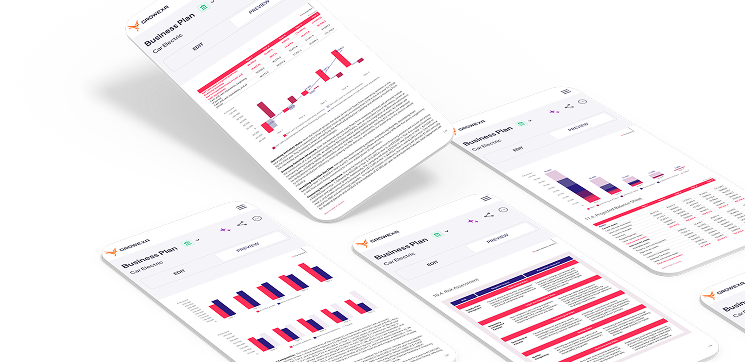
This is where modern planning platforms increasingly influence financing outcomes. Tools such as Growexa help businesses structure financial projections, repayment scenarios, and capital allocation models in a lender-readable format instead of relying on fragmented spreadsheets and generic templates.
Lenders typically require:
Financial inconsistencies immediately raise underwriting concerns.
Discrepancies between tax filings and internal financial reports often trigger deeper investigation.
Clean accounting systems materially improve lender confidence.
Borrowers should also prepare:
Incomplete records frequently delay underwriting timelines, especially within SBA lending structures.
With documentation assembled, the next decision becomes lender selection.
Many borrowers compare only interest rates. Sophisticated borrowers compare financing structures.
APR matters, but repayment flexibility, collateral exposure, covenant restrictions, and refinancing limitations may carry greater long-term consequences.
The U.S. lending market is fragmented by:
Choosing the wrong lender can increase effective borrowing costs even when headline rates appear competitive.
| Lender Type | Best For | Main Advantages | Primary Drawbacks | Typical Borrower Profile |
|---|---|---|---|---|
| Traditional Banks | Real estate, long-term expansion | Lower rates, longer repayment | Strict underwriting | Established businesses |
| Credit Unions | Relationship-based local lending | Personalized service | Smaller lending capacity | Local SMBs |
| SBA Lenders | Lower down payments | Government-backed flexibility | Slower approvals | Smaller businesses |
| CDFIs | Underserved founders | Flexible standards | Smaller loan sizes | Early-stage operators |
| Online Lenders | Fast working capital | Rapid approvals | Higher APRs | Speed-focused borrowers |
| Revenue-Based Lenders | Variable cash flow businesses | Revenue-linked payments | Higher total cost | SaaS and e-commerce firms |
Successful loan applicationspresent a coherent financial narrative.
Lenders want evidence that management understands both opportunity and downside exposure.
Borrowers should calculate financing needs precisely rather than estimating broadly.
Overborrowing increases debt burden unnecessarily. Underborrowing creates execution risk.
Sophisticated lenders often question arbitrary loan requests because imprecision signals weak financial planning.
Applicants should evaluate:
Addressing weaknesses proactively can improve financing outcomes substantially.
In some cases, delaying an application by several months to strengthen financial positioning produces materially better loan terms.
Lenders approve repayment strategies, not ambitions.
Strong applications explain clearly how operational cash flow will support debt servicing under realistic market conditions.
This becomes especially important during economic slowdowns or industry contraction.
Incomplete submissions slow underwriting and increase lender workload.
Businesses that provide organized digital records, labeled financial statements, and consistent reporting formats project operational competence immediately.
Most lenders request clarification during underwriting.
Slow responses can weaken momentum and reduce lender confidence.
Efficient communication signals professionalism and financial discipline.
Borrowers should review:
Many businesses focus so heavily on approval that they underestimate long-term repayment consequences.
Even strong applicants still encounter rejection. In many cases, preventable operational mistakes are responsible.
Loan denials rarely happen because lenders dislike the business idea itself.
More often, rejection reflects concerns around repayment visibility, execution risk, or financial discipline.
Cash flow instability remains one of the most common rejection drivers.
Businesses that cannot clearly explain revenue timing, repayment capacity, or margin volatility create underwriting uncertainty immediately.
This affects even high-growth companies.
Template-driven business plans with vague projections reduce lender confidence quickly.
Underwriters evaluate whether management understands:
Specific operational reasoning matters far more than optimistic forecasting.
Commingled finances complicate underwriting because lenders struggle to isolate true business performance.
Dedicated business accounts and professional bookkeeping improve transparency significantly.
Some companies pursue fast financing without calculating long-term repayment exposure.
High-fee loans with compressed repayment structures can reduce profitability and create additional operational pressure.
Short-term liquidity relief sometimes creates long-term financial stress.
Fraudulent lending activity remains widespread.
The Federal Trade Commission has repeatedly warned businesses about fake preapproval offers, unsolicited financing guarantees, and requests for sensitive financial data.
Legitimate lenders conduct underwriting. They do not guarantee approval without due diligence.
Before submitting an application, borrowers should confirm six core areas:
Businesses should also maintain records of all lender communications and underwriting correspondence.
That documentation becomes valuable during renewals, refinancing discussions, or future funding rounds.
Applying for a business loan in the United States is not fundamentally an administrative process. It is a credibility assessment.
Lenders evaluate whether management can allocate capital efficiently, preserve repayment capacity, and maintain operational stability under pressure. Strong reporting systems, disciplined financial controls, and a clearly defined use of funds consistently improve approval probability.
The most important insight is often counterintuitive:
Businesses do not secure financing simply because they need money.
They secure financing because lenders believe management can handle risk responsibly.
That distinction separates scalable companies from financially fragile ones.
The sequence remains straightforward:
Prepare documentation first. Compare lenders second. Apply third.
Businesses that reverse that order often weaken negotiating leverage, waste time, and increase borrowing costs unnecessarily.
For founders and executives, business financing should not be treated as emergency liquidity management. It should be approached as a long-term capital allocation strategy tied directly to operational resilience, growth efficiency, and enterprise value creation.
As financing markets continue tightening around risk exposure, disciplined borrowers will retain a structural advantage.


