

Create a Business Plan in 5 Minutes with AI

According to the Federal Reserve’s Small Business Credit Survey, more than 60% of U.S. small businesses seek external financing at least once every three years. Traditional loans — personal and business — remain the most common option, ahead of equity financing and revenue-based alternatives.
At the same time, approval rates remain uneven. Large banks approve roughly 50–55% of small business loan applications. For online lenders, approval rates are higher, but at significantly higher cost. The gap between approval and rejection is rarely explained by the idea itself. It is explained by documentation quality, financial readiness, and how closely the application aligns with underwriting criteria.
This article explains how lenders actually evaluate applications, what documents they require in practice, and how entrepreneurs should structure the process step by step to maximize approval probability.
For the early-stage entrepreneur, the first major decision is often one of identity: should the loan be taken as an individual or as a corporate entity? This choice carries long-term implications for asset protection, tax liability, and future borrowing capacity.
A personal loan is issued to an individual and evaluated entirely on personal financial strength. In practice, this means loan amounts typically between $5,000 and $100,000, with repayment terms of two to seven years. Approval decisions rely on personal credit score, verifiable income, income stability, and existing personal debt. Business activity is not reviewed as part of underwriting, documentation is limited to personal financial records, and the loan impacts only the borrower’s personal credit profile.
A business loan is issued to a company and evaluated based on the business’s ability to generate cash flow. Loan sizes generally begin around $25,000 and can reach several million dollars depending on lender type. Underwriting centers on revenue consistency, operating cash flow, time in business, and debt service capacity. While personal guarantees are common for small businesses, the lender’s analysis focuses on whether the company can service debt from ongoing operations. Business loans require formal financial documentation, including tax returns, balance sheets, income statements, and bank statements, and contribute to the company’s business credit history when reported.
In practical terms, personal loans are most often used when a business is pre-revenue, has limited operating history, or when speed matters more than financial structure. Business loans become viable once revenue is established and borrowed capital is tied directly to growth initiatives, asset purchases, or working capital cycles.
In the world of commercial lending, if it isn't on paper, it doesn't exist. Loan approvals are driven by documentation coherence—the ability of disparate files to tell a single, consistent story of profitability.
For personal loans, the requirements are lean but strict. Lenders demand a 12-to-24-month snapshot of earnings. For the self-employed, tax returns are the "source of truth." It is a common mistake to assume that high bank deposits are sufficient; without the corresponding tax filings to back them up, underwriters will disregard that income entirely. Business loan documentation is far more demanding. Lenders require a "Financial Trinity":
The most common point of failure is a lack of reconciliation. If your P&L shows $500,000 in revenue but your bank statements only show $450,000 in deposits, the $50,000 "gap" is viewed as a risk indicator. For early-stage companies, the Business Plan must bridge the gap between history and potential. It must demonstrate—through conservative assumptions—exactly how the debt will be serviced without relying on "best-case" market scenarios.
Applying for a loan is a chronological process. Jumping to the submission phase without the preliminary steps is a recipe for a "Hard Decline."
Before engaging a lender, you must calculate your Debt-Service Coverage Ratio (DSCR). Lenders generally look for a ratio of 1.25 or higher—meaning your business has $1.25 in cash flow for every $1.00 of debt payment. If your internal audit shows you are hovering at 1.05, you are not ready to apply.
Vague requests for "Working Capital" are often deprioritized. A strategic applicant specifies the target: "Applying for $150,000 to purchase three CNC machines to fulfill a backlogged contract with X Corp, projected to increase monthly revenue by 22%." This transforms the loan from a liability into a growth catalyst.
Once you submit, expect a "Request for Further Information" (RFI). Professionalism during this stage is vital. Responses should be factual, delivered within 24–48 hours, and must never contradict the initial application. Underwriters view delayed or shifting explanations as signs of internal mismanagement.
Lenders do not view your business holistically; they view it through five specific risk variables:
| Criteria | Description |
|---|---|
| Credit Quality | For most entrepreneurs, personal credit still anchors the decision. A FICO score below 620 is often an automatic "no," while 680+ opens the door to competitive Tier 1 and SBA pricing. |
| Cash Flow & DTI | For personal loans, a DTI over 45% is a standard rejection point. For business loans, the DSCR must show a clear "safety buffer." |
| Existing Leverage | Lenders look for "Credit Fatigue." If you have multiple outstanding lines of credit or have made several recent inquiries, lenders fear you are "stacking" debt to stay afloat. |
| Time in Business | This is the ultimate proxy for durability. Traditional banks want two years of history; online lenders may settle for six months, but they will charge a premium for the lack of data. |
| The ROI of the Loan | Lenders favor "Direct Revenue Expansion" (equipment, inventory, or refinancing high-cost debt) over "Indirect Expansion" (marketing or speculative hiring). |
Even robust businesses with healthy margins can face a swift rejection due to tactical errors. In the current lending environment, underwriters are looking for any reason to say "no" to manage their own risk profiles. One of the most frequent mistakes is the lack of a specific, quantifiable purpose for the loan. A request for "general working capital" is often perceived as a red flag, signaling that the business might be struggling to cover operational leaks rather than investing in growth.
Lenders prefer to see that the capital is earmarked for a specific ROI-generating activity. For instance, consider a mid-sized commercial printing company that was recently denied a $500,000 "expansion loan." After refining their pitch to specify that the funds were for a high-speed digital press—calculated to increase production capacity by 35% and reduce energy costs by 15%—the loan was approved within weeks. The specificity transformed the loan from a "risk" into an "investment."
Another critical error is "shotgunning" applications. When an entrepreneur applies to ten different lenders simultaneously, it triggers a cascade of "hard pulls" on their credit report. In the American credit scoring system, this behavior can shave 20 to 50 points off a score in a single month and signals financial desperation to savvy underwriters. A strategic applicant identifies two or three "best-fit" partners—perhaps one Tier-1 bank and one specialized industry lender—and approaches them with a focused, transparent plan.
Finally, data integrity is non-negotiable. Inconsistencies between tax returns, bank statements, and internal accounting software (like QuickBooks or Xero) can lead to an immediate denial. In the world of commercial lending, an unexplained $10,000 discrepancy isn't just a typo; it is treated as a sign of poor management or, in the worst-case scenario, attempted fraud.
If your current financial profile is not "loan-ready," a period of optimization is mandatory. This process goes beyond merely "cleaning up the books"; it involves a surgical improvement of your business’s financial health.
Strategic optimization begins with aggressive debt management. On the personal side, reducing credit card balances to below 30% of their limit can rapidly boost your personal FICO score, which remains a primary factor in small business lending. For the business, the focus must be on the Debt-Service Coverage Ratio (DSCR).
One effective case study involved a logistics firm that improved its DSCR from a precarious 1.10 to a healthy 1.45 simply by tightening its Accounts Receivable (AR). By offering a 2% discount for invoices paid within 10 days, they accelerated their cash inflows, reduced their reliance on short-term lines of credit, and presented a much stronger balance sheet to their bank.
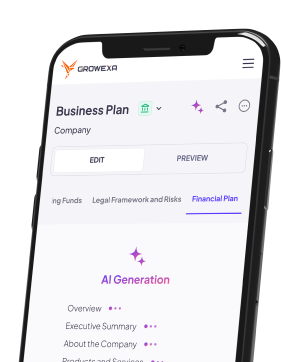
In 2026, the role of AI-driven financial tools has become a game-changer for entrepreneurs. Platforms like Growexa or specialized AI modules within enterprise accounting software now allow business owners to run "pre-underwriting" simulations. These algorithms analyze your financial data exactly how a bank’s software would, identifying potential "red flags" such as:
By using these tools months before applying, you can course-correct, consolidate high-interest debt, or delay the application until your metrics align with the lender's "ideal borrower" profile.
A high-level strategy to impress underwriters is the inclusion of "Stress Test" scenarios in your business plan. Rather than presenting a single "best-case" forecast, provide a three-tiered projection:
By demonstrating that your business can still meet its debt obligations even in a "Moderate Stress" scenario—perhaps by cutting specific non-essential costs outlined in your plan—you position yourself as a sophisticated and low-risk borrower. This level of transparency builds immediate trust with the loan officer, moving your application from the "maybe" pile to the "approved" pile.
Capital is a tool, not a life raft. The most successful American entrepreneurs view a loan as a strategic lever to amplify their existing success, rather than a way to patch a sinking ship. Whether you choose a personal loan for its speed or a business loan for its structural advantages, the quality of your preparation dictates the quality of your terms.
Preparation is effectively 50% of the success in any funding round. By mastering your documentation, utilizing modern AI diagnostics, and presenting a stress-tested business plan, you stop asking for favors and start offering a sound investment opportunity.
Are you ready to secure the capital your business deserves? Begin by conducting a thorough review of your Debt-Service Coverage Ratio and refining your business plan to meet the rigorous standards of today’s institutional lenders.


