
Licensing determines commercial feasibility. Confirm state eligibility, local authorization, ownership requirements, and application procedures before committing substantial capital.
Compliance must be built into operations. Security, inventory reconciliation, employee training, vendor verification, and reporting create recurring costs that belong in the financial model.
Revenue is not a reliable proxy for profitability. Product margins, excise and sales taxes, federal tax treatment, competition, and inventory losses can materially reduce earnings.
Banking and working capital require dedicated planning. Access to financial services cannot be assumed, and cash-handling risks must be addressed through documented controls.
Investors need downside scenarios. Licensing delays, price compression, slower customer acquisition, and higher compliance expenses should be modeled before funding decisions.
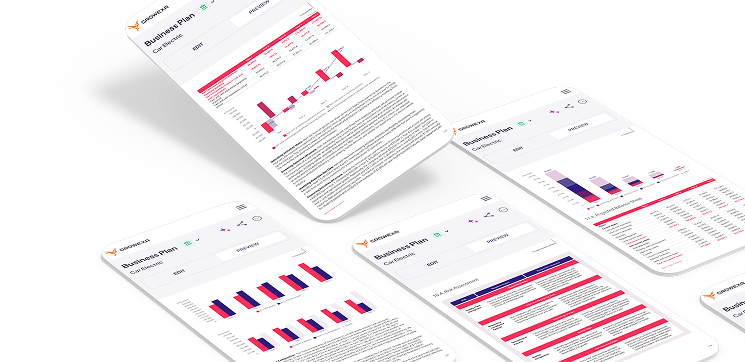

Create a Business Plan in 5 Minutes with AI

A cannabis dispensary operates within a regulatory framework that can restrict market entry, ownership, locations, suppliers, product categories, advertising, and daily operating procedures. These restrictions make regulatory feasibility a prerequisite for financial feasibility.
The business plan must therefore connect its licensing strategy with the proposed operating model. Developing a comprehensive cannabis retail business plan ensures all regulatory, financial, and operational variables are fully modeled before launching. A dispensary authorized to serve medical patients may face different eligibility, purchasing, product, and reporting requirements from a business licensed for adult-use retail. Some jurisdictions permit both activities, subject to additional conditions.
Compliance also influences capital allocation. Surveillance equipment, secure storage, inventory-tracking systems, employee screening, and professional services may be necessary before the business can generate revenue. Unlike optional marketing expenditures, many of these costs cannot be deferred without affecting the ability to operate legally.
The most consequential planning mistake is treating compliance as an administrative expense added after the financial projections are complete. In a regulated cannabis business, compliance affects the location, facility design, staffing structure, supplier relationships, cash management, and ultimately the amount of capital required.
Navigating cannabis business compliance is the foundational prerequisite for establishing a legally viable operation. Cannabis licensing is primarily jurisdiction-specific. States that authorize medical or adult-use cannabis establish their own application procedures, license categories, eligibility requirements, operating rules, and enforcement mechanisms. Local governments may impose additional approvals or restrictions.
A dispensary license business plan should identify the relevant state regulatory authority, the precise retail license category, application or selection procedures, applicable fees, renewal obligations, and any restrictions on license availability. Founders must also determine whether the jurisdiction permits new applications or uses a limited licensing process.
Federal law creates a separate layer of risk. State authorization does not automatically make cannabis activity lawful under federal controlled-substances legislation. Federal scheduling developments and related tax consequences must be checked against the law actually in effect, rather than proposed changes or announcements.
Licensing timelines should be treated as uncertain until the relevant approvals are issued. An application submission, conditional approval, or preliminary local authorization may not permit retail operations.
The financial plan should therefore distinguish the application phase, facility preparation, final authorization, and commercial opening. Expenses incurred during each phase must be funded even if the expected launch date changes.
The federal tax position deserves explicit attention in the plan. The IRS has stated that Internal Revenue Code Section 280E restricts deductions for businesses trafficking in Schedule I or II controlled substances, while properly calculated cost of goods sold can reduce gross receipts. The DEA's June 2026 announcement described marijuana rescheduling as a proposed regulatory action subject to formal proceedings. Accordingly, a 2026 financial model should not assume that proposed rescheduling has already eliminated Section 280E restrictions; the current legal status must be confirmed before publication or investment.
Cannabis licensing authorities may require detailed information about owners, controlling persons, investors, lenders, and other parties with financial interests in the proposed business. The definitions and disclosure thresholds differ by jurisdiction.
The ownership section should identify the legal entity, ownership percentages, management responsibilities, voting rights, and sources of startup capital. Financing arrangements should be reviewed for any provisions that create reportable financial interests or control rights.
A business plan should also demonstrate that sufficient capital is available to complete the licensing process, develop the premises, acquire opening inventory, and fund operations during the initial sales period. Depending on the jurisdiction, applicants may need to provide financial records, funding documentation, or other evidence of financial suitability.
Ownership transparency is not merely an application requirement. Changes in investors, management, or financing arrangements may trigger ongoing disclosure or approval obligations. The operating plan should assign responsibility for monitoring those changes.
A commercially attractive retail location may be unusable for cannabis sales if it fails zoning, distance, licensing, or municipal approval requirements. Site selection should begin with the applicable jurisdiction's rules concerning permitted districts, separation distances, property control, local authorization, and restrictions on retail activity. These conditions can differ between municipalities within the same state.
Operators should avoid making irreversible property commitments before confirming the regulatory pathway. Where possible, lease negotiations should address licensing contingencies, approval timelines, construction obligations, and the consequences of an unsuccessful application.
The financial implications are substantial. A delayed local approval can extend rent, insurance, professional fees, and other preopening expenses without generating revenue.
Location analysis must also consider customer access, competition, visibility, parking, and the purchasing characteristics of the authorized market. However, demand projections should reflect only legally accessible customers and permitted sales channels.
Security is a core operational and regulatory function for licensed cannabis retailers. The business plan should describe how the facility protects employees, customers, products, records, and cash while satisfying applicable state and local requirements.
The security program may involve controlled access, surveillance, alarms, secure storage, visitor management, incident reporting, and coordination with authorized security providers. Exact specifications, retention periods, and procedures must be taken from the jurisdiction's current rules.
The security budget should distinguish installation expenses from recurring monitoring, maintenance, insurance, and staffing costs. Surveillance equipment that satisfies an initial inspection still requires ongoing operation and record management.
Security responsibilities should be assigned to identifiable management roles, with documented training and incident-response procedures. The plan should also explain how security controls integrate with inventory reconciliation and cash accountability.
The commercial implication is that security cannot be evaluated solely as a one-time construction expense. It is part of the permanent operating cost structure and should be included in both base-case and downside forecasts.
Inventory control is particularly important in cannabis retail because licensed products may be subject to mandatory tracking, identification, reconciliation, transfer documentation, and reporting.
Many regulated markets use seed-to-sale tracking systems to record product movement through the licensed supply chain. The required platform, reporting procedures, deadlines, and reconciliation standards depend on the state.
A dispensary's operating model should connect its point-of-sale system, inventory records, receiving procedures, and regulatory reporting obligations. Inventory discrepancies can create compliance exposure in addition to ordinary financial losses.
Management should establish documented procedures for receiving products, verifying authorized transfers, reconciling physical stock, handling returns where permitted, and recording damaged or otherwise unsaleable products.
From a financial perspective, inventory controls affect cost of goods sold, shrinkage, working capital, and purchasing decisions. A business with weak inventory records may overstate gross margin, underestimate losses, or purchase stock that cannot be sold before its permitted shelf life or other applicable limitations.
Inventory accuracy should therefore be treated as both a compliance requirement and a financial reporting control.
A licensed dispensary must source products through channels permitted by its jurisdiction. Supplier availability, product categories, testing requirements, labeling standards, and transfer procedures may be regulated.
The business plan should explain how vendors are evaluated for licensing status, product compliance, reliability, pricing, and delivery performance. It should also identify who verifies supplier documentation and approves purchases.
Vendor concentration presents a commercial risk. Dependence on a small number of suppliers can expose the dispensary to stock shortages, price increases, product recalls, and disruptions affecting customer demand.
At the same time, expanding the supplier base without adequate controls can increase administrative complexity and inventory fragmentation. The purchasing strategy should balance assortment breadth with demand forecasting and available working capital.
The financial model should include realistic wholesale costs, expected product mix, supplier payment terms, and inventory turnover assumptions. Revenue forecasts based on products that are not legally available or commercially accessible to the proposed dispensary are not credible.
A cannabis retail staffing plan must account for customer service, inventory handling, management oversight, security responsibilities, and jurisdiction-specific employee qualifications.
Depending on the state, employees or managers may need registrations, permits, background checks, age eligibility verification, or prescribed training. Requirements may also apply to customer identification, transaction limits, product information, and recordkeeping.
The staffing model should identify management accountability for compliance rather than assigning every obligation to general retail employees. Training and supervision should cover the procedures relevant to each position.
Labor expenses should be forecast by shift and operating hours. A dispensary with extended opening hours may require more coverage than a simple employee headcount suggests, particularly when management or security responsibilities must be maintained throughout the day.
The business should also budget for employee turnover, refresher training, payroll taxes, benefits, and professional compliance support. Understaffing may reduce short-term payroll expense while increasing service problems and operational risk.
Dispensary startup costs vary substantially according to licensing structure, local real estate conditions, facility size, security requirements, inventory strategy, and the time required to obtain final authorization.
A meaningful startup budget should separate regulatory expenses, facility investment, opening inventory, and the cash required before the business becomes self-sustaining.
The following is a hypothetical budget for a leased, single-location retail dispensary. The figures are illustrative planning assumptions, not national industry averages or quotations from suppliers.
| Startup expense | Illustrative budget range |
|---|---|
| Licensing, application, legal, and professional fees | $25,000–$125,000 |
| Lease deposits and preopening occupancy | $30,000–$100,000 |
| Renovation and facility improvements | $100,000–$350,000 |
| Security and surveillance systems | $25,000–$100,000 |
| POS, inventory systems, and IT | $10,000–$35,000 |
| Initial compliant product inventory | $75,000–$200,000 |
| Recruitment, training, and preopening payroll | $30,000–$100,000 |
| Insurance, professional services, and launch expenses | $20,000–$75,000 |
| Working capital and contingency | $150,000–$400,000 |
| Total illustrative funding requirement | $465,000–$1,485,000 |
The actual investment may fall outside this range. In some jurisdictions, limited license availability or extensive development requirements can materially increase capital needs. Conversely, smaller facilities or existing compliant premises may require less investment.
The most important cost distinction is between capital required to open and capital required to survive the launch period. A dispensary that spends its entire budget on property improvements and inventory may lack the liquidity to cover payroll, taxes, insurance, and operating expenses while customer demand develops.
Licensing delays should be modeled separately because they can consume working capital before any sales occur.
A dispensary financial plan should begin with transaction volume, average transaction value, product mix, and the cost of acquiring compliant inventory. Revenue projections based solely on population size or an assumed share of the cannabis market provide insufficient evidence of commercial viability.
Retail gross margin measures the difference between net sales revenue and cost of goods sold. It does not account for payroll, rent, security, compliance, marketing, professional fees, or income taxes.
For example, consider a hypothetical dispensary generating $180,000 in monthly net sales, excluding taxes collected on behalf of government authorities. If merchandise costs total $108,000, gross profit is $72,000 and gross margin is 40%.
The financial outcome changes considerably once operating expenses are included.
| Monthly financial metric | Illustrative amount |
|---|---|
| Net retail sales | $180,000 |
| Cost of goods sold | $108,000 |
| Gross profit | $72,000 |
| Payroll and employee costs | $30,000 |
| Rent and occupancy | $12,000 |
| Security and compliance | $7,000 |
| Insurance, software, and professional services | $5,000 |
| Marketing and administration | $8,000 |
| Operating profit before interest and income taxes | $10,000 |
The resulting operating margin is $10,000 ÷ $180,000 × 100 = 5.6%. These are hypothetical figures, not verified industry averages.
The example excludes income taxes, financing expenses, and other costs not explicitly identified. It also assumes that applicable transaction taxes are treated correctly rather than included indiscriminately in revenue.
Federal taxation requires a separate calculation. Under the IRS guidance cited above, Section 280E can disallow ordinary business deductions for covered cannabis activities, even though properly calculated cost of goods sold remains relevant in determining gross income. Consequently, taxable income may differ substantially from ordinary accounting profit.
The model should also distinguish state cannabis excise taxes, general sales taxes, local cannabis business taxes, and income taxes. These obligations differ by jurisdiction, and their financial treatment depends on the applicable rules.
An attractive gross margin does not guarantee positive after-tax cash flow. Tax planning should be performed by a qualified professional using the law in effect for the relevant tax period.
Access to banking and payment services cannot be assumed simply because a dispensary holds a state license.
Financial institutions serving marijuana-related businesses may face enhanced due diligence, monitoring, and reporting obligations. FinCEN guidance describes expectations for financial institutions that choose to provide such services, including verification of licensing information and ongoing monitoring. It does not require every bank or credit union to accept cannabis-related customers.
The business plan should identify realistic arrangements for receiving customer payments, paying suppliers and employees, maintaining accurate accounting records, and meeting tax obligations.
Where cash transactions are significant, management should implement documented cash reconciliation, secure storage, authorized handling, and deposit procedures consistent with applicable law and financial institution requirements.
Cash flow forecasting should distinguish accounting revenue from funds available to pay operating expenses. Inventory purchases, tax payments, insurance premiums, and financing obligations can create substantial liquidity requirements even when the business reports an operating profit.
The plan should not assume unrestricted access to conventional card processing, financing, or other banking products. Any proposed financial service arrangement should be verified with an appropriately authorized provider before it becomes a core financial assumption.
A cannabis retail financial model should cover at least the development period, the initial operating ramp-up, and a stabilized operating scenario. Monthly projections are particularly valuable because licensing delays and slow customer acquisition can create significant cash shortfalls before the business reaches break-even.
The model should connect customer transactions, average ticket size, product margins, operating expenses, inventory purchases, taxes, and financing requirements.
Using the illustrative operating statement above, assume monthly fixed operating expenses of $62,000 and a 40% gross margin. Under those assumptions, operating break-even revenue equals $62,000 ÷ 40% = $155,000 per month, before interest and income taxes.
At an average transaction value of $60, the business would need approximately 2,584 transactions per month, or about 86 transactions per day over a 30-day month, to cover those operating expenses.
This calculation assumes a stable product mix and gross margin. It does not establish after-tax break-even, particularly where federal deduction restrictions affect the relationship between accounting profit and tax liabilities.
A useful financial model should compare multiple scenarios.
| Financial metric | Base case | Conservative case | Downside case |
|---|---|---|---|
| Monthly net sales | $180,000 | $150,000 | $120,000 |
| Gross margin | 40% | 37% | 34% |
| Gross profit | $72,000 | $55,500 | $40,800 |
| Operating expenses | $62,000 | $62,000 | $64,000 |
| Operating profit or loss | $10,000 | −$6,500 | −$23,200 |
The conservative case combines weaker sales with lower product margins. The downside case assumes further revenue deterioration and higher operating costs.
These changes can arise from competition, price discounting, supplier cost increases, regulatory expenses, or slower customer acquisition. The scenarios are illustrative and do not represent forecasts for a particular state.
The business plan should translate each scenario into monthly cash requirements, including inventory purchases, financing obligations, and tax payments. The relevant question is whether the company has sufficient liquidity to remain compliant and operational while adverse conditions persist.
Investors evaluating a cannabis dispensary business plan will generally scrutinize regulatory feasibility, the credibility of projected sales, the reliability of funding sources, and the operator's ability to maintain compliance. A projected high-growth retail business is not necessarily attractive if licensing remains uncertain or if the company has committed substantial capital to a location that may not receive approval.
Investors will also examine the relationship between expected sales and local competition. A dispensary entering a market with numerous established operators may face price compression, higher customer acquisition costs, and slower inventory turnover.
Gross margin assumptions should be supported by realistic supplier quotations and product mix forecasts. Labor, security, compliance, insurance, and professional service expenses should reflect the requirements of the intended jurisdiction.
The most important financing question concerns resilience. Investors need to understand how much capital could be lost if licensing is delayed, sales develop slowly, or tax and regulatory costs exceed expectations.
A credible plan should therefore document assumptions, identify material risks, and show how management will preserve liquidity without compromising legal obligations.
Before submitting a dispensary license application, financing proposal, or investor presentation, management should confirm that the operating plan addresses the following areas.
| Review area | Required planning evidence |
|---|---|
| License eligibility | Applicable license category, application requirements, and eligibility review |
| Ownership and funding | Required disclosures, entity structure, and documented capital sources |
| Location | Zoning verification, property control, and local approval pathway |
| Facility security | Security policies, approved systems, and responsible personnel |
| Inventory controls | Tracking, reconciliation, receiving, and recordkeeping procedures |
| Suppliers | Licensing verification and compliant purchasing arrangements |
| Employees | Required registrations, training, supervision, and staffing coverage |
| Financial projections | Startup costs, margins, taxes, cash flow, and downside scenarios |
| Banking and payments | Verified financial service arrangements and documented cash controls |
| Ongoing compliance | Renewal calendar, internal reviews, reporting responsibilities, and professional oversight |
The checklist is a planning tool, not a substitute for a jurisdiction-specific application package. For example, California's Department of Cannabis Control publishes detailed requirements concerning retailer licensing, security, inventory documentation, and track-and-trace reporting. These rules illustrate the depth of operational detail regulators may require, but they cannot be applied automatically to another state.
A cannabis dispensary business plan should be evaluated as an integrated regulatory, operational, and financial model. Licensing determines whether the business can operate; security and inventory systems determine whether it can maintain compliance; and margins, taxation, and working capital determine whether it can generate sustainable returns.
The most credible plans do not treat compliance as an appendix or assume that market growth will compensate for weak economics. They establish a legally supportable operating model, quantify the full cost of maintaining it, and demonstrate resilience under conservative financial assumptions.
For founders preparing an investment or licensing proposal, the next step is to consolidate those assumptions into a documented plan. The Growexa business planning platform provides tools to structure business strategy and financial projections. Entrepreneurs can create a cannabis business plan and review business plan software pricing before selecting a planning workflow.
A useful business plan does not simply make a dispensary look financially attractive. It demonstrates that the proposed operation can meet its obligations, withstand foreseeable setbacks, and justify the capital committed.
A dispensary business plan should cover licensing eligibility, ownership disclosures, location and zoning, security, inventory controls, supplier relationships, staffing, startup costs, financial projections, taxation, cash management, and compliance responsibilities. It should also include conservative scenarios addressing licensing delays, lower sales, and higher operating costs.
Costs vary substantially by jurisdiction, licensing process, property requirements, security investment, and opening inventory. The illustrative budget in this article ranges from $465,000 to $1.485 million for a leased single-location dispensary. Actual requirements may be significantly higher or lower, and the figures should not be interpreted as national averages.
Yes. A business selling regulated cannabis products must obtain the licenses and approvals required by the jurisdiction in which it intends to operate. State licensing may be accompanied by local authorization, zoning approval, inspections, and ongoing compliance obligations. State authorization does not eliminate federal legal considerations.
A licensed dispensary can generate operating profits, but profitability depends on sales volume, gross margin, inventory costs, staffing, security, occupancy expenses, and taxation. Federal tax treatment may cause after-tax results to differ substantially from ordinary operating profit. Investors should assess cash flow rather than relying on sales growth alone.
There is no single risk that dominates every market. Licensing delays, insufficient working capital, declining retail prices, high operating costs, inventory losses, and tax liabilities can all threaten viability. The most serious financial exposure often arises when several risks occur simultaneously.
Some licensed cannabis businesses may obtain financing or financial services from providers willing and authorized to serve the sector, but availability, eligibility, documentation, and terms vary. Entrepreneurs should verify funding arrangements and applicable restrictions before including loan proceeds in their financial projections.
No. A scheduling change would not, by itself, establish unrestricted federal legality for state-licensed retail dispensaries. Its implications would depend on the final federal rules and other applicable legal requirements. Tax and regulatory assumptions should be reviewed against enacted and effective law, not proposals.


