
LivePlan is best for ongoing financial forecasting. Its financial modeling, accounting integrations, and performance monitoring make it suitable for established small businesses evaluating small business planning tools.
Upmetrics is best for structured business plan creation. It combines guided writing, AI assistance, financial projections, and collaboration tools as a reliable business plan creator software for founders and consultants.
Growexa is best for AI-assisted business plan generation. It helps entrepreneurs prepare structured business plans with financial projections, making it a top contender for best business plan software 2026, particularly for bank loans and investor presentations.
IdeaBuddy is best for early-stage idea validation. Its business modeling, planning templates, and basic financial tools help founders assess concepts before committing significant capital.
The best software depends on the business objective, not the feature count. Prioritize financial accuracy, scenario planning, export capabilities, and long-term usability over automated drafting speed or subscription price alone.
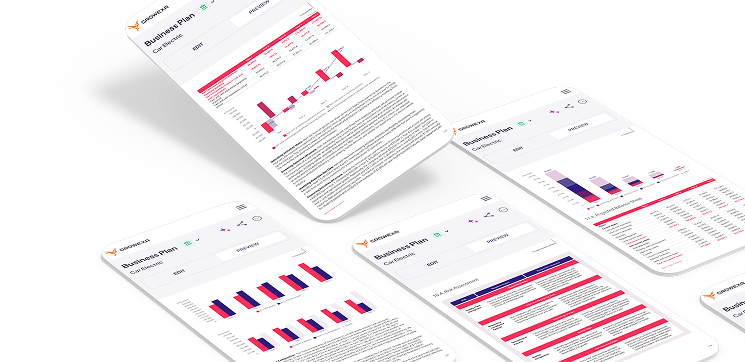

Create a Business Plan in 5 Minutes with AI

| Software | Best for | Financial capabilities | AI assistance | Principal limitation |
|---|---|---|---|---|
| LivePlan | Ongoing forecasting and business performance | Integrated financial statements and performance monitoring | AI-assisted planning | Advanced management features may exceed one-time planning needs |
| Upmetrics | Structured business plan creation | Financial forecasts and planning tools | AI writing and planning assistance | Detailed assumptions still require manual verification |
| Growexa | AI-assisted business plan preparation | Financial projections and plan-oriented financial statements | AI-centered drafting workflow | Ongoing accounting integration and performance monitoring are less clearly documented |
| IdeaBuddy | Early-stage idea development | Basic financial planning and business modeling | AI-assisted idea and plan development | Less appropriate for complex financial management |
| Bizplan | Guided startup business planning | Financial planning tools | Verify current AI functionality | Not primarily positioned for continuous forecasting |
| PlanBuildr | Template-guided plan writing | Financial projections within the planning workflow | Verify current AI functionality | Limited publicly documented advanced management capabilities |
Best starting points by use case: LivePlan for established businesses prioritizing financial monitoring; Upmetrics for founders who want structured editing and planning; Growexa for AI-assisted plan production; IdeaBuddy for early concept development.
These are editorial recommendations, not claims that one platform outperforms every competitor. Feature availability, export options, integrations, and pricing should be confirmed against the vendor's current subscription terms.
This business plan software comparison considers ten criteria that affect the practical value of a planning platform.
| Evaluation criterion | Why it matters |
|---|---|
| Guided business-plan creation | Reduces the effort required to structure a complete document |
| Financial projections | Connects revenue, expenses, profitability, and liquidity |
| Scenario planning | Shows how changes in assumptions affect financial results |
| AI assistance | Accelerates drafting and organization without replacing verification |
| Templates and examples | Helps users identify relevant business information |
| Collaboration | Supports multiple contributors, consultants, and reviewers |
| Exports | Determines whether the finished plan can be shared in the required format |
| Accounting integrations | Connects planning assumptions with actual operating performance |
| Lender and investor suitability | Supports the documentation required for financing discussions |
| Price and value | Measures cost against the features and frequency of use |
The criteria are applied consistently, but their relative importance depends on the buyer. Financial monitoring may be decisive for an established business, while a founder preparing a first plan may place greater weight on guided drafting and initial forecasting.
This article also distinguishes business plan software from generic productivity applications. A word processor can produce a business plan, and a spreadsheet can calculate financial projections, but neither necessarily provides an integrated planning workflow.
The platforms selected here are specifically designed to support business planning or closely related financial modeling. The analysis does not assign artificial numerical scores because no standardized product-testing dataset supports such precision.
Best for: Founders and small-business owners who want to produce a structured business plan with AI assistance, particularly for financing-oriented presentations.
Growexa focuses on AI-supported business plan preparation. Its workflow is designed to help users organize business information, develop narrative sections, and incorporate financial projections into a completed planning document.
Key strengths. The principal advantage is drafting efficiency. Entrepreneurs who are unfamiliar with conventional business plan structures can use a guided, AI-assisted process rather than preparing every section manually. Industry-specific planning resources can also help identify the relevant revenue drivers, operating expenses, and startup investment requirements.
Limitations. Automated drafting does not independently establish market demand, validate supplier costs, or guarantee that financial projections are realistic. Users must review assumptions and ensure that the plan reflects their actual business. Companies requiring continuous accounting synchronization or advanced operational forecasting should verify whether the available functionality meets those needs.
Pricing. Growexa offers subscription-based access, with current terms available through Growexa pricing. Trial conditions, plan limits, and export permissions should be checked before purchase.
Financial capabilities. Growexa's planning workflow includes financial projections intended to support the business plan, including revenue, expenses, profitability, and related financial statements. Users should confirm the available modeling depth for complex financing arrangements or multi-unit operations.
AI capabilities. AI-assisted narrative generation is central to the platform's positioning. This can reduce initial drafting time, although the resulting content requires business-specific review.
Ideal user. A founder preparing a startup, expansion, bank, or investor business plan who wants a structured first draft and financial model without building the entire document from scratch.
The Growexa business plan generator is most relevant when document preparation is the immediate priority rather than continuous financial management.
Best for: Established small businesses that need financial forecasting and ongoing performance monitoring.
LivePlan combines guided business plan development with financial forecasting and tools designed to help owners compare planned performance with actual results.
Key strengths. Its strongest differentiation is the relationship between financial planning and business management. Users can develop financial forecasts and, with applicable functionality, review performance against those projections. This is particularly valuable for companies that already generate reliable operating data and want to improve budgeting discipline.
Limitations. A broader financial management workflow may be unnecessary for a founder preparing a single document. Users should also consider the learning effort required to maintain forecasts and interpret performance reports.
Pricing. LivePlan uses subscription pricing with different feature tiers. The appropriate comparison is not simply the entry-level subscription price, but the cost of the tier that includes the required forecasting, collaboration, and accounting functionality.
Financial capabilities. LivePlan supports profit-and-loss, cash-flow, and balance sheet forecasting. Its higher-tier functionality is particularly relevant to ongoing forecasting and actual-versus-plan analysis.
AI capabilities. The platform includes AI-supported planning assistance. Its core proposition, however, extends beyond generating narrative content to maintaining a financial planning process.
Ideal user. An operating business with recurring revenue and expense data, especially one that wants to use its business plan as a management tool throughout the year.
For this audience, the return on software investment may come less from reducing writing time and more from identifying unfavorable financial variances early enough to respond.
Best for: Founders, consultants, and small-business owners who want a structured planning environment with AI assistance and financial forecasting.
Upmetrics combines guided business plan creation, templates, financial modeling, and AI-supported drafting. Its workflow is designed for users who want to develop a complete plan while retaining control over individual sections.
Key strengths. The platform offers a structured approach to writing and editing business plans. Industry templates and examples can help users organize their information, while AI assistance can accelerate the preparation of narrative content.
Its combination of planning and financial forecasting is useful for founders preparing conventional business plans and supporting projections. Consultant-oriented functionality may also be relevant for users managing several planning projects.
Limitations. Templates and AI-generated sections can become generic if users do not replace assumptions with actual market and operating information. Businesses with complex financing structures should verify whether the forecasting tools support their specific requirements.
Pricing. Upmetrics offers subscription tiers with different functionality and billing options. Users should compare project limits, collaboration permissions, and financial features rather than focusing exclusively on the advertised entry price.
Financial capabilities. Upmetrics supports financial forecasting as part of the business planning process. This enables users to connect projected revenue and expenses with the narrative assumptions in their plan.
AI capabilities. AI-assisted writing and planning are integrated into the workflow. Users can develop sections with automated assistance while retaining editing control.
Ideal user. A startup founder or consultant who wants a conventional business plan structure, financial projections, and the flexibility to revise individual sections.
Upmetrics is particularly relevant when the user values an organized editing process rather than maximizing the automation of the initial document.
The following platforms serve narrower business planning needs. They are included because they provide dedicated planning workflows, not simply because they can store documents or manage projects.
Best for: Entrepreneurs validating an early-stage concept before committing significant capital.
Key strengths. IdeaBuddy combines a business model canvas, guided idea development, financial planning, and a business plan builder. Its approach is useful when a founder has not yet established the customer proposition, revenue mechanism, or initial operating assumptions. The platform also offers idea validation tools, templates, collaboration, and document exports.
Limitations. A guided ideation workflow may be less suitable for an established business requiring detailed operational budgets, complex debt schedules, or ongoing financial performance monitoring. Founders should also verify which tools are available under each subscription.
Pricing. IdeaBuddy advertises a free 15-day trial, followed by paid Dreamer and Founder plans. The current pricing page did not expose reliable numerical prices in the retrieved text, so specific paid rates should be confirmed directly with the vendor rather than inferred from historical promotions.
Financial capabilities. Financial planning includes sales, expenses, profit-and-loss projections, and cash-flow forecasting. These features are useful for testing an initial business concept.
AI capabilities. IdeaBuddy advertises AI assistance for business planning and writing, with request limits depending on the plan.
Ideal user. A first-time founder who needs to determine whether an idea is commercially plausible before investing in a detailed financing proposal.
Best for: Startup founders who prefer a guided, section-by-section business planning process.
Key strengths. Bizplan has historically emphasized a structured business plan builder, financial planning, and startup-oriented presentation. This approach is relevant to founders who want to develop the business model progressively rather than begin with an automatically generated document.
Limitations. Its current feature availability, integrations, collaboration permissions, and product development status require direct confirmation. It should not be selected for advanced forecasting or AI functionality without testing the current product.
Pricing. Current subscription rates could not be independently verified from an accessible official pricing source during this review.
Financial capabilities. Financial planning has been part of the platform's established offering, but the current scope of forecasting and scenario analysis should be confirmed.
AI capabilities. No specific AI feature set is asserted here because current official documentation was not sufficiently verified.
Ideal user. A founder who values a conventional, guided startup planning structure and is prepared to verify current product availability before purchasing.
Best for: Entrepreneurs seeking a guided business plan creation process or considering professional writing assistance.
Key strengths. PlanBuildr offers a dedicated business plan creation workflow organized around business information and funding needs. Its associated professional writing service covers market analysis, business strategy, and financial projections.
Limitations. The self-service software and professionally prepared business plans are different offerings. Buyers should distinguish subscription access from the scope, cost, and deliverables of the writing service. Advanced forecasting, accounting integrations, and current AI functionality were not sufficiently documented for a detailed feature comparison.
Pricing. PlanBuildr offers subscription arrangements, including monthly and annual access, but current self-service rates were not verified. Its separately advertised professional business plan writing service starts at $3,500; this is not the price of the self-service software.
Financial capabilities. Financial projections are included in the professional writing service. The precise modeling functionality available through self-service software should be confirmed separately.
AI capabilities. Current AI functionality could not be reliably established from the official pages reviewed.
Ideal user. An entrepreneur who wants a structured plan-building workflow or is evaluating whether to prepare the document independently or commission professional assistance.
A lender-ready business plan is fundamentally a financial document supported by a commercial narrative. Its purpose is to explain how the company will use borrowed capital and generate sufficient cash flow to meet its obligations.
The most useful software for this purpose should connect revenue forecasts, operating costs, working capital, existing debt, and proposed financing. It should also produce financial statements that are internally consistent with the written plan.
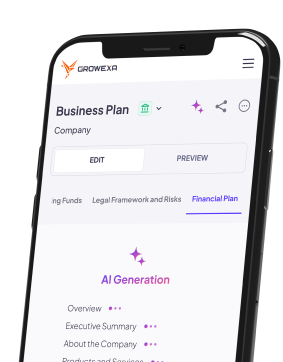
Growexa is a relevant option for founders preparing a financing-oriented business plan through an AI-assisted workflow. Its published features include bank-oriented plan formats, projected financial statements, and PDF export. LivePlan is particularly relevant when the borrower needs detailed forecasts and expects to monitor operating performance after obtaining financing. Upmetrics provides a structured environment for preparing conventional business plans and financial projections.
The distinction becomes important when the borrower has an established operating history. Historical financial statements and actual business performance may carry greater weight than an automatically generated narrative.
No business planning platform guarantees lender acceptance. Borrowers should verify required documents and use the software to organize a credible financial case. A practical starting point is selecting business planning software for bank loans that supports the lender's requested financial schedules.
For ongoing financial forecasting, LivePlan is the strongest starting point among the principal platforms reviewed. Its emphasis on financial statements, accounting connections, and performance monitoring makes it relevant to operating companies that need to revise budgets and compare results with forecasts.
Upmetrics is also suitable for developing integrated financial projections within a business plan. It is worth evaluating when the primary requirement is preparing a forecast for a new venture or financing presentation rather than maintaining an ongoing management-reporting process.
Growexa supports financial projections within its business plan generation workflow. This may be sufficient for founders who need a financial model as part of a completed document, but businesses requiring specialized forecasting functionality should test the available assumptions and outputs.
A meaningful financial comparison should consider more than whether software can calculate profit. Cash flow, working capital, debt service, capital expenditure, and scenario analysis often determine whether a business remains financially viable.
For example, a retailer may report strong operating margins while experiencing cash shortages because inventory purchases occur before customer sales. Software that cannot represent those timing differences may produce forecasts that appear attractive but offer limited management value.
The best forecasting platform is therefore the one that models the company's actual economic drivers and can be maintained as conditions change.
Startups need planning tools that help establish the business model before requiring extensive documentation. The most useful features are customer segmentation, revenue assumptions, startup cost estimates, and the ability to revise the plan as evidence develops.
IdeaBuddy is particularly relevant during the earliest stage because it combines business model development with basic financial planning and idea validation.
Upmetrics is suitable when the founder is ready to develop a complete business plan using guided sections, examples, and financial forecasts.
Growexa is an alternative for users who want AI-assisted preparation of a more complete first draft.
LivePlan becomes particularly relevant when financial forecasting is a central requirement or the startup expects to maintain detailed budgets after launch.
The key strategic issue is avoiding false precision. A startup with no sales history may not benefit from elaborate five-year projections if its customer acquisition assumptions remain untested.
Planning software should help founders identify the assumptions that matter most, rather than encourage them to treat uncertain estimates as established financial results.
Consultants require a different software selection framework from individual founders. Their work may involve multiple client projects, document customization, collaboration, repeated revisions, and different financial reporting requirements.
Upmetrics is worth considering because its Professional offering is explicitly positioned toward consultants, incubators, and advisers. The vendor also offers add-ons for workspaces, team members, and white-label functionality.
Growexa's Professional plan supports multiple active projects and team collaboration, making it relevant to consultants preparing standardized business plans for several clients. Its suitability depends on project limits, export requirements, and the amount of customization needed.
LivePlan may be preferable for consultants whose services include recurring financial forecasting, performance reviews, and ongoing business advisory work.
IdeaBuddy also offers organizational and white-label options, which may be relevant to incubators or entrepreneurship programs.
For consultants, the correct measure of value is not subscription price alone. It is the time required to complete and revise each engagement, the quality of the financial outputs, and the ease of maintaining separate client information.
Free business planning tools can be sufficient for validating an idea, preparing an initial outline, or testing a simple revenue model. However, free access does not necessarily include complete financial statements, unrestricted exports, multiple projects, or advanced collaboration.
IdeaBuddy offers a limited free trial with access to selected planning tools and AI assistance. LivePlan does not currently advertise a free trial, but offers a 35-day money-back guarantee. Growexa advertises a three-day trial. The following table provides a pricing reference for the principal paid platforms.
Official pricing pages reviewed October 19, 2026. Prices in USD; annual rates shown as monthly equivalents.
| Software | Monthly billing | Annual billing equivalent |
|---|---|---|
| LivePlan Standard | $20/month | $15/month |
| LivePlan Premium | $40/month | $24/month promotional first-year rate |
| Upmetrics Premium | $19/month | $14/month |
| Upmetrics Professional | $49/month | $37/month |
| Growexa Starter | $19/month | $13/month |
| Growexa Professional | $35/month | $24/month |
| Bizplan | $29/month | $20.75/month |
Sources: official LivePlan, Upmetrics, Growexa, and Bizplan pricing pages. Promotional terms and renewal prices may differ.
The relevant comparison is the total cost of completing and maintaining the required planning work. A $15 monthly subscription that requires extensive manual financial modeling may cost more in management time than a higher-priced platform with appropriate forecasting functionality.
The reverse is also true. An entrepreneur preparing a single business plan may receive little additional value from paying for advanced accounting integrations or ongoing performance dashboards.
Free software is most appropriate when the planning requirements are simple and the user can independently validate financial assumptions. Paid software becomes more compelling when it reduces repetitive work, integrates financial calculations, or supports recurring planning activities.
Business planning software is frequently marketed through the number of templates, AI functions, or sample plans included. These features may improve usability, but they do not necessarily determine whether the software supports better financial decisions.
For most small businesses, three capabilities deserve particular attention. First, financial consistency. Revenue, expenses, staffing, capital expenditure, and financing assumptions should flow through the financial statements without creating unexplained contradictions. A business plan that forecasts growth but omits the associated working-capital investment may overstate financial viability.
Second, the ability to test assumptions. Management should be able to examine how lower sales, reduced margins, delayed customer payments, or higher operating expenses affect profitability and liquidity. Scenario planning is especially important for businesses seeking debt financing or making substantial capital commitments.
Third, the usefulness of the final output. A business plan may need to be reviewed by a bank, investor, consultant, or internal management team. Export quality, editing flexibility, and supporting financial schedules should match that audience's requirements.
AI assistance, collaboration, templates, and integrations should be evaluated in relation to these objectives.
For example, an AI tool that produces a complete narrative in minutes may save substantial preparation time. But if its financial assumptions cannot be reconciled with supplier quotations, historical sales, or debt obligations, the resulting document may require extensive revision.
Similarly, accounting integrations create value only when the business has reliable financial records and intends to use them for forecasting and performance monitoring.
The strongest software choice is therefore the one that reduces the cost of making informed decisions, not merely the cost of producing a document. The best business plan software for small businesses in 2026 depends on what the business needs to accomplish after the plan is written.
LivePlan is particularly relevant when ongoing forecasting and performance management justify a continuing subscription. Upmetrics offers a structured approach to business planning and financial projections. Growexa emphasizes AI-assisted preparation of business plans, while IdeaBuddy, Bizplan, and PlanBuildr serve more specific planning workflows.
The economic value of planning software should be measured through time saved, the reliability of financial analysis, and the quality of decisions it supports. A faster first draft is useful, but accurate assumptions and a maintainable financial model are more important when significant capital is at risk.
For founders preparing a new business plan or financing proposal, Growexa's AI business plan software offers a workflow for developing structured business documentation and financial projections. Compare the available features and subscription terms against your actual requirements before committing.
The objective is not simply to finish a business plan. It is to create a planning process that remains useful when business conditions change and management must decide what to do next.
LivePlan is a strong option for established businesses that need financial forecasting and performance monitoring. Upmetrics is suitable for structured business plan development, while Growexa emphasizes AI-assisted document preparation. The best choice depends on whether the business needs a one-time plan, financing documentation, or ongoing financial management.
IdeaBuddy is relevant for early-stage idea validation. Upmetrics and Growexa are practical options for founders developing complete business plans, while LivePlan is particularly useful when detailed financial forecasting is a priority. Startups should select software based on their development stage and the evidence required for their next financing or operating decision.
Paid software can be worthwhile when it reduces drafting time, improves financial consistency, supports collaboration, or provides useful forecasting capabilities. Its value depends on the complexity of the business and how frequently the planning tools will be used. Simple businesses may be able to begin with free templates and spreadsheets.
Yes. Dedicated business planning platforms commonly support revenue, expense, and profitability forecasts. More advanced tools may also generate cash-flow and balance sheet projections, scenario analysis, and performance reports. Users should verify whether the software can represent their specific financing and operating assumptions.
Growexa, LivePlan, and Upmetrics can support preparation of business plans and financial projections for financing discussions. LivePlan is particularly relevant for detailed financial management, while Growexa and Upmetrics offer structured plan-development workflows. No platform guarantees loan approval or replaces lender-specific documentation.
Not necessarily. AI can accelerate drafting and organization, but traditional forecasting functionality may be more valuable when a business requires detailed financial analysis or ongoing performance monitoring. The strongest solution depends on the balance between writing assistance, financial modeling, and management requirements.
A general-purpose AI assistant can help draft sections, organize research, and explain financial concepts. However, users may still need separate spreadsheets, financial modeling tools, and document formatting. Dedicated business planning software can provide integrated workflows and calculations, although all outputs still require verification.
Confirm financial forecasting capabilities, export formats, project limits, collaboration permissions, subscription renewal terms, and any required integrations. Testing the platform with realistic business assumptions is more informative than comparing feature lists alone.


