
Determine the licensing category before selecting property. States regulate assisted living under different facility classifications, with requirements that may change according to capacity and resident care needs.
Budget for both development and operating losses. Property, renovations, accessibility, equipment, licensing, insurance, preopening payroll, and working capital all affect startup funding.
Model staffing around resident needs and regulatory obligations. Labor costs cannot always be reduced proportionately when occupancy is low.
Distinguish private-pay revenue from Medicaid reimbursement. Medicaid coverage and provider eligibility vary by state, and federal Medicaid generally does not pay for room and board in assisted living.
Calculate break-even occupancy and cash reserves. A facility may require substantial working capital before resident revenue covers its recurring expenses.
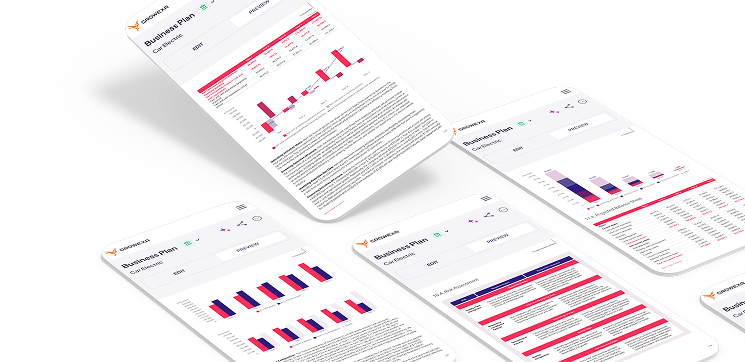

Create a Business Plan in 5 Minutes with AI

Learning how to start an assisted living facility begins with understanding that assisted living generally combines residential accommodation with personal care, supervision, assistance with daily activities, meals, and supportive services. The precise services that a licensed facility may provide depend on state regulations and the resident population it is authorized to serve.
This distinction is fundamental to the business model. A facility serving relatively independent older adults may require a different staffing structure from one supporting residents with extensive personal care needs or cognitive impairment. Some states regulate memory care services through additional requirements, endorsements, disclosures, or specialized facility categories.
Unlike skilled nursing facilities, assisted living residences are primarily regulated through state licensing frameworks rather than a single nationwide federal assisted living license. Federal requirements may still apply to employment, accessibility, consumer protection, and participation in particular funding programs.
The operating strategy should begin with four linked decisions: the resident population, the range of services offered, the property's size and configuration, and the intended payer mix. These decisions determine the applicable license, physical infrastructure, staffing requirements, and expected revenue per resident.
A higher-acuity resident population may support higher service charges, but it can also require more labor, training, equipment, and regulatory oversight. Higher revenue per resident does not automatically translate into a higher operating margin.
Understanding total assisted living facility startup costs is essential for realistic financial planning. The capital required to establish an assisted living facility varies widely. Leasing and adapting an existing small residential property can involve a very different cost structure from acquiring commercial real estate or developing a new purpose-built community.
For initial feasibility analysis, investors should separate one-time development costs from recurring operating expenses and the cash reserves needed during occupancy ramp-up.
The following figures illustrate a hypothetical 20-resident facility using an existing property. They are not national market averages, contractor quotations, or estimates of costs in a particular state.
| Startup cost category | Illustrative planning range |
|---|---|
| Property acquisition or lease-related upfront costs | $100,000–$600,000 |
| Renovation, accessibility, and safety improvements | $150,000–$500,000 |
| Licensing, legal, design, and professional fees | $20,000–$75,000 |
| Furniture, fixtures, and equipment | $60,000–$150,000 |
| Insurance deposits and initial coverage | $15,000–$45,000 |
| Recruitment, training, and preopening payroll | $50,000–$125,000 |
| Initial supplies, systems, and marketing | $25,000–$65,000 |
| Working capital reserve | $200,000–$500,000 |
| Total illustrative funding requirement | $620,000–$2,060,000 |
The property line represents upfront cash committed under an acquisition or lease structure, not necessarily the full market value of purchased real estate. A property acquisition funded with debt would require a separate schedule showing purchase price, loan proceeds, equity contribution, and closing expenses. Major construction, land acquisition, or a larger facility could require substantially more funding.
Property is often the largest capital commitment. Investors must evaluate purchase or lease costs alongside the building's suitability for the intended licensing category.
A property that appears affordable may require extensive conversion work or may not qualify for the proposed use. Bedroom configuration, bathrooms, circulation areas, common spaces, parking, and access for residents with mobility limitations can materially affect feasibility.
Renovations may include accessible bathrooms, ramps, wider circulation routes, fire protection systems, emergency lighting, call systems, commercial kitchen improvements, and other modifications.
The required work depends on applicable building and fire codes, state licensing rules, local approvals, and the building's existing condition. Accessibility obligations must also be evaluated under relevant federal, state, and local requirements.
Investors should obtain professional assessments before finalizing property commitments.
Meeting assisted living license requirements involves factoring in legal, regulatory, and direct state application fees. Licensing expenses can include application and inspection fees, legal assistance, architectural services, engineering, policies and procedures, and professional support for regulatory preparation.
The direct license fee may be relatively small compared with the cost of preparing the building and operating systems for approval. Delays can also extend the period during which the project incurs expenses without resident revenue.
Facilities generally require resident furnishings, common-area furniture, kitchen and laundry equipment, office systems, emergency supplies, and equipment appropriate to the authorized care model.
Higher-acuity services may require additional resident assistance equipment. Procurement should follow the approved service model rather than assumptions borrowed from unrelated healthcare facilities.
Coverage may include general liability, professional liability, property insurance, workers' compensation, commercial vehicle insurance, and other protections depending on the operation.
Insurers may assess resident characteristics, staffing, safety procedures, property condition, and claims exposure. Premiums and coverage availability should be investigated early because insurance requirements can affect licensing and financing.
Operators may need to recruit administrators, caregivers, and other essential personnel before accepting residents. Training, background checks, orientation, policy development, and inspections can generate payroll expenses before the first admission.
Underestimating preopening staffing costs can create immediate liquidity pressure.
Working capital finances operating expenses while occupancy increases. It should cover payroll, food, utilities, insurance, maintenance, supplies, financing obligations, and other costs that continue regardless of resident census.
The appropriate reserve depends on the occupancy ramp-up forecast and downside scenarios. It should be calculated through monthly cash-flow projections rather than selected as a fixed percentage of construction costs.
There is no single assisted living license valid across the United States. States use different facility classifications, licensing authorities, resident eligibility rules, staffing requirements, and approaches to specialized services.
For example, one state may license assisted living under a residential care category, while another distinguishes assisted living from personal care homes or adult family homes. Some states use facility size to determine the applicable license, while others focus on services, resident characteristics, or the level of assistance provided.
These distinctions can materially affect the financial model. A proposed facility may require a different physical layout, staffing arrangement, administrator qualification, or inspection process depending on the state and license category.
Licensing should therefore be evaluated before property acquisition. A building's existing residential or commercial use does not establish that it can operate as a licensed assisted living facility.
The state reference below identifies primary licensing authorities and facility categories. It is a starting point for regulatory due diligence, not a substitute for reviewing current regulations, application instructions, and local approvals.
The following directory covers all 50 states and Washington, DC. It identifies the principal state agency or official government entry point and the facility categories prospective operators should investigate. Agency links are provided for regulatory verification; not every link opens directly to an assisted living application.
Directory reference date: October 16, 2026. This is a regulatory research directory, not a certification that every linked rule, category, or application has been independently verified as current on that date. Before relying on a particular classification, confirm the latest requirements with the licensing authority. Facility size, resident characteristics, memory care, and the services provided may change which rules apply.
| State | Licensing authority and official URL | Primary facility category | Capacity or service distinctions to verify |
|---|---|---|---|
| Alabama | Alabama Department of Public Health | Assisted Living Facility | Specialty care assisted living has additional requirements |
| Alaska | Department of Health | Assisted Living Home | Requirements vary with resident needs and authorized services |
| Arizona | Department of Health Services | Assisted Living Facility | Supervisory, personal, and directed care service levels |
| Arkansas | Department of Human Services | Assisted Living Facility | Level I and Level II assisted living distinctions |
| California | Department of Social Services | Residential Care Facility for the Elderly (RCFE) | Small and larger facilities; dementia care and administrator requirements |
| Colorado | Department of Public Health and Environment | Assisted Living Residence | Secure environments and specialized services require review |
| Connecticut | Department of Public Health | Assisted Living Services Agency | Services agency regulation differs from residential property oversight |
| Delaware | Department of Health and Social Services | Assisted Living Facility | Resident assessment and service limitations |
| District of Columbia | DC Health | Assisted Living Residence | Resident service scope and building approvals |
| Florida | Agency for Health Care Administration | Assisted Living Facility | Standard license and applicable specialty licenses |
| Georgia | Department of Community Health | Assisted Living Community | Personal Care Home versus Assisted Living Community; capacity thresholds |
| Hawaii | Department of Health | Assisted Living Facility | Adult Residential Care Home is a separate category |
| Idaho | Department of Health and Welfare | Residential Assisted Living Facility | Resident care levels and staffing capabilities |
| Illinois | Illinois Department of Public Health | Assisted Living Establishment | Shared Housing Establishment is a separate category |
| Indiana | Indiana Department of Health | Residential Care Facility | Health services and residential care licensing distinctions |
| Iowa | Department of Inspections, Appeals, and Licensing | Assisted Living Program | Dementia-specific programs and other service categories |
| Kansas | Kansas Department for Aging and Disability Services | Assisted Living Facility | Residential Health Care Facility is a separate classification |
| Kentucky | Cabinet for Health and Family Services | Assisted Living Community | License and service requirements depend on care arrangements |
| Louisiana | Louisiana Department of Health | Adult Residential Care Provider | Multiple licensing levels and service distinctions |
| Maine | Department of Health and Human Services | Assisted Housing Program | Assisted Living Programs, Residential Care Facilities, and related categories |
| Maryland | Maryland Department of Health | Assisted Living Program | Levels of care and approved resident capacity |
| Massachusetts | Executive Office of Aging & Independence | Assisted Living Residence | Certification framework; specialized care requirements |
| Michigan | Department of Licensing and Regulatory Affairs | Home for the Aged | Adult Foster Care is a separate category; capacity and age distinctions |
| Minnesota | Minnesota Department of Health | Assisted Living Facility | Assisted Living with Dementia Care license distinction |
| Mississippi | State Department of Health | Personal Care Home—Assisted Living | Assisted Living versus Residential Living classifications |
| Missouri | Department of Health and Senior Services | Assisted Living Facility | Assisted Living Facility and Residential Care Facility distinctions |
| Montana | Department of Public Health and Human Services | Assisted Living Facility | Category A, B, and C resident/service distinctions |
| Nebraska | Department of Health and Human Services | Assisted-Living Facility | Resident service limitations and staffing |
| Nevada | Division of Public and Behavioral Health | Residential Facility for Groups | Endorsements and specialized care requirements |
| New Hampshire | Department of Health and Human Services | Assisted Living Residence | Residential Care and Supported Residential Care classifications |
| New Jersey | Department of Health | Assisted Living Residence | Comprehensive Personal Care Home and Assisted Living Program distinctions |
| New Mexico | Department of Health | Assisted Living Facility for Adults | Resident acuity and specialized care requirements |
| New York | Department of Health | Assisted Living Residence | Adult Care Facility basis; Enhanced and Special Needs certifications |
| North Carolina | Department of Health and Human Services | Adult Care Home | Family Care Home and larger Adult Care Home distinctions |
| North Dakota | Department of Health and Human Services | Assisted Living Facility | Basic Care Facility is a separate regulated category |
| Ohio | Ohio Department of Health | Residential Care Facility | Resident care needs and facility licensing standards |
| Oklahoma | State Department of Health | Assisted Living Center | Residential Care Home and Continuum of Care Facility distinctions |
| Oregon | Department of Human Services | Assisted Living Facility | Residential Care Facility and Memory Care endorsement distinctions |
| Pennsylvania | Department of Human Services | Assisted Living Residence | Personal Care Home is a separate licensing category |
| Rhode Island | Department of Health | Assisted Living Residence | Fire-code, medication, and dementia-care classifications |
| South Carolina | Department of Public Health | Community Residential Care Facility | Resident capacity and care service restrictions |
| South Dakota | Department of Health | Assisted Living Center | Capacity and service limitations |
| Tennessee | Department of Health | Assisted-Care Living Facility | Residential Home for the Aged is a separate category |
| Texas | Health and Human Services Commission | Assisted Living Facility | Type A, Type B, and Type C distinctions; capacity considerations |
| Utah | Department of Health and Human Services | Assisted Living Facility | Type I and Type II; small and larger facility distinctions |
| Vermont | Department of Disabilities, Aging and Independent Living | Assisted Living Residence | Residential Care Home and assisted living distinctions |
| Virginia | Department of Social Services | Assisted Living Facility | Residential living and assisted living levels of care |
| Washington | Department of Social and Health Services | Assisted Living Facility | Adult Family Home is a separate category; service contracts vary |
| West Virginia | Department of Health | Assisted Living Residence | Residential Care Community and capacity distinctions |
| Wisconsin | Department of Health Services | Community-Based Residential Facility (CBRF) | Residential Care Apartment Complex and Adult Family Home distinctions |
| Wyoming | Department of Health | Assisted Living Facility | Resident eligibility, staffing, and service restrictions |
Several state distinctions deserve particular attention. California licenses Residential Care Facilities for the Elderly through its Community Care Licensing system, including administrator certification requirements.
The table should be reviewed periodically before publication updates, particularly after agency reorganizations, legislative changes, and revisions to licensing classifications. Operators should verify the specific license application, statutory definitions, capacity thresholds, inspection requirements, and authorized services directly with the relevant authority.
Property selection is one of the most consequential decisions in assisted living development because regulatory suitability can determine whether the investment is commercially feasible.
Before acquiring or leasing a building, investors should confirm zoning authorization, occupancy classification, building-code requirements, fire safety standards, accessibility obligations, and the suitability of the physical layout for the proposed resident population.
An existing residential property may not qualify for assisted living use without substantial modifications. Likewise, a former healthcare building may still require renovation to meet the requirements of a different licensing category.
Fire protection and emergency preparedness deserve particular attention. Requirements may address alarms, sprinklers, evacuation procedures, emergency power, staff response capabilities, and resident mobility. Facilities serving residents who cannot evacuate independently may face different obligations from those serving more independent residents.
The development budget should incorporate professional assessments, permitting timelines, and the possibility that authorities will require modifications during the approval process.
Investors should also examine local demand and competition. A technically compliant property may still be a poor investment if the location cannot support the occupancy and pricing assumptions required for profitability.
Adhering to mandated assisted living staffing requirements is both a key regulatory obligation and one of the largest recurring expenses in operations.
States establish different requirements concerning administrator qualifications, caregiver training, background screening, medication assistance, supervision, and staffing coverage. Some regulations specify particular minimums, while others require staffing sufficient to meet assessed resident needs.
Operators should not assume that a single national caregiver-to-resident ratio applies to every facility.
A typical staffing structure may include an administrator, direct care personnel, medication-trained staff where authorized, food service employees, housekeeping, maintenance, and administrative support. Nursing personnel or external clinical providers may also be necessary depending on resident needs and permitted services.
| Position or function | Primary responsibility | Financial consideration |
|---|---|---|
| Administrator | Operations, compliance, staffing, oversight | Fixed or largely fixed management expense |
| Direct care staff | Assistance with daily activities and supervision | Coverage depends on shifts and resident needs |
| Medication support | Assistance or administration as legally permitted | Training and credential requirements |
| Food service | Meal planning, preparation, dietary support | Labor and food costs |
| Housekeeping and maintenance | Cleaning, sanitation, property upkeep | Recurring operating expense |
| Nursing or clinical support | Services within the facility's authorized scope | Employee or contracted-service costs |
Staffing should be modeled by shift, not simply as an annual headcount. A facility requiring continuous coverage must account for nights, weekends, holidays, paid leave, absences, and employee turnover.
A 24-hour position requires 168 coverage hours per week. At 40 paid hours per employee, that represents 4.2 full-time-equivalent positions before allowing for vacation, sickness, training, or other nonproductive time.
Consequently, a small facility can experience substantial labor costs even with relatively few residents. Reducing occupancy does not necessarily permit proportional staffing reductions, particularly where safety and supervision obligations remain unchanged.
Assisted living facilities commonly generate revenue through accommodation charges, personal care services, and other permitted fees. The precise pricing structure depends on the facility's services, resident agreements, state rules, and market positioning.
Private-pay residents may pay a monthly base charge that includes housing, meals, and specified services. Additional charges may apply for higher levels of assistance, subject to contractual and regulatory requirements.
Medicaid requires separate analysis. Some states provide Medicaid-funded home- and community-based services that can support eligible residents in assisted living settings. However, program eligibility, provider participation, covered services, and reimbursement rates vary by state.
Federal Medicaid funding generally does not cover assisted living room and board. Operators must distinguish payments for covered care services from housing and meal charges, and verify any applicable state-specific arrangements.
Medicare should not be treated as a general payer for long-term assisted living accommodation. Although eligible residents may receive separately covered healthcare services, that does not mean Medicare finances their assisted living residency.
Other potential funding sources may include qualifying veterans' benefits, long-term care insurance, and private family contributions. Eligibility and payment conditions must be verified individually.
A revenue model should therefore forecast resident fees by payer category and service level rather than applying one average reimbursement assumption to all occupied units.
Occupancy is a central driver of assisted living profitability because substantial operating costs remain in place regardless of the number of residents.
A facility must maintain its property, administrative functions, insurance, essential staffing, and safety systems even when several units are vacant. As occupancy increases, revenue may grow faster than fixed expenses, improving operating margins. However, higher resident acuity can also increase staffing and service costs.
Break-even analysis should therefore use contribution per occupied unit rather than monthly resident fees alone.
Consider a hypothetical 20-resident facility charging an average of $6,000 per occupied unit per month. Assume resident-specific variable costs of $1,500 per month and fixed operating expenses of $67,500.
The contribution per occupied unit is $6,000 − $1,500 = $4,500 per month. Break-even occupancy is calculated as Fixed Monthly Costs ÷ Contribution per Occupied Unit, or $67,500 ÷ $4,500 = 15 residents.
For a facility with 20 available units, this represents 75% occupancy.
| Occupied units | Occupancy rate | Monthly revenue | Operating profit or loss |
|---|---|---|---|
| 10 | 50% | $60,000 | −$22,500 |
| 12 | 60% | $72,000 | −$13,500 |
| 15 | 75% | $90,000 | $0 |
| 17 | 85% | $102,000 | $9,000 |
| 19 | 95% | $114,000 | $18,000 |
The calculation assumes that the average monthly fee, variable cost per resident, and fixed operating expenses remain constant across the modeled occupancy levels. It also assumes that staffing requirements can be satisfied within the stated cost structure.
Actual facilities may experience step increases in labor costs as occupancy or resident care needs rise. Debt service, taxes, and other expenses excluded from the operating assumptions can also change the financial break-even point.
An occupancy forecast should consider the expected pace of resident admissions, discharges, turnover, local competition, and the time required to build referral relationships. Reaching a target occupancy rate is not equivalent to maintaining it consistently.
An assisted living financial model should connect development costs, operating capacity, resident revenue, staffing, financing, and cash flow.
A monthly forecast is particularly important during the first two years because occupancy may increase gradually while payroll and property expenses begin much earlier.
Using the 20-resident facility at 85% occupancy, the following simplified operating statement illustrates the relationship between revenue, variable expenses, and fixed costs.
| Monthly financial metric | Illustrative amount |
|---|---|
| Licensed resident capacity | 20 |
| Occupied units | 17 |
| Average monthly revenue per occupied unit | $6,000 |
| Total resident revenue | $102,000 |
| Resident-specific variable expenses | $25,500 |
| Contribution after variable expenses | $76,500 |
| Staffing and administration | $43,000 |
| Property and occupancy expenses | $12,000 |
| Insurance, systems, and other overhead | $7,500 |
| Maintenance, marketing, and general expenses | $5,000 |
| Total fixed operating expenses | $67,500 |
| Monthly operating profit | $9,000 |
The illustrative operating margin is $9,000 ÷ $102,000 × 100 = 8.8%. This is not a national assisted living profit margin benchmark, and it does not represent final net income.
The model excludes financing costs, income taxes, and any expenses not explicitly included in the assumptions. It also assumes that the staffing budget is sufficient for the resident population and applicable regulatory requirements.
For a leveraged facility, management should separately forecast loan interest, principal repayments, and any required lender reserves. Principal repayments reduce cash availability even though they are not recorded as operating expenses.
Capital expenditures also require separate planning. Building repairs, furniture replacement, safety-system upgrades, and major equipment purchases can consume cash without appearing as ordinary monthly operating expenses.
The most important financial analysis concerns the relationship between occupancy growth and liquidity. If the facility operates below break-even for six months, the business must finance those losses in addition to its initial development investment.
Investors should model a base case, a conservative occupancy ramp-up, and a downside scenario involving delayed licensing, higher staffing expenses, or slower admissions. Each scenario should show the minimum cash balance and the amount of additional funding that may be required.
An assisted living business plan must demonstrate both regulatory feasibility and financial viability. Lenders and investors need evidence that the proposed property can qualify for the intended use, that management can operate the facility safely, and that projected resident revenue can support ongoing expenses and financing obligations.
The plan should explain the target resident population, licensing category, property strategy, market demand, service model, staffing structure, and operating procedures. Financial projections should include development expenditures, funding sources, occupancy assumptions, resident pricing, payroll, operating expenses, debt service, and working capital.
For a property-based assisted living project, lenders may evaluate real estate collateral, borrower equity, operator experience, construction or renovation risk, and expected debt-service coverage. An inexperienced operator may face additional scrutiny because regulatory compliance and resident care introduce operational risks beyond those of conventional residential real estate.
A business plan for financing should clearly distinguish property investment from business operating requirements. Financing the building does not necessarily provide enough cash to recruit staff, complete licensing preparations, and support operations while occupancy develops.
Founders can use an AI business plan generator to organize their assumptions and financial projections. A healthcare business plan example may also provide a useful reference for planning a regulated service business, although a medical clinic template is not an assisted living facility template and should not be used as a substitute for facility-specific licensing, staffing, and occupancy analysis.
Before seeking financing, operators should verify the regulatory pathway with the relevant state authority, obtain property and renovation estimates, and prepare a cash-flow model that demonstrates adequate funding through the expected occupancy ramp-up.
Starting an assisted living facility is a capital-intensive undertaking in which regulatory requirements and financial performance are closely connected. The license category determines what services can be provided, the property must support those services, and the staffing model must satisfy resident needs even before the facility reaches stable occupancy.
The strongest investment cases begin with regulatory feasibility and work toward financial projections, not the reverse. A building that appears inexpensive or a market with attractive resident fees may still be commercially unsuitable when renovation requirements, staffing obligations, and the time needed to reach break-even are considered.
Before committing capital, develop a state-specific licensing assessment, a property feasibility study, and a monthly financial model that incorporates occupancy, staffing, working capital, and downside scenarios. The objective is to establish not merely that a facility can open, but that it can operate safely, meet its obligations, and generate sustainable returns.
Startup costs depend on facility capacity, property acquisition or leasing, renovations, licensing, equipment, staffing, and working capital. A small residential facility may require a substantially different investment from a large purpose-built community. The illustrative 20-resident budget in this article ranges from $620,000 to $2.06 million, but it is not a national cost estimate and may not reflect the full purchase price of financed real estate.
Yes, assisted living and related residential care operations are generally subject to state licensing or certification requirements. The applicable category depends on the jurisdiction, services, resident population, and facility characteristics. Operators must also verify relevant local building, zoning, fire safety, and business requirements.
There is no reliable universal ranking. States differ in licensing categories, facility standards, administrator qualifications, inspection procedures, and authorized services. A state with a seemingly straightforward application process may still present significant property, staffing, or financial challenges. Investors should compare specific regulatory and market conditions rather than rely on general rankings.
Staffing requirements vary by state, facility category, resident needs, and services provided. Some jurisdictions establish specific staffing or coverage standards, while others require sufficient personnel to meet assessed resident needs. Staffing plans must also account for overnight coverage, weekends, leave, training, and employee absences.
Medicaid may cover certain eligible care services in assisted living settings through state-specific programs, including some home- and community-based services arrangements. Coverage, eligibility, provider participation, and reimbursement vary by state. Federal Medicaid generally does not pay for assisted living room and board, so operators must verify the funding structure before including Medicaid revenue in their projections.
Break-even occupancy depends on resident pricing, variable service costs, fixed operating expenses, staffing requirements, and financing. In the illustrative 20-resident model presented here, operating break-even occurs at 15 occupied units, or 75% occupancy. Actual facilities may require higher or lower occupancy depending on their cost structure and payer mix.
It may be possible in certain jurisdictions, but approval depends on the applicable facility category, local zoning, building and fire codes, accessibility requirements, and resident capacity. A house being legally occupied as a residence does not establish that it qualifies for licensed assisted living use. Property suitability should be confirmed before acquisition or conversion.


