
Stop editing templates
Start building a plan that gets approved
Turn this template into a complete business plan with:
- Financial projections
- Loan-ready structure
- Clear repayment logic
Based on 40+ bank requirements

The global appetite for mushrooms has outgrown the niche. Once viewed as a specialty product, mushrooms now sit at the center of one of agriculture’s fastest-growing markets — a fusion of sustainability, nutrition, and year-round profitability. But while cultivation may seem deceptively simple, running a Mushroom Farm requires precision, planning, and a solid operational backbone.
A great Mushroom Farm Business Plan transforms curiosity into capability. It bridges biology and business, turning natural processes into scalable systems. Whether you’re cultivating gourmet varieties for chefs or supplying high-volume white mushrooms to retailers, the Business Plan defines how your farm grows, finances, markets, and sustains itself.
This guide walks through every essential element of a professional Mushroom Farm Business Plan — from the executive summary through operations, funding, and financials. It’s written not as theory, but as a working framework to help you structure a profitable, sustainable Mushroom Farm that thrives beyond the first harvest.
Turn this template into a complete business plan with:
Based on 40+ bank requirements




Most business plans fail not because of the idea — but because the numbers don’t prove repayment.
Build a bank-ready business plan in minutes
(with projections, structure, and validation)
Every successful Mushroom Farm Business Plan starts with a clear, concise Executive Summary — your 90-second pitch to investors and partners. It distills the farm’s mission, market opportunity, and financial model into one compelling narrative.
Your Mushroom Farm exists at the intersection of health and sustainability. Demand for fresh, locally grown mushrooms has surged across restaurants, grocery chains, and wellness markets. Consumers view mushrooms as both a functional food and an eco-friendly crop. The Business Plan should emphasize that dual appeal: high nutritional value and low environmental footprint.
Define your business model upfront — whether it’s a controlled-environment farm focusing on premium oyster mushrooms, a mid-scale button-mushroom facility, or a hybrid model that combines production and processing. Quantify your opportunity: local demand, production capacity (in kilograms per month), and forecasted revenue.
Summarize ownership structure, team expertise, and funding requirements. Include top-line financial projections — gross revenue, net margin, and break-even period — all within two paragraphs. The Executive Summary is where your Business Plan convinces readers that your Mushroom Farm is not just viable, but strategically designed for growth. A strong summary answers three questions:
Your Company Overview section grounds the Business Plan in identity and purpose. It answers “Who are we?” and “Why are we doing this?” For a Mushroom Farm, clarity here builds investor trust and operational focus.
Start with your vision and mission statements. For example:
Describe your business structure — sole proprietorship, partnership, or corporation — and explain the reasoning behind it. Outline ownership shares, management roles, and any advisory relationships (for instance, an agricultural consultant or microbiologist on board).
Next, define your value proposition. What differentiates your Mushroom Farm from competitors? It might be controlled-environment technology, year-round consistency, zero-waste compost cycles, or farm-to-table distribution. The Business Plan should connect these advantages to measurable results: higher yields, lower spoilage, or shorter delivery times.
Location and facilities matter deeply in this industry. Specify your site’s square footage, production rooms, temperature control systems, and water recycling infrastructure. If expansion is planned, the Business Plan should describe future scalability — e.g., doubling capacity by year three or integrating processing lines for dried mushrooms.
Finally, emphasize compliance and sustainability. Investors expect an Organic Mushroom Farm to operate under strict hygiene, safety, and environmental standards. Include any certifications you have (GAP, USDA Organic, or local equivalents). Your Business Plan isn’t just about growth — it’s about proving that growth is responsible, repeatable, and resilient.
In agriculture, success begins with market understanding. The Market Analysis section of your Mushroom Farm Business Plan transforms assumptions into evidence. It shows investors you know your ecosystem — both literally and commercially.
Start with global and regional trends. The mushroom industry is expanding at 6–7% annually, driven by plant-based diets, urban farming, and demand for functional foods like lion’s mane and reishi. Position your Mushroom Farm within this trajectory. Is your focus gourmet retail, health supplements, or institutional supply chains? Align your narrative with macro trends that validate growth potential.
Next, narrow to local context. Identify your primary market radius — within 50 or 100 kilometers — and estimate potential demand in kilograms per week. Use competitor benchmarking to quantify opportunity gaps: lack of premium suppliers, delivery delays, or inconsistent quality. Define your target customer segments. Typical categories include:
The Business Plan should translate these insights into numbers — market size, expected share, and achievable pricing. A credible Mushroom Farm Business Plan also evaluates risks: perishability, price fluctuations, and dependency on distribution channels. Show how you’ll mitigate them through cold-chain logistics or contract farming.
Finally, conduct a concise SWOT analysis. Strengths may include controlled-environment farming or expertise in mycology; weaknesses might involve capital intensity. Opportunities lie in organic certification and export markets, while threats include climate variability and new entrants. A well-articulated SWOT doesn’t just fill a section — it proves you understand the dynamics shaping your Mushroom Farm’s future.
Mushrooms may grow in the dark, but your marketing can’t. The Marketing and Sales Strategy section of your Mushroom Farm Business Plan explains how you’ll build awareness, trust, and consistent demand in a fragmented market.
Start with positioning. Is your Mushroom Farm a premium brand selling gourmet varieties like shiitake and oyster mushrooms to high-end chefs, or a volume producer targeting supermarkets? Your Business Plan must articulate this clearly — your brand voice, packaging, and pricing depend on it.
Next, describe your brand narrative. The modern consumer wants transparency — stories of sustainability, traceability, and health benefits. Use your Business Plan to define how you’ll tell that story through design, content, and community engagement. Photos of the cultivation process, origin labels, and “meet-the-farmer” videos all transform a product into a relationship.
Sales channels form the backbone of the Mushroom Farm Business Plan. Detail how you’ll distribute:
For each channel, assign metrics — expected conversion rate, revenue per client, and growth targets. Integrate a digital strategy as well: SEO-optimized website, social media presence, and local-search marketing. Consistency in communication is key; every message should reinforce your farm’s identity and reliability.
Pricing must align with perceived value. Premium mushrooms can command 25–40% higher prices when framed as organic, local, or specialty. The Business Plan should document cost structure and margin logic: production cost per kilogram, wholesale versus retail price, and distribution expenses.
Finally, retention matters as much as acquisition. Build loyalty programs for chefs, seasonal partnerships with local grocers, or “adopt-a-bed” campaigns that let consumers connect emotionally with production. A Mushroom Farm Business Plan that measures lifetime customer value (LTV) — not just first sales — demonstrates strategic maturity.
Marketing in agriculture isn’t about slogans; it’s about sustained relationships. Your Business Plan turns that philosophy into measurable, profitable outreach.
A well-designed Operations Plan is the spine of any professional Mushroom Farm Business Plan — it defines how vision becomes output, day after day, crop after crop. For mushroom cultivation, precision is everything: humidity, temperature, air quality, and substrate preparation determine yield more than land or labor ever could.
In your Mushroom Farm, operations start long before the first flush. The Business Plan should document the entire production chain — from substrate sterilization and inoculation to incubation, fruiting, and harvest. This level of operational transparency reassures lenders and partners that you understand both the science and the logistics.
Describe your facilities in operational terms, not just dimensions. Investors want to visualize your Mushroom Farm as a living system: growing chambers with climate control, incubation racks designed for maximum airflow, automated misting systems, and waste composting units. The Business Plan should quantify capacity — number of racks, kilograms per batch, harvest cycles per month — translating infrastructure into economic potential.
Supply chain stability is critical. A Mushroom Farm that depends on inconsistent substrate suppliers or untrained labor is exposed to costly disruptions. Use your Business Plan to demonstrate risk mitigation: secondary vendors, in-house composting capacity, and maintenance schedules for sterilizers and HVAC units.
Labor structure belongs here as well. Mushrooms require daily attention, but not necessarily a large workforce. The Business Plan should define roles for production, quality assurance, logistics, and packaging, specifying how labor hours map to revenue per kilogram. For smaller Mushroom Farms, cross-training staff to manage multiple stages of cultivation increases resilience and reduces payroll volatility. Operational metrics — yield per substrate bag, contamination rates, harvest recovery percentage — serve as leading indicators of profitability. Include them in your Business Plan to prove you’ll manage through data, not intuition. A disciplined Operations Plan keeps your Mushroom Farm efficient, scalable, and sustainable across seasons.
Beyond cultivation, logistics define competitiveness. The Business Plan must explain how mushrooms reach buyers at peak freshness: delivery schedules, cold-chain storage, packaging materials, and distribution routes. Every hour post-harvest impacts product quality, and therefore price.

A smart Mushroom Farm uses its Operations Plan as a dynamic document — one that adapts to expansion, technology upgrades, and market growth. Whether adding spawn production, diversifying into gourmet lines, or automating packaging, your Business Plan becomes the control system guiding every upgrade and correction.
Behind every thriving Mushroom Farm is a team that understands both agriculture and entrepreneurship. The Management and Organization section of your Mushroom Farm Business Plan introduces not just people, but the structure that channels their skills into results.
Start with the leadership core. Detail who founded the Mushroom Farm, what expertise they bring — mycology, agronomy, logistics, or finance — and how their roles complement each other. The Business Plan should show balance: technical mastery matched with strategic oversight. Investors rarely back crops; they back capable teams.
If your Mushroom Farm employs a general manager, describe accountability systems — daily reporting, production dashboards, or financial check-ins. In smaller farms, founders often wear multiple hats; in larger ones, delegation is crucial. The Business Plan must show that management is scalable and processes won’t collapse as operations expand.
Describe governance mechanisms. A well-run Mushroom Farm operates like any mature business — clear communication channels, defined decision rights, and performance reviews tied to productivity. The Business Plan should mention advisory support if available: agricultural consultants, financial analysts, or sustainability experts who provide quarterly oversight.
Culture matters as much as credentials. A Mushroom Farm demands patience, hygiene discipline, and teamwork. Use your Business Plan to describe hiring principles — reliability, attention to detail, respect for biological processes. This signals to investors that you understand the human element of operational success.
Organizational charts are useful but secondary. Focus on accountability. Explain how your Mushroom Farm tracks results, handles issues, and nurtures innovation. If technology is part of the operation — sensors, IoT monitoring, yield analytics — specify who manages that data. The Business Plan should connect every role to measurable outcomes, showing a management system that grows with the business.
Finally, succession and training. Mushroom cultivation is knowledge-intensive; your Business Plan must outline how expertise is retained and passed on. Training programs, documentation, and continuous improvement workshops ensure your Mushroom Farm never depends on one person’s know-how. A professional Business Plan demonstrates that the organization is designed for continuity — not just growth.
No connection between:
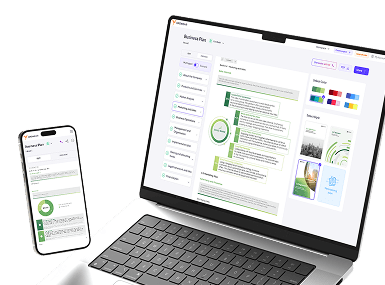
Growexa builds a complete, lender-ready business plan — with financial logic and a professionally formatted PDF
Even the most efficient Mushroom Farm cannot grow without capital. The Raising and Allocating Funds section of your Mushroom Farm Business Plan is where ambition meets arithmetic. It answers not only “how much” you need, but “why,” “when,” and “how it creates return.”
Your Business Plan should present funding as a staged process, not a lump sum. Break financing into phases — infrastructure setup, production scaling, marketing rollout, and contingency reserves. This shows discipline and awareness of cash flow cycles. A Mushroom Farm that maps funding to operational milestones signals financial maturity.
List the capital sources you’re targeting: personal savings, bank loans, agricultural grants, investor equity, or equipment leasing. For each, explain terms, repayment assumptions, and ownership implications. Transparency here builds trust — investors prefer realism over optimism.

Use your Business Plan to tie every dollar raised to a measurable outcome. If $100,000 funds the setup of climate-controlled grow rooms, specify projected yield increase and margin improvement. If $20,000 is allocated to packaging and branding, explain expected sales lift. A great Business Plan treats capital as a tool, not a trophy.
Expense allocation requires equal rigor. Mushroom farming has a unique cost structure: high initial setup, moderate running costs, and steady but perishable output. The Business Plan should quantify capital expenditure (CAPEX) and operating expenditure (OPEX) separately, linking them to revenue projections. Investors look for farms that balance upfront investment with recurring efficiency.
Cash flow management is the lifeline. Mushrooms are short-cycle crops, which means weekly sales and rapid reinvestment. Use your Business Plan to show how working capital covers substrate, utilities, and labor while maintaining reserves for equipment upkeep.
Financial discipline also requires buffers. Every Mushroom Farm faces seasonal shocks — contamination, market dips, or supply interruptions. Allocating at least 10–15% of raised funds as contingency reflects prudence. A Business Plan that acknowledges uncertainty inspires confidence because it shows foresight, not fear.
Finally, align funding strategy with growth vision. If you plan to expand from 1,000 to 5,000 bags per month, state the capital threshold that triggers that expansion. Tie investor returns to milestones — profitability targets, capacity utilization, or recurring contract revenue. A transparent Mushroom Farm Business Plan doesn’t promise miracles; it proves mastery over numbers.
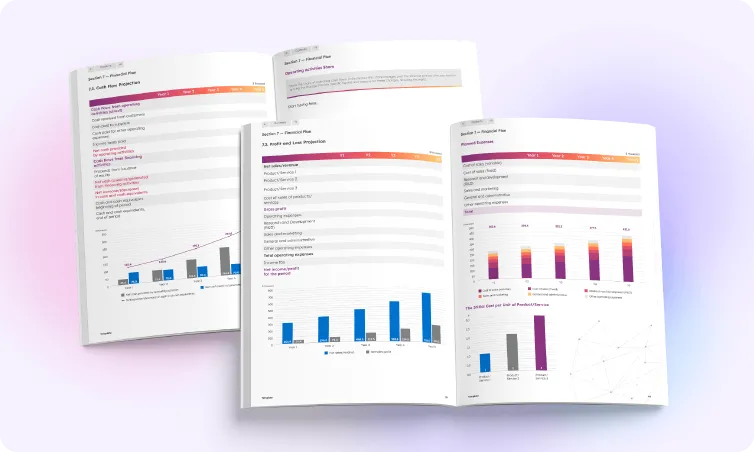
Numbers are the universal language of credibility. The Financial Plan transforms your narrative into a measurable model — showing that your Mushroom Farm can not only produce but profit. A professional Mushroom Farm Business Plan should include three financial statements: the income statement, balance sheet, and cash flow projection. But it’s not just about filling templates; it’s about demonstrating financial logic. Investors don’t invest in spreadsheets — they invest in the story those numbers tell.
Start with revenue modeling. Estimate production output per batch, average price per kilogram, and annual capacity. Translate biological cycles into cash cycles. Mushrooms grow fast — typically 30 to 45 days from substrate to harvest — which means frequent cash turnover. Your Business Plan should leverage that velocity, showing how reinvestment accelerates compounding returns.
Cost structure must be precise. Identify fixed costs (lease, salaries, utilities) and variable costs (substrate, packaging, transport). Include depreciation schedules for equipment — autoclaves, air handlers, shelving — to capture real asset value. The Business Plan should demonstrate understanding of break-even dynamics: at what volume does your Mushroom Farm shift from covering costs to generating surplus?
Margins vary by variety, so your Financial Plan must reflect product mix. Oyster mushrooms may yield higher margins but lower shelf life; button mushrooms sell faster but at thinner spreads. A sophisticated Business Plan models both scenarios, including a sensitivity analysis showing how changes in price or yield impact net profit.
Include at least 12–18 months of monthly projections, then a 3-year summary. The Mushroom Farm Business Plan should highlight key ratios: gross margin percentage, EBITDA, current ratio, and return on investment (ROI). Clarity here proves that the Mushroom Farm is not just an agricultural idea — it’s a functioning enterprise.
Funding utilization should connect back to this section. If you’ve raised $150,000, show how it flows through setup, operations, and marketing, then when cash flow turns positive. The Business Plan should show payback period, investor ROI, and reinvestment strategy for growth.
One often-overlooked component of a Mushroom Farm Financial Plan is risk modeling. Include downside and upside cases — for example, a 10% drop in yield or a 15% increase in retail demand. Demonstrating adaptability turns your Business Plan into a management tool, not a static document.
A Mushroom Farm thrives when its Financial Plan acts like a dashboard — tracking KPIs, comparing actuals vs. forecasts, and guiding operational pivots. Over time, these numbers evolve from projections into evidence.
A Mushroom Farm Business Plan isn’t merely a financing document — it’s the living architecture of discipline, innovation, and resilience. In an industry where success depends on both biology and business, the Business Plan becomes your most powerful crop: a structured system that multiplies insight, not just yield.
It connects spores to strategy, operations to outcomes, and effort to equity. The best Mushroom Farm Business Plans do more than describe — they direct. They forecast risk, define rhythm, and remind founders that sustainability is a financial model as much as a philosophy.
If you’re ready to grow from concept to enterprise, start with a structure that keeps every decision accountable. Download the Mushroom Farm Business Plan template to model your own operation — or use Growexa to design a custom plan that adapts as your farm expands.
Every successful Mushroom Farm begins underground, but every lasting one is rooted in planning.
Because mushroom cultivation is a science of precision — and investors fund precision, not passion. A solid Mushroom Farm Business Plan helps you structure everything from substrate sourcing to cash flow cycles. It translates biological processes into financial predictability and ensures that each decision — from temperature control to market pricing — contributes to long-term stability and profit.
Startup costs vary by scale, but a small Mushroom Farm often requires $30,000–$80,000 for infrastructure, climate systems, and initial substrate. A larger commercial setup can exceed $250,000. A well-prepared Business Plan breaks these costs down into stages, helping you raise funds efficiently and track ROI across each expansion phase.
Clarity, scalability, and data. Investors look for farms that understand yield economics, have mapped their production capacity, and can show how each batch converts to revenue. A professional Mushroom Farm Business Plan demonstrates your grasp of operating margins, market demand, and risk management — proving you’re running a business, not a hobby.
At least once a year — or whenever a key variable shifts, such as market price, technology, or expansion size. The Mushroom Farm Business Plan is a living document; it must evolve as your farm grows. Treat it like an operational dashboard — review actuals vs. projections, recalibrate cash flow, and refine strategy before each new production cycle.
Start with a structured Mushroom Farm Business Plan template — it gives you a proven framework and saves time — but customize it fully. No two Mushroom Farms are identical. Adjust metrics, costs, and market assumptions to your region and production style. A template gives you the map; your insight turns it into a compass.

